August 25, 2026
Looking to keep yourself up to speed with the latest solar news and developments? You’re in exactly the right place. Here, we cover everything from our own company updates and exciting project announcements to breaking industry news, emerging solar technology and important developments across the renewable energy sector.
Whether you’re researching solar for your business, keeping an eye on the latest industry trends or simply looking to understand how solar energy is evolving, our articles are designed to give you useful, straightforward information. You’ll also find in-depth guides, expert insights and practical advice to help you make informed decisions and get the most out of your energy technology.
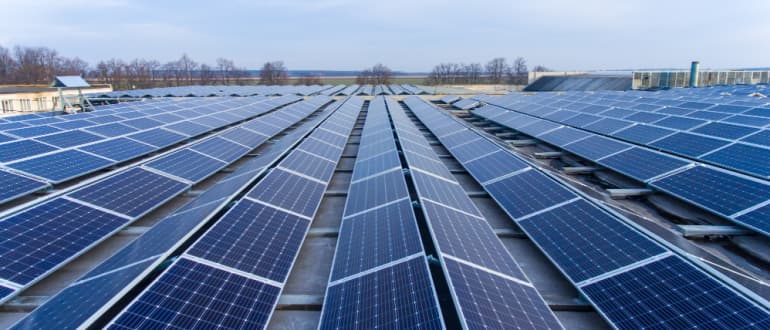
One of the key advantages of boosting your energy security through solar panels is that they provide a reliable means of generating your own on-site power, making you less reliant on the National Grid, and the global energy market in general – much of which is still significantly dependent on fossil fuels.
It’s worth noting that the last few years have brought some particularly seismic economic shocks which have been felt across the globe, including the Covid-19 pandemic, and Russia’s invasion of Ukraine. As well as the devastating human costs to these events, they’ve also sent shockwaves through the world’s economies, leading to massive spikes in energy prices – the effects of which are still being keenly felt by countless businesses today. That’s where commercial solar panels can help. By making you less dependent on national and international energy markets, they can insulate you from economic shocks associated with geopolitical factors or supply chain issues, and help you stabilise your costs in the long term – making it much easier to protect your business continuity.
We’ve spoken before about the impacts of blackouts and brownouts on your business. To explain the difference quickly in a nutshell, a blackout is the result of a complete mains power supply failure – in other words, it is (by definition) an unexpected outage. That generally results in devices being improperly and abruptly shut off, which can be highly damaging for certain pieces of machinery or equipment, especially if they’re mid-operation at the time.
A brownout on the other hand is a term used to describe what happens when the voltage drops below the usual mains supply level. That doesn’t necessarily mean a complete outage like a blackout, and depending on the nature and duration of a brownout, it may even leave a majority of devices still functioning. In some cases, a brownout may even be intentionally implemented by the National Grid, to lessen the strain on the grid itself, to prevent the less palatable possibility of a complete blackout.
The threats to your business from a blackout are obvious – a sudden and abrupt shut-off in power can pose a major risk of damage to your assets, especially heavy-duty machinery. Even if the machines themselves escape damage, there’s still the downtime costs to your business as you wait for power to come back online. Look no further than search giant Google for an easy example of this – the corporation briefly lost power in 2013, and lost an estimated £100,000 a minute until it was back online. It was down for five minutes, which meant the outage was projected to have cost the company almost half a million pounds.
A brownout poses similar issues. It’s true that the risk of damage might not be quite as potent with a reduction in power, as opposed to a complete outage), and in many cases, devices may still be operating on a baseline level of power. However, the reduction can cause some of them to malfunction, which can cause further complications later down the line.
In both cases, you can mitigate the risks by having a redundancy through on-site power generation, in the form of solar panels. Even if there is an outage, you can plug the gap with stored energy from your solar panels – and depending on your circumstances, you may even be able to power your business entirely with stored solar energy for a certain amount of time. In any case, that can help save you money, save you time, and give you more peace of mind.
One of the key benefits of solar power systems is that they generate electricity at a fixed cost, offering a hedge against rising utility prices. Over time, as those energy savings accumulate, you’ll find that your commercial solar panel installation can end up paying for itself in a relatively short amount of time, allowing you to enjoy all the cost savings that steady, reliably low energy prices can give you.
Depending on your unique energy profile, and your rates of consumption as an organisation, your savings may run well into the thousands. That means it’s not just energy security that you can enjoy with commercial solar panels, but a bit of added financial security as well – always welcome in today’s increasingly uncertain economic climate!
With each successive Conference of the Parties (COP) climate meeting every year, it’s becoming clear that governments across the globe are steadily implementing more and more stringent regulations in a bid to reduce carbon emissions, and promote the adoption of more renewable sources of energy – including solar panels. Long-term global energy security is the goal, and that can only be realistically achieved with renewables. That makes it a key priority for businesses across the globe in the years ahead. In 2023, for the first time, the gathered nations universally agreed the need to transition away from fossil fuels.
What’s more, the long-term viability of renewables has been proven time and again, and indeed, a joint study by University of Exeter and University College London found that solar energy has now reached a stage where it will unquestionably become the world’s main source of energy by 2050.
Wide-ranging changes to the world’s energy supplies are already on the way, and becoming an early adopter can help you stay ahead of those regulations, so you can avoid getting caught off-guard by mandated changes. In other words, you get to transform your energy supply on your own terms, on your own schedule, rather than having to rush to conform to a schedule that’s been imposed upon you (which is often far more costly and stressful).
Energy security isn’t just important for your own internal business goals – crucially, it’s also something that your suppliers, investors and customers will be on the lookout for too.
In recent years, the rise of Corporate Social Responsibility and Environmental, Social and Governance metrics demonstrates that more and more people are leaning towards companies that “walk the walk” when it comes to ethical commitments. Making responsible steps towards securing a sustainable, secure energy supply is one of the measures which can put you head and shoulders above your competitors – and it may well end up becoming the deciding factor in who your customers choose to buy from.
That makes it one of the many additional indirect benefits of ensuring your energy security – not only does it give you direct practical advantages in terms of your cost savings and your peace of mind, but it could even help you win more business along the way.
Those are just five of the most crucial ways that you can protect your business by boosting your energy security through solar panels – and that’s exactly where we can help here at Low Carbon Energy. We have over 60 years of combined experience in commercial solar, having helped SMEs and large corporations across a wide variety of sectors transform their business’ energy supply.
Each of our installations is bespoke, tailoring your solution on your specific energy profile, helping us to maximise carbon reductions and saving you thousands in energy bills. Feel free to look at our case studies for just a few examples of businesses which have reaped huge rewards from solar, such as Boeing and Irish Water. To find out how we can help you, feel free to give us a call today on 01282 421 489!
December 27, 2023
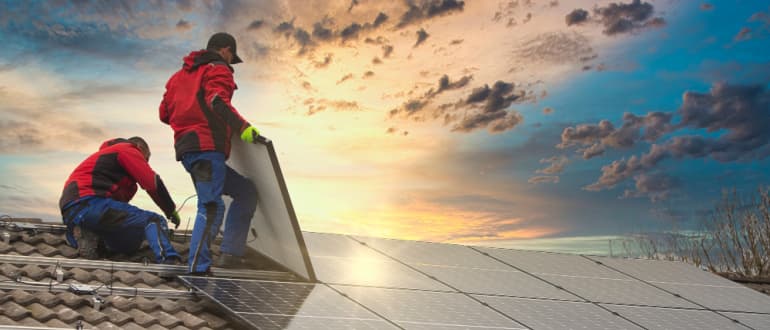
It was a bit of a rough start to the year for the UK government, as January saw the release of the Net Zero Review, assessing the UK’s progress towards this goal. It was authored by Conservative MP Chris Skidmore, acting as the Interim Minister for Energy and Clean Growth. His conclusions were not flattering. Britain was found to be not on track with virtually all of our targets, including transport, housing, family or energy generation. The report was at least unequivocal in its support for Net Zero, touting the economic benefits it will bring. Unfortunately, the government’s response didn’t initially impress anyone. And only a few months ago, the Climate Change Committee’s 2023 report demonstrated that the government’s trajectory hasn’t improved. Let’s hope for better in 2024.
According to the results of a joint study between the University of Exeter and University College London, it’s now almost certain that solar energy will become the world’s main source of energy by 2050, a projection supported research from Berlin-based Mercator Research Institute on Global Commons and Climate Change (MCC), which found that the cost of solar power has dropped by nearly 90% in just the last decade.
This shift is reflected globally, and while the UK’s slow progress is being (rightfully) criticised, the general public appear to be becoming more concerned about the issue than ever, and there are signs of growing political pressure on embattled Prime Minister Rishi Sunak to take decisive, positive action on the issue. And with growing proof that solar energy is set to become not just the dominant energy source of the UK, but the world at large, there’s no question that new fossil fuel licences will become progressively harder and harder to justify. The only main question left is: by the time the government realises this, will it already be too late?
As part of an encouraging pattern globally, Europe’s energy landscape in general is rapidly shifting towards electrification and renewable sources. Accelerated global adoption is being driven by rising social acceptance, policy support, and favourable economics. In the UK alone, there are concerns over energy standing charges (news which is probably not new to you), and these concerns are leading directly to greater public acceptance of change.
One recent study from Goldman Sachs is particularly worthy of note, with its conclusion that electrification has the potential to “cut European energy bills significantly” – full electrification could potentially decrease household bills by over 20%. What’s more, Goldman Sachs’ research indicates that over 70% of electrification in Europe over the next decade will be deflationary, aligning with the broader trend of solar power becoming progressively more cost-effective. No wonder so many businesses are moving ever-more decisively to install commercial solar panels!
This year’s COP28 conference was certainly eventful – kicked off by rumblings that the COP28 president (who is the head of an oil company) was planning to use the climate conference to seal oil deals. That seemed, at best, counterintuitive, especially since Mr Sultan Al Jaber made no move to deny these reports.
There was also controversy around the language of the Global Stocktake – the text outlining where progress has been made, and what needs urgent improvement if the world is to meet its climate commitments. After a bit of back-and-forth over the specifics of the language (hugely important in a legal text), COP28 finally achieved an historic milestone – namely, a universal consensus that countries need to transition away from fossil fuels in energy systems. And although lots of countries rightly think that the text could have gone a lot further, it’s still an important landmark achievement worthy of recognition.
So that was 2023 – let’s see what 2024 brings! And if you’re planning to transform your business energy supply, we’ll be right there with you here at Low Carbon Energy.
Here at the Low Carbon Energy Company, we have over 60 years of combined experience in commercial solar, having helped SMEs and large corporations across a wide variety of sectors transform their business’ energy supply.
Each of our installations is bespoke, tailoring your solution on your specific energy profile, helping us to maximise carbon reductions and saving you thousands in energy bills. Feel free to look at our case studies for just a few examples of businesses which have reaped huge rewards from solar, such as Boeing and Irish Water. To find out how we can help you, feel free to give us a call today on 01282 421 489!
December 20, 2023
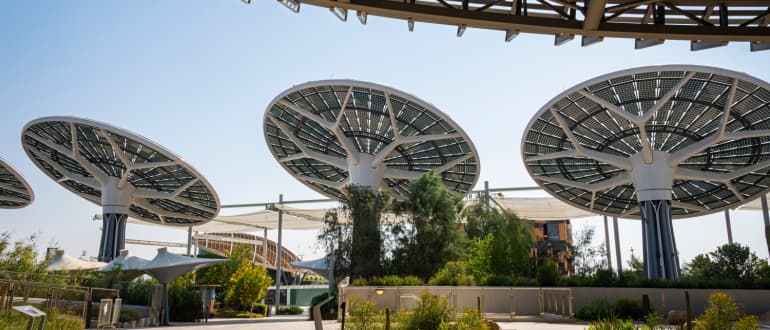
This year, it was held in Dubai, in the UAE (United Arab Emirates). It began on the 30th of November, and ended on the 12th of December 2023, having overrun just slightly in the closing few hours. It was a highly eventful conference, even by COP standards. While there were several controversies and outcries – as you’ll see – there were also some major positive steps made, some of which directly affect the future of commercial solar panels.
Now, one area there was no agreement on was carbon markets, where countries can buy or sell “carbon credits” – units representing a reduction of greenhouse gases – to meet their climate targets. Negotiators couldn’t quite reach a consensus on how credit markets would be supervised, and how different types of credits could be accounted for. Expect to see that one relatively high on the agenda for COP29 next year.
On the other hand though, here are the other key highlights of the conference, including the areas that did see significant progress this year.
We’d be remiss not to mention this one. If you’ve been watching the headlines, you may even remember there was major controversy before the summit even started, There was a bit of an outcry about the UAE’s presidency of the COP28 talks, mainly because the country is one of the top 10 oil and gas producers in the world – and observers quite fairly wondered how objective they could really be. Those concerns were only compounded by the fact that the president of the UN climate talks is Dr Sultan al-Jaber, who is the head of the giant Abu Dhabi National Oil Company (Adnoc).
What’s more, the BBC reported that leaked briefing documents showed Adnoc’s plans to discuss fossil fuel deals with 15 nations, which seemed, to put it politely, somewhat counterintuitive for a climate conference. Dr Sultan al-Jaber didn’t deny the plans either, but insisted he was committed to the progress of climate talks. Understandably, that did little to inspire confidence in attendees and observers.
Despite the controversy surrounding the UAE’s stewardship of the event, there’s no denying that some major milestones were achieved at COP28. Landmark agreement to support vulnerable nations facing the worst impacts of climate change. Displacement, relocation and migration. Geographically diverse board will be established and the fund will be managed by the World Bank. First pledges from wealthy nations were made in Dubai, and currently at over $650 million.
The NCQG (New Collective Quantified Goal) has been the subject of much back-and-forth, but some substantial progress on it was finally made at COP28. It builds on the $100 billion pledged by developed nations to finance climate mitigation and adaption initiatives in developing nation. As a planet, we’ve still not met that goal, although we are on track this year. The main thing is that climate scientists agree that it still falls far short of what’s needed.
This year though, nations agreed to draft a post-2025 finance target ahead of the climate conference next year, so more details will be finalised then.
It’s been an unavoidable truth for some time now that some effects of climate change are now unavoidable, so there’s been an increasing focus in recent years on how countries can adapt to these changes, and what strategies can be adopted. The agreement at COP28 calls for a doubling in adaptation finance, and plans to continually assess and monitor what additional measures may need to be taken in future years.
One major milestone here: the text mandates an explicit 2030 date to meet targets on water security, ecosystem restoration and health. Disappointingly though, language around closing the adaptation finance gap was watered down somewhat. Rest assured it’s one of the areas that the world will be watching closely next year, as further details on financing expectations are due at COP29.
Without question the most closely scrutinised text at COP28, the Global Stocktake is exactly what it sounds like – it’s essentially “taking stock” of where the world stands now, where progress has been made, and what needs urgent improvement if the world is to meet its climate commitments.
There was again a lot of controversy surrounding the text when reports emerged detailing weakened language around emissions and fossil fuels – effectively loosening the obligations of the world’s most polluting countries (and let’s be honest, making them exponentially less likely to take the painful steps necessary to address that pollution). After an outcry, that text was amended to a degree, slightly tightening up those obligations again.
It touches on the likelihood that the world will reach its peak global emissions between 2020-2025, and it’s now explicit about the necessity of limiting global warming to 1.5C above pre-industrial levels, and reaching Net Zero by 2050.
Crucially, this marks the first time that countries have agreed on the need to transition away from fossil fuels in energy systems. It’s regarded as a key admission that richer countries are expected to move away from coal, oil and gas more quickly.
As far as a lot of people are concerned though, it could have gone a lot further. The deal doesn’t specify a timescale, which is a source of concern for some observers, and it doesn’t necessarily compel said wealthy countries to take action. That’s not been good news to the UK, US, EU, and some of the nations most vulnerable to climate change (including geographically low-lying or developing nations), many of whom wanted a more ambitious commitment to phase out fossil fuels.
However, it does call on countries to accelerate low-emission and zero-emission technologies like carbon capture and storage. The agreement also includes global targets to triple the capacity of renewable energy like wind and solar power, and to double the rate of energy efficiency improvements. The deadline for both of these initiatives is 2030 – so very, very close in global terms.
So… the million dollar question that so many people are asking is: will it ultimately make any difference? And to be honest, the answer right now is that it’s difficult to say. The caution surrounding the UAE’s stewardship is certainly understandable, as is the accusation that many countries are using the summit as an opportunity to engage in ‘greenwashing’ – essentially, deliberately giving the impression that they’re taking the climate crisis seriously, without actually taking the proper steps to address it.
However, it’s also worth noting that these summits do have a precedent for sparking global action; the United Nations says that the 1.5C warming limit agreed at COP21 has driven “near-universal climate action”. Now, it’s true that we still have a long way to go as a planet, but still – that’s reason enough for a little optimism, isn’t it?
With climate action becoming a more urgent item on the world’s agenda than ever before, it’s no wonder that so many companies are turning to more renewable sources of energy to power their business. And if you’re thinking of doing the same, that’s exactly where we can help.
Here at the Low Carbon Energy Company, we have over 60 years of combined experience in commercial solar, having helped SMEs and large corporations across a wide variety of sectors transform their business’ energy supply.
Each of our installations is bespoke, tailoring your solution on your specific energy profile, helping us to maximise carbon reductions and saving you thousands in energy bills. Feel free to look at our case studies for just a few examples of businesses which have reaped huge rewards from solar, such as Boeing and Irish Water. To find out how we can help you, feel free to give us a call today on 01282 421 489!
December 18, 2023
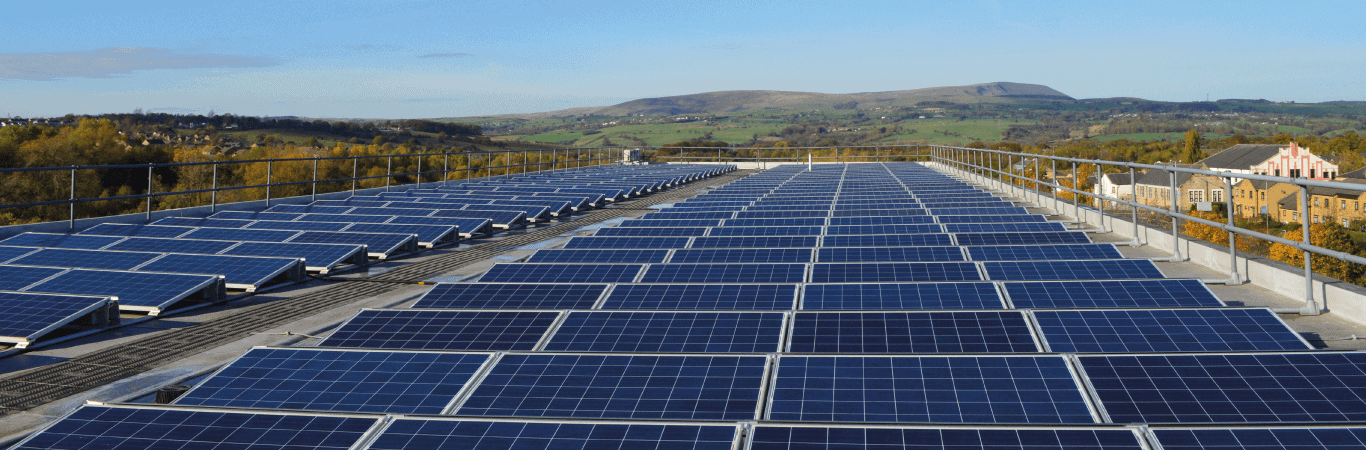
Solar panels are among the greenest forms of energy generation for both domestic and commercial properties, so it’s no surprise that they’re becoming continually popular amongst both the private and commercial sectors. But while the advantages of this technology are generally very well known, not everyone is quite so clear on exactly how they work. This week, we’ve put together this simple guide to the science behind them, and the advantages they can bring to you or your company.
Since there are obviously no moving parts involved solar panels, which means that most of the clever technology is not in the mechanics, but in the choice of materials, and the way they interact.
In a nutshell, solar panels are typically made from silicon (or a similar type of semiconductor material), which is installed in a metal frame with a glass casing. When this semiconductor material is exposed to photons of sunlight, it releases electrons, and produces an electric charge – which is then harnessed for whatever application the solar panels are connected to.
The key components to solar panels are called photovoltaic cells. Each panel contains a number of such cells, which are all sandwiched between two layers of semi-conducting material, typically silicon. When the photons present in sunlight hit these layers it creates positive and negative charges in the different layers, and this results in an electric field filled with electrons, which can be used as a direct current of electricity. These then move towards a metal strip called an electrode, which creates an electric current.
This process as a whole is known as the photoelectric effect, and it’s this that allows something as simple and readily available as sunlight to generate electricity that can power our homes and businesses.
Once electrons have been generated using the photoelectric event, they then have to be converted into a form that can be easily harvested and utilised. This is done by means of an inverter which converts the direct current to an alternating current. This alternating current can then be used in the home or commercial building to which the solar panel is attached or channelled into the National Grid.
Contrary to what some people think, solar panels don’t actually need direct sunlight to work, and can work perfectly well on cloudy days. That’s because they absorb energy from not just the light spectrum that we can see, but other wavelengths too, which are easily capable of passing through thick clouds. Almost any form of light is suitable – theoretically, even artificial light would work to some extent (although at that stage you’d be expending energy to produce energy, which would somewhat defeat the point).
So while strong, direct sunshine will produce the most energy, solar panels are still useful even on overcast days too.
We can all see the damaging effects that climate change is having upon our planet year after year, much of which is man-made. That’s why we all need to do all we can to reduce our personal carbon footprint, and our actions today can make a big difference to the world our children and grandchildren will grow up in. Generating electricity via solar panels is a much greener electricity solution, and it can also lead to substantial savings in your electricity bill when compared to electricity sourced solely from the National Grid.
Businesses of all sizes and in all sectors can enjoy the same benefits as domestic customers, but this can be especially important as energy bills are one of the major overheads that a modern business faces, and in today’s competitive market, all savings are important. It also brings advantages in terms of energy security, as you won’t have to rely on electricity from an external source, and commercial solar can be a major step towards achieving your Corporate Social Responsibility targets.
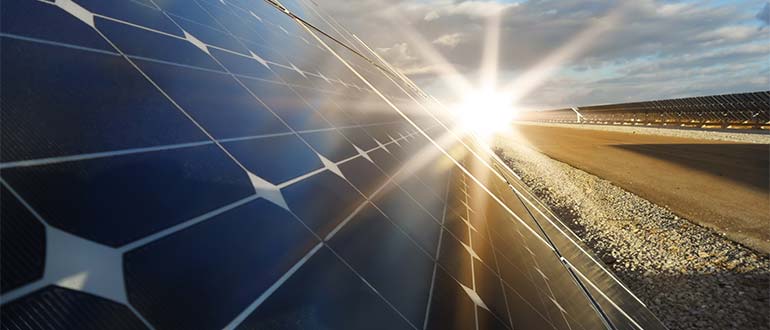
Solar panels and other green energy solutions from Low Carbon Energy can cost less than you think and can eventually lead to cost savings, as well as creating greener home or business premises. That’s good news for your bills, good news for the reputation of your company, and good news for our planet. At Low Carbon Energy, we have a wealth of experience at designing and installing solar panel systems for properties of all kinds and all sizes, and we’re proud to be a Carbon Trust Partner. Why not give us a call today on 01282 421 489 to see how we can help you?
November 30, 2023

Setting the right sustainability goals can sometimes be a harder task than it sounds. “Reduce our carbon emissions”, for example, sounds like a perfectly serviceable goal on paper, but in practice, it’s more of an overarching mission than a specific goal. Specific goals need to be measurable and achievable: and strike that careful balance between being ambitious and being realistic. (For example, you set yourself the goal of generating a certain amount of your business’s energy output through renewable energy – which is where our commercial solar panels can come in handy.)
Equally though, when you’re striking that balance it’s always a good idea to tilt the scales slightly towards the ‘ambitious’ side, and make sure to aim high with your sustainability goals. Here’s why!
If the renewables sector has one consistent defining quality, it’s that it’s always rapidly evolving. Even in the last few years alone we’ve seen a massive shift in market conditions, government policies, and emerging technologies – all of which means that what might have once seemed like really ambitious climate goals are now easier to hit than you might think.
There’s also the human factor to consider; namely the shift in public attitudes towards climate action, which now often makes it easier to get buy-in from employees, as well as support and recognition from potential partners, investors and customers due to ESG.
And of course, while it’s always highly motivating to successfully achieve a small goal, it’s an even bigger rush to effectively a chieve a larger one. That feeling of success can then serve as an excellent motivation to continuing onto new goals.
An ambitious sustainability goal can still be motivating even if it’s not achieved too quickly: if (for example) market forces don’t intervene. That’s largely because it can give your team something to constantly strive for. It’s a marked difference to what often happens if climate goals are set too small-scale – if they’re achieved too quickly, the effort involved can feel trivial, and they can end up feeling more like a box-ticking exercise.
Setting large-scale goals, on the other hand, signals to your staff that you’re serious about effecting real change at your company, helping to drive a consistent sense of positive forward progress, helping the entire team all work towards the same established goals.
As an extra bonus, setting large goals can often lead to the identification of additional opportunities along the way. You might end up solving several smaller goals while working towards the bigger ones – and even if the smaller ones weren’t in your original plan, that can again work wonders for helping to provide further motivation.
We’ve touched on this a few times above already, but thought it was worth expanding a little further! Consumers, investors and potential business partners are all increasingly drawn towards companies that can demonstrate clear ethical commitments to their staff members, local communities, and wider environment. (That’s one of the reasons that ESG has become such a prominent metric in gauging a company’s commitment to its goals.)
And by the same token, today’s public is increasingly wary of greenwashing; when companies essentially pretend to be more environmentally conscious than they actually are. There are a number of ways consumers often spot this: companies might point to green schemes or achievements that might be older than they might first appear, or be more tenuously related than they seem. The public is also on the lookout for vague or ambiguous language in a company’s sustainability goals – the “reduce carbon footprint” goal we mentioned above is a pretty good example of this.
Today, the public rightly expects facts, figures, and numbers. They also expect a company’s sustainability goals to be proportional to its size – people will have bigger expectations from a national supermarket, for example, than they might for a small local café. So if you’ve got a particularly ambitious (but realistic) goal that you can show you’re making positive, measurable progress towards achieving, then that can give you a valuable edge over competitors.
Commercial solar panels are an excellent example of that kind of clear demonstration of commitment to climate goals – and that’s exactly where we can help here at Low Carbon Energy. Our experts at Low Carbon Energy have over 60 years of combined experience in commercial solar, having helped SMEs and large corporations across a wide variety of sectors transform their business’ energy supply.
Each of our installations is bespoke, tailoring your solution on your specific energy profile, helping us to maximise carbon reductions and saving you thousands in energy bills. Feel free to look at our case studies for just a few examples of businesses which have reaped huge rewards from solar, such as Boeing and Irish Water. To find out how we can help you, feel free to give us a call today on 01282 421 489!
November 23, 2023
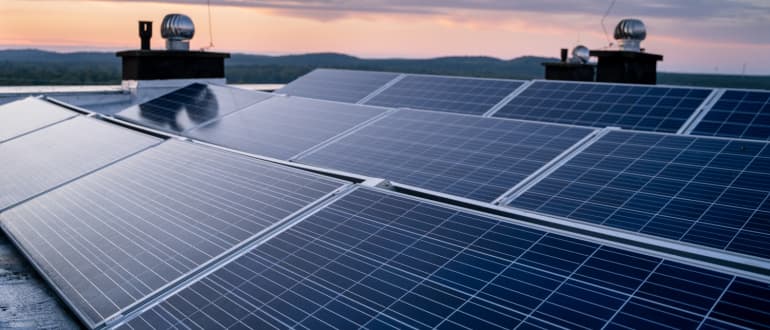
Essentially, Ofgem has announced a review on daily standing charges on energy bills, and businesses, charities and billpayers are being encouraged to submit their views. It’s been prompted by growing frustration over the current system: right now, energy customers pay a fixed daily charge to cover the costs of connecting to a supply. However, those fees have been steadily growing. In most areas, the charge has roughly doubled over the past two years, and customers don’t have any ability to reduce what they pay.
Now, Ofgem says it wants to open up a debate over the changes, and it’s open to suggestions on how the system may be fixed. This may potentially even include the option to scrap the charge completely.
Whatever the replacement scheme will be is not going to solve the impact of the energy crisis overnight, but will hopefully give UK residents some more financial breathing space until more long-term changes take effect.
One recent study from Goldman Sachs, no less, says that electrification has the potential to “cut European energy bills significantly.”
In the words of one researcher, “we model the full electrification system of a typical European household and conclude that switching to electric heating and electric mobility would lower the overall energy bill by more than 20%.”
That same research found that a European household investing in a new heat pump or electric vehicle could see a payback period as short as three and a half years. That would help eliminate carbon emissions from households, estimated to make up about 30% of the total carbon footprint in the EU and UK.
As part of their research, the team at Goldman Sachs looked at the relative costs that will be needed for electrification in Europe and the US. This involved comparing the costs of solar, onshore and offshore wind, power grid improvements etc. Ultimately, they found that more than 70% of electrification process in Europe over the next 10 years will be deflationary. In other words, instrumental in reducing inflation.
Their findings correlate more broadly with a general pattern of solar power becoming progressively cheaper over time. In fact, it’s one of the key advantages of solar, and widely recognised in the industry too. Between 2010 and 2019 alone, the cost of solar PV globally dropped by an incredible 82%.
In short, there’s never been a better time to revolutionise your own-site power supply, and stay at the cutting edge of the energy revolution. And that’s exactly where we can help here at Low Carbon Energy.
Our experts at Low Carbon Energy have over 60 years of combined experience in commercial solar, having helped SMEs and large corporations across a wide variety of sectors transform their business’ energy supply.
Each of our installations is bespoke, tailoring your solution on your specific energy profile, helping us to maximise carbon reductions and saving you thousands in energy bills. Feel free to look at our case studies for just a few examples of businesses which have reaped huge rewards from solar, such as Boeing and Irish Water. To find out how we can help you, feel free to give us a call today on 01282 421 489!
November 17, 2023
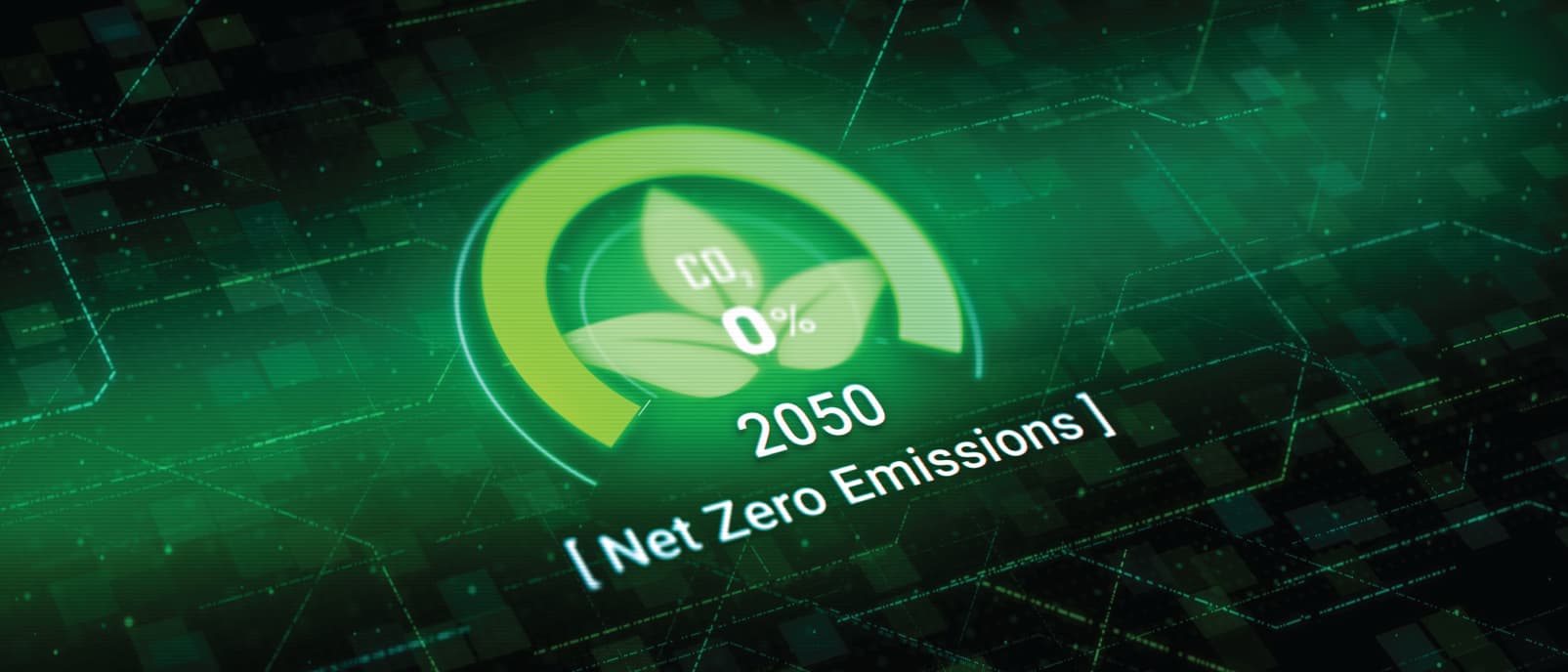
Net Zero has now been a major item on the government’s agenda for well over five years. In June 2019, the UK made a legally-binding commitment to making a 100% reduction of greenhouse gas emissions by 2050 (compared to 1990 levels). A range of measures are required for the nation to hit this target; the most obvious of which is a massive reduction in fossil fuels, and a corresponding increase in investment for renewables sources of power, like wind turbines and commercial solar panels.
It’s been a bit of a bumpy ride at times so far, but the question is: how is it all going now?
To put it simply: it’s not going well. In the Climate Change Committee’s 2023 report, its authors highlighted that the UK has now lost its leadership in climate issues. This is down to a variety of shortcomings, including:
There is some slightly encouraging progress in terms of the sales of electric cars, but the infrastructure is not yet where it needs to be. The oil and gas projects have proven particularly controversial, and hugely damaging to both the UK’s progress, and its standing as an international climate leader. The outgoing chair of the Climate Change Committee, Lord Deben, has described the issuance of new oil and gas permits as “unacceptable”.
After the COP26 conference in 2021, then-Prime Minister Boris Johnson committed to a 2030 deadline for the UK to cut its carbon emissions by 68% (from 1990 levels). In just the short time since then, we’ve already “slipped behind” says Lord Deben. “This is not a report that suggests satisfactory progress.”
Back in June, the outgoing chair also noted “a worrying hesitancy by ministers to pursue climate goals”. Unfortunately, just a few short months later, a new development would prove those comments depressingly prophetic.
In late September, Prime Minister Rishi Sunak announced a major government U-turn on climate targets. Amongst the most notable was the delay on the 2030 deadline for the sales ban on new petrol and diesel cars, as well as the phrasing out of gas boilers. Mr Sunak says he remains firmly committed to the UK’s climate obligations, but wants to take “a more pragmatic, proportionate and realistic approach” that he says will save families thousands of pounds.
But businesses and environmental groups have been quick to point out that these delays will almost certainly end up costing more in the long run, as well as further threatening the UK’s position as an international climate leader. Several have also pointed out that for all the Prime Minister’s insistence that he’s striking a middle ground in his approach to the UK’s climate targets, his announcements are lacking in crucial detail about how exactly he’s going to achieve them. (Detail that, to reiterate, the government is legally obligated to provide.)
The tone and timing of the announcement has prompted suspicions in some quarters that it’s not been made with any good-faith consideration to the UK’s green targets at all. Instead, some observers suspect it’s purely a political move to appeal to wavering voters – the Conservative party is very visibly struggling in polls, and a general election is looming ever-closer over the horizon. These suspicions are fuelled by rumours that the U-turn has been developed with the input of Tory campaign strategist Isaac Levido, partially with the intention of drawing diving lines within Labour. Technically the reports are unsubstantiated, but they certainly seem plausible in the wake of the disastrous Conservative by-election defeats in the key seats of Tamworth and Mid Bedfordshire.
The U-turn announcement has gone over about as well as you’d expect, especially with scientists and academics who have direct access to the data on climate change. Greenpeace says that the announcement demonstrates the UK is “not a serious player in the global race for green growth”, while Oxfam has described it as a “betrayal”. The executive director of Edinburgh Climate Change Institute was even more blunt in his assessment, saying that the move was “not pragmatic, it’s pathetic.”
The International Energy Agency was similarly dismayed by the announcement. In its earlier Annual World Energy Outlook, it noted that there were encouraging signs in the gathering pace of the worldwide transition to cleaner energy, and for the first time it was able to forecast that the demand for oil, gas and coal would peak before the end of the decade.
But that progress is delicate, and now the UK’s backtracking on climate targets could easily be a factor in derailing it. The director of the IEA, Dr Fatih Birol, told the Guardian that Mr Sunak’s change in trajectory would not directly affect the IEA’s global projects, but he took care to clarify that countries who rowed back on their climate promises would harm their own economies, as well as the planet.
It’s hardly a ringing endorsement for the government’s U-turn, and there could be headaches for Mr Sunak in the near future too, as environmental groups are planning to challenge the move in court. The key arguments are likely to hinge on the fact that the UK has a legal obligation to set out in detail how it will meet its 2050 target, including outlining clear carbon budgets for various sectors.
It’s also worth mentioning the slightly worrying fact that the CCC said the UK’s climate policies were already relatively weak to start with, with the UK missing targets on almost every front – so we definitely can’t afford to be pulling back further.
Ultimately, there’s no sugarcoating it – there’s not much encouraging news so far. However, polls have consistently shown that the majority of the public back the transition to Net Zero, though uncertainty starts to creep in when they feel the costs will be pushed onto consumers. That’s the issue that Mr Sunak claims to be addressing – but again, commentators have pointed out that his U-turn will end up costing consumers more in the long run.
Regardless of what the government is doing though, there’s no question that consumers still prefer businesses who can demonstrate a clear commitment to lowering their own climate footprint. And that’s exactly where solar panels can help.
If you’re thinking of installing some solar panels for your own business, or if you’ve got any questions, you can count on us to have all the answers you need – our experts at Low Carbon Energy have over 30 years of combined experience, having helped SMEs and large corporations across a wide variety of sectors transform their business’ energy supply.
Each of our installations is bespoke, tailoring your solution on your specific energy profile, helping us to maximise carbon reductions and saving you thousands in energy bills. Feel free to look at our case studies for just a few examples of businesses which have reaped huge rewards from solar, such as Boeing and Irish Water. To find out how we can help you, feel free to give us a call today on 01282 421 489!
October 30, 2023
Researchers at the Universities of Exeter and London have used three models to track positive feedbacks, leading them to project that solar PV will dominate the global energy mix in less than three decades. (That’s a relatively short timeframe, in global economic terms!)
In the words of the researchers themselves: “due to technological trajectories set in motion by past policy, a global irreversible solar tipping point may have passed where solar energy gradually comes to dominate global electricity markets, without any further climate policies.”
The 90% price drop figure, on the other hand, comes from calculations made by the MCC. Its analysts have noted that the price of electricity from solar panels has plunged by 87% since 2013, making the transition to renewable energy sources considerably more cost-effective than expected.
A small range of other factors has supported this drop. It’s been largely attributed to several key scientific breakthroughs that’s made them much more efficient, as well as falling raw material costs. Batteries are another major factor: the cost of batteries fell by nearly 10% in August. That drop took them past a tipping point that ultimately put electric vehicles on a price parity with those using internal combustion engines (in other words, the majority of cars still on UK roads).
By definition, global advances also affect the UK, so it’s broadly good news for us as a nation. One academic at MCC even suggests that the world’s entire energy consumption could plausibly be cost-effectively covered by solar technology and other renewables, although they do admit that this is “an extremely optimistic scenario”. However, as the same researcher put it, “the future is open.”
Now, there’s no doubt that Britain has a little way to go. In June of this year, the news broke that the UK is no longer a world leader in climate action, and the Climate Change Committee pointed out that the government efforts to scale up climate action were “worryingly slow”, especially in light of new fossil fuel projects being green-lit – with a new oilfield in Scotland and a new mine being opened in Cumbria.
It’s understandably not inspiring a lot of confidence in green observers here in the UK, but there’s solace to be found in the fact that the studies’ authors have acknowledged that there are still cultural, political and economic barriers. For example, political resistance from anti-environmentalists and lack of solar financing in developing countries.
However, just to counter that bit of pessimism, it’s worth noting that the UK enjoyed a record-breaking year for renewable energy in 2022. Wind, solar, biomass and hydroelectric energy generated 40% of our electricity last year, a rise of 5% from the year before. What’s more, the number of solar and wind projects completed this year means that we’re on track to break more records in 2023.
So that’s a quick glimpse of where we are on a global and national scale – and if you’re looking to further your sustainable energy plans for your own business, you’re in exactly the right place. Here at Low Carbon Energy, our experts have over 30 years of combined experience, having helped SMEs and large corporations across a wide variety of sectors transform their business’ energy supply.
Each of our installations is bespoke, and we tailor your solution on your specific energy profile, helping us to maximise carbon reductions and save you up to thousands of pounds in energy bills. Feel free to look at our case studies for just a few examples of businesses which have reaped huge rewards from solar, such as Boeing and Irish Water. To find out how we can help you, feel free to give us a call today on 01282 421 489!
October 24, 2023
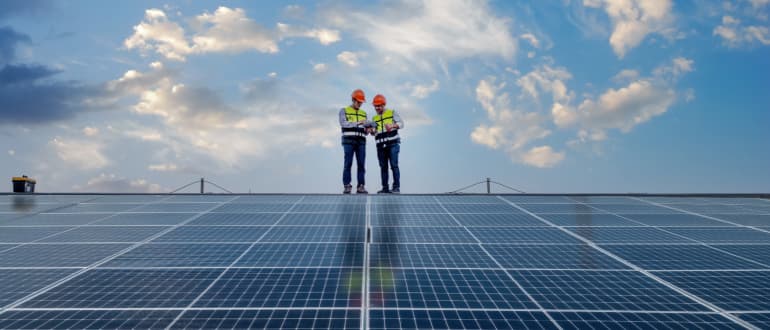
This one couldn’t be farther from the truth. In fact, studies have shown that solar panels can actually increase the value of a commercial property. The reason for this is that solar panels make a business more energy-efficient, which is a desirable feature for many investors.
While it’s true that solar panels do need sunlight to generate electricity, they’ll still produce electricity even on cloudy days, just at a reduced rate. Plus, if your solar panels are connected to a battery storage system, you can use the stored electricity that you’ve generated on sunnier days, so you’re far less likely to need to use the grid as a fallback.
Not true! While snow can reduce the efficiency of solar panels, it’s not a solar killer. Snow will typically melt off solar panels within a few days, but even when they’re covered in snow, they’ll still produce some electricity. If you’re concerned that your solar installation is underperforming because of snow, just brush the snow off!
This is a BIG misconception. Businesses and other organisations, such as local councils and authorities, can go solar with ease. In fact, commercial solar panels are a superb way for businesses to save money on their energy bills, reduce their carbon footprint, break away from their reliance on an ageing national grid, and improve their environmental image amongst their customers.
Solar panels can easily be installed at ground level, but if they are installed on a roof, they won’t damage it. They’re typically mounted on brackets that are attached to the rafters to ensure that the panels won’t damage the roof itself. Besides, a full survey of your business’s roof will be undertaken before solar panels are fixed to ensure that it can take the additional weight of the panels, and extra support will be recommended if necessary.
The truth is that the cost of commercial solar panels has decreased significantly in recent years, and solar energy is now more affordable than ever before. According to a report by the International Renewable Energy Agency, the price of PV panels dropped a whopping 82% between 2010 and 2019.
Nonsense! Solar panels need very little looking after. In fact, the only real maintenance that’s required is to occasionally clean the panels with warm, soapy water.
Here’s the truth: Solar panels are an extremely reliable source of (clean) energy. The solar panels that we provide guarantee energy security for 25 years and offer returns of up to – and often in excess of – 20%. Does that sound like an unreliable power solution to you?
This might be the most egregious myth of them all. Even if you take into account the energy it takes to manufacture and install solar panels, they still have a much lower carbon footprint than fossil fuel-based energy sources. Once installed, solar panels don’t produce any greenhouse gases, pollutants, or any other kind of harmful emissions; they also help reduce our reliance on fossil fuels and reduce energy poverty by providing affordable energy to communities in need.
Considering going solar? Don’t be discouraged by these silly myths! If you still have concerns about the efficiency of commercial solar panels or have questions about how commercial solar installations can be beneficial to your business, then speak to our experts on 01282 421 489, and we’ll be glad to help out!
October 4, 2023
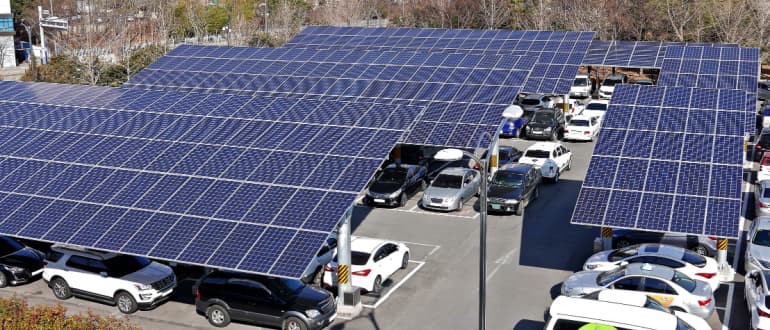
Car parks typically have a lot of open space, which means that the performance of the commercial solar panels that you install won’t be hindered.
If you exclude multi-storeys from the mix, car parks tend to be large open spaces that are free from shade and obstructions, which means they receive a lot of direct sunlight. This makes them the perfect place to install commercial solar panels, as you’re giving the solar panels the opportunity to perform optimally. Multi-storeys, however, still have their part to play thanks to their…
The bigger the property, the bigger the solar panel installation can be – but those panels still need to be fixed somewhere. Multi-storey car parks typically have strong support structures, which make them perfect for mounting solar panels.
Car parks are typically located near buildings and other infrastructure, which makes it a lot easier to connect to the grid and store the electricity that they generate.
While using your car park to install commercial solar panels is an effective way to use the space, where they truly ‘shine’ is in the lucrative income and positive image they can also generate for your business.
Commercial solar power can help businesses reduce their energy costs by generating (and storing) their own electricity. This can slash energy costs for businesses such as supermarkets, shopping malls, and data interpretation solutions that use a lot of energy.
Substantially improve your business’ energy security by reducing its reliance on the grid. This can be especially important for companies that operate in areas with unreliable electricity supplies or that are completely dependent on electricity to run. For example, a power blackout would completely hobble I.T. firms.
Solar power is a clean and renewable energy source, so it can help businesses reduce their carbon emissions, meet their environmental goals, and improve their corporate social responsibility (CSR) image all at the same time.
Installing commercial solar panels and combining them with battery storage can enable you to sell any excess electricity back to the grid, resulting in residual income. You could even install EV charging points and offer access to customers for a small fee.
Solar panels are incredibly easy to look after, which keeps maintenance costs low.
Thanks to a sustained rise in public opinion about the positives of using green, sustainable energy, solar car parks can now considerably increase the property value of commercial buildings. So, not only could you be investing in your company’s future in an environmentally responsible way with commercial solar panels, but you could be improving its fiscal future too.
By demonstrating to your workforce that you’re serious about doing your part to commit to sustainability, you’ll help to improve employee morale within the existing workforce and attract the best candidates to the company for new vacancies too.
If you’re a business owner, you should seriously consider either installing a solar car park on your premises or converting your existing car parking space. Commercial solar technology has improved dramatically over the past decade, to the point where it’s now seen as a canny investment.
With guaranteed energy security for 25 years, returns in excess of 20%, and clean energy generated from as little as £0.03/KWH, your car park could be the key to meeting your environmental CSR, attracting the best talent to your company, increasing the value of your property, making a lucrative residual income, and dramatically reducing your energy costs.
If you have any questions on solar power car parks, commercial solar panels, or battery storage, call 01282 421489 and speak to one of our expert team members for advice.
September 29, 2023
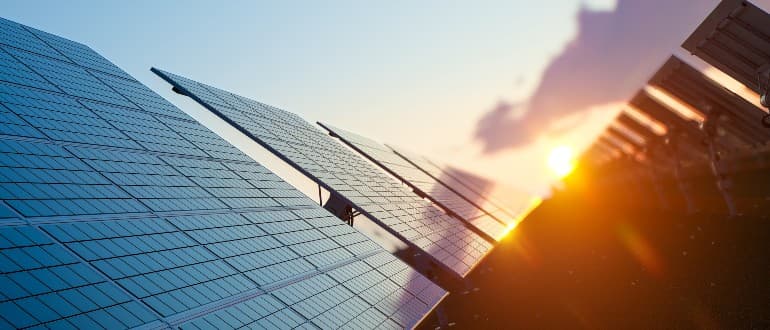
While commercial solar panels generally require little maintenance, regular service checks are immensely useful for keeping them operating at peak condition, ensuring that you’re always getting the very best out of your solar PV system throughout their operational lifespan – normally at least 25 years.
With regular maintenance, your solar panels will:
Maintenance of your solar panels also fulfils all your warranty requirements and helps to mitigate the risk of fires, complying with IEC 62446.
Our maintenance service is available to all properties and buildings with solar PV systems – even if we’re not the original installers. Our service encompasses everything from annual servicing to ad-hoc repairs. So, what does it typically involve?
Our Solar Panel Maintenance service comprises a series of checks all designed to help us evaluate your solar panels, and ensure that they’re in full working order – generating the maximum amount of energy and savings for your business.
When we come to perform a review of your solar panels, one of the first things we’ll do is make sure that they’re clean. The gradual accumulation of dirt and grime can be one of the biggest factors affecting the efficiency of your solar panels.
Happily, most solar PV systems are designed to be self-cleaning to a certain extent. Solar panels at a high angle tend to have the best self-cleaning mechanisms, but those pitched at lower angles can sometimes benefit from a quick, professional once-over on a regular basis, which is exactly where our experts can help at Low Carbon Energy.
We generally recommend that your solar PV systems are cleaned and services twice a year, with the first appointment falling around Spring if possible. That way, you stand to gain maximum benefit from the abundance of natural light around this time of year.
We’ll also inspect the PV system itself, testing and measuring all the DC circuits and individual components as well as the module glass – looking for damage, discolouration, irregularities and more. While we’re doing this, we’ll also conduct testing of electrical strings, isolators and safety devices.
Our maintenance programme also covers checks and maintenance of the inverters, mounting frame, and security – testing the serviceability of CCTV and fencing system as appropriate.
We check for any environmental degradation and resolve any issues that may have occurred with your solar panels since they’ve been installed. Finally, we’ll also future-proof your solar PV system by assessing it for any other developing issues, resolving them before they evolve into more complex or costly problems.
Following your service, we’ll provide you with a report that covers the ins-and-outs of the service, and any work that may have been required. At this point, you can schedule your next maintenance service or leave your next appointment until you’ve got a solar panel-related issue that needs sorting.
One of the best things about this service is that you choose when you want your solar panels looked at. We don’t ask our customers to sign up to any pre-paid service plans or routine maintenance plans – instead giving you the freedom to book an appointment when required.
For those of you who’d prefer the assurance planned maintenance service, we do have that available too.
While it’s not compulsory, we’d generally advise opting for preventative maintenance if you can. In the long run, it’s usually a lot cheaper than relying purely on reactive callouts, as regular checks can help us to identify and deal with emerging faults before they develop into serious problems, which might be a lot more costly and complicated to fix.
To book your Solar Panel Maintenance service check, just fill out our online form and we’ll sort out an appointment as soon as possible.
If you’re looking for other ways to make the most of your solar panels, why not consider battery storage? By storing the excess electricity generated from the panels by day, you’ll benefit from greater energy independence as you’re able to use stored electricity for “free” at night. Battery storage is also ideal for those regions that suffer from electricity blackouts – ensuring you don’t have to go without.
Throughout all our decades in providing solar panels for businesses here at Low Carbon Energy, we’ve noticed that a lot of the same questions tend to crop up quite frequently around solar panel maintenance – so just in case you’re wondering the answers to any of these yourself, you can find them right here!
Yes, but not very much. This is why so many people find that an annual maintenance check tends to be quite sufficient for keeping their panels in peak condition – and not, say, one that needs to be done weekly or monthly.
It’s worth bearing in mind that solar panels are largely static – there are no moving parts, no wires to get frayed, no worn surfaces, or broken mechanisms, so there’s essentially very little to wear out. The annual cleaning helps to maintain their efficiency, rather than their basic functioning. It helps ensure they’re clean of any minor contaminants that can sometimes start to gather, like dust or dead leaves or debris. And we handle that bit for you here at Low Carbon Energy!
You’ll be happy to hear that you don’t need to – they’re designed to be self-cleaning to a certain extent. Obviously, they still need a bit of external assistance every now and again, which is why our experts are here to give them the once-over on an annual basis.
However, to be clear, we’d always advise against trying to clean them yourself. It’s very difficult to do without the right tools and equipment (both in terms of cleaning materials and access equipment), and they need very careful treatment, or you risk causing them damage. And if you accidentally do end up damaging them, the repair costs will probably end up costing you a lot more than just some lost efficiency – so we’d always recommend leaving the job to the professionals!
As we’ve said previously, the efficiency of your solar panels is largely influenced by the way in which they’re installed. However, once they’re set up, if you’d like to maximise their efficiency, there are a couple of simple checks you can carry out every so often.
These include:
Checking the generation meter for any warning lights (which are typically red)
Tracking and analysing the figures on your generation meter
Comparing your actual output to the original quote
You can also keep an eye on any nearby trees throughout the year, to ensure that they don’t start to overshadow your panels – which can obviously limit the amount of sunlight that reaches them, and start to impact their efficiency.
If you’ve noticed a particularly severe drop in the efficiency of your solar panels at any stage, feel free to talk to us.
At Low Carbon Energy have over 30 years of combined experience, having helped SMEs, large corporations and public organisations over a wide variety of sectors to transform their business’ energy supply. Feel free to take a look at some of our case studies for just a few examples of our previous projects, or give us a call today on 01282 421 489 to find out what we can do for you!
August 22, 2023
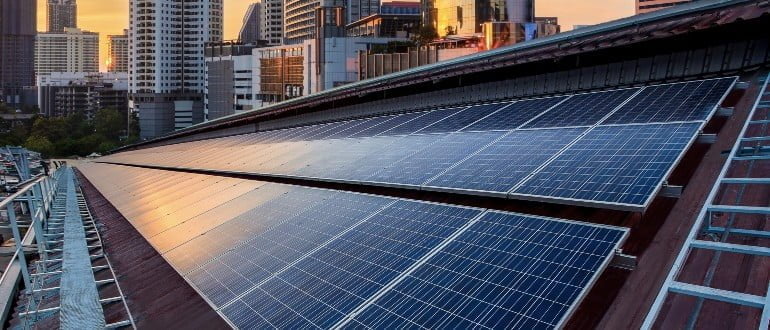
We’ll give you the short answer to start with: probably not. Most commercial solar panel installations meet the requirements for Permitted Development. Permitted development rights essentially allow you to carry out certain building works and changes of use without having to make a planning application (within reason).
However, obviously, there are limits on permitted development rights, to protect communities and local amenities from any potentially negative impacts of certain projects (for example, there would be strict limits on any proposed solar projects around historic buildings like churches). So if you’re wondering if your own commercial solar panel project has any risk of infringing on local landmarks or communities, it’s always a good plan to familiarise yourself with the legislation in advance. We appreciate there’s a lot to take on board, so here at Low Carbon Energy, we’ve slimmed it down to the essentials for you!
The requirements differ slightly between roof-mounted, wall-mounted and ground-mounted solar panels, but there’s one in particular worth bearing in mind – ever since April 2015, official regulations have held that most non-domestic solar installations under 1 megawatt are classed as permitted development.
Specifically, solar projects come under Class J of the Town and Country Planning (General Permitted Development) (England) Order 2015.
These cover:
“The installation, alteration or replacement of:
However, in order to qualify as permitted development, solar panels still have to meet certain conditions, which we’ve laid out below.
Roof-mounted solar
Ground mounted solar
General conditions to be aware of
You’ll also need to make sure that your development properly follows the building regulations governing solar panel installations. Building regulations are primarily concerned with safety, so the key areas concerning solar panels include Part A (the structural safety of a building) and Part P, which is the electrical safety of a building. Amongst other things, they’re essentially there to ensure that your rooftop can support the additional weight of your solar panels, and that they’re not at risk of causing direct or indirect harm to any people or property.
Yes – quite a few actually! You will probably need planning permission for your commercial solar installation if any of the following circumstances apply:
Now, it’s worth remembering that if your commercial solar panel installation falls into one of the categories above, that doesn’t necessarily mean that your planning application will be rejected off the cuff. However, it won’t be approved automatically either, so it all comes down to the judgement of your individual local authority. If your council thinks that it’ll have too much of a negative impact on the property itself or the surrounding area, then they could say no – so be braced to receive the news either way!
As a side note, if your system exceeds 50kW in power generation capacity, then you’ll need the Prior Approval of the Local Planning Authority. That’s a slightly more flexible process than making a formal planning application, but will still involve the authority assessing the design and external appearance of the development, making sure it produces no harmful by-effects for neighbours or passers-by – such as by creating a glare on occupied neighbouring land.
As with so many administrative processes, it can vary slightly depending on the specifics of your situation. However, the official advice is to allow for about 10 to 11 weeks.
If planning permission is required, it often takes around two weeks to compile the application, and ensure that all relevant details are covered. From there, it can take up to two months for the planning department to come back with a response. This is just a general estimate though – if we have any specific advice or knowledge about your individual case, you can trust us to keep you informed here at Low Carbon Energy.
Those are the general procedures to know – if you need a little more detail, it’s a good idea to check out the official UK government webpage on when planning permission is required. Alternatively, if you need some quick answers, you can always ask us right here at Low Carbon Energy! You can count on us to have all the answers you need – our experts have over 30 years of combined experience, having helped SMEs and large corporations across a wide variety of sectors transform their business’ energy supply.
Each of our installations is bespoke, and we tailor your solution on your specific energy profile, helping us to maximise carbon reductions and save you up to thousands of pounds in energy bills. Feel free to look at our case studies for just a few examples of businesses which have reaped huge rewards from solar, such as Boeing and Irish Water. To find out how we can help you, feel free to give us a call today on 01282 421 489!
August 22, 2023
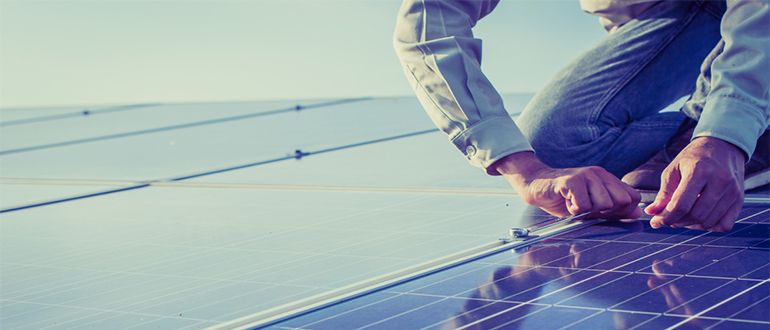
Renewable energy has seen some fantastic advances over the years, and collectively they’re already beginning to fast overtake fossil fuels as a means of energy production. Solar power is amongst the most prolific forms of renewable energy, and showcases some brilliant examples of the benefits of renewables as a whole. While solar energy has a fantastic range of benefits for society and humanity in general – it’s ideal for remote communities in sparse locations, for example – it also has a number of specific benefits for commercial businesses and homeowners in the UK. Here, we’ve summed up the main ones!
August 22, 2023
As experts with commercial solar panels here at Low Carbon Energy, we’ve always been particularly focused on maintaining our policy of ethical buying, and the transparency of our supply chains.
Now, we know that supply chains are a crucial pillar for countless businesses across the UK, but it’s not uncommon for them to be seen as an inescapable concern, rather than an actively beneficial aspect of the business. This has been particularly true in recent years, where supply chain problems have been especially prominent. The Covid lockdowns, materials shortages that followed, and the 2021 Suez Canal blockage are all amongst some of the most high-profile examples, creating headaches for business owners.
With all this intensive management, it’s hardly surprising that some business owners have been reluctant to invest much more time, energy and money than absolutely necessary into improving the sustainability of their supply chains, given that many have been demanding so much attention simply to maintain their baseline functions.
But while understandable, it’s a sentiment that could create major missed opportunities. Not only do more sustainable supply chains help to improve the long-term resilience of a business, but in an era where customers are more selective than ever, sustainability can be a crucial factor in distinguishing a business from the competition – which could make all the difference to who comes out on top.
Right off the bat, it’s worth mentioning that as many as 76% of consumers have said they would break off relationships with companies known for poor treatment of their employees, communities or the environment (and especially all three). In terms of carrot and stick, that’s the stick – but the carrot is that another study found consumers are willing to pay up to a 10% premium for products with greater supply chain transparency.
And in case you needed any more persuading, a study by EY found that 8 out of 10 of its respondents of supply chain executives had recently begun actively considering natural resources use, decarbonisation and ethical sourcing. Amongst them, about 32% had already noticed an increase in customer loyalty.
So, that’s all reason enough to re-examine your supply chains. The question is – what are the best ways to do it?
Right now, experts generally agree that here in the UK, a lack of in-house understanding of the importance of ESG issues within the supply chain is one of the biggest obstacles to increasing sustainability.
So with that in mind, one of the best ways to start improving the sustainability of your supply chains is by sitting down with your team to look at its benefits, and how it can tangibly help your business. Marketing wins with your customers are one obvious example, but sustainable practices are almost always cheaper and more efficient in the long-run too – not to mention making your business more resilient to market shocks. (Look no further than the current volatile situation with oil prices!)
Once you have ‘buy-in’ from your team, with everyone recognising it as an opportunity to make their lives easier rather than simply a mandate from management, you can start focusing on the next goal: using everyone’s skills to identify areas where you can optimise quality, price and carbon footprints in your procurement decisions.
The crucial thing is that if it’s going to work for your company, you’ll need to make sure that nobody thinks of it simply as a box-ticking exercise. Only with real commitment can you hope to make substantial change.
And if you’re thinking about doing that with your business energy supply, that’s exactly where we can help here at Low Carbon Energy. If you’re thinking of installing some solar panels for your own business, or if you’ve got any questions, you can count on us to have all the answers you need – our experts have over 30 years of combined experience, having helped SMEs and large corporations across a wide variety of sectors transform their business’ energy supply.
Each of our installations is bespoke, tailoring your solution on your specific energy profile, helping us to maximise carbon reductions and saving you thousands in energy bills. Feel free to look at our case studies for just a few examples of businesses which have reaped huge rewards from solar, such as Boeing and Irish Water. To find out how we can help you, feel free to give us a call today on 01282 421 489!
August 21, 2023
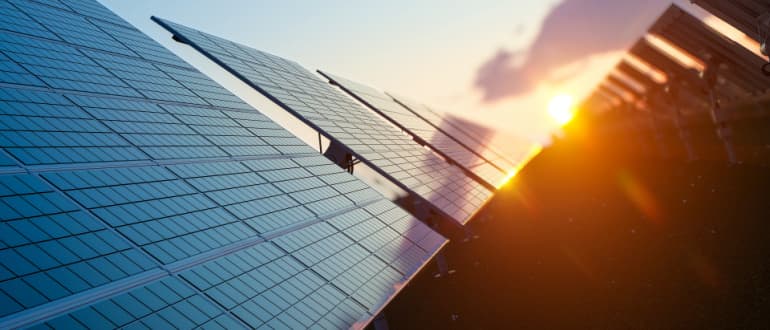
On a national scale, we’re in the middle of quite a big push on solar. Right now, the government’s main goal is to increase the UK’s solar capacity nearly five-fold to 70GW as part of wider plans to “power up Britain” with energy that’s cleaner, cheaper, and more secure.
We’re already making major headway in the domestic sector, and as a nation we may already be on track for completing 230,000 installations by the end of 2023, which would be a new record. What’s more, 99% of the UK’s solar capacity – both on the ground and on rooftops – has been installed since May 2010. That’s the equivalent of powering almost 4 million homes.
While these are unquestionably big strides however, they’re not enough on their own.
Put simply, we need a lot more solar panels to help us reach that 70GW target, and unused commercial roof space can provide the perfect home for them – making commercial solar a wealth of untapped potential. According to a senior figure within the taskforce, there’s “acres” of unused space on (for example) car parks and supermarkets which could be put to excellent use.
It’s estimated that the rate of rooftop installation has to double to help us effectively hit 70GW by 2035, so the taskforce is currently examining various incentives to help drive that progress forward. Cost reductions have previously been effective (somewhat unsurprisingly), so at some point in the future we may expect to see the resurgence of policies similar to the old Feed-In Tariff, or the Smart Export Guarantee.
In addition to this, the taskforce is looking at publishing a roadmap in 2024 – essentially an action plan to highlight exactly what they’re going to do, and when they’re going to do it. Key areas of focus will be on expanding the UK’s workforce and skills, and identifying opportunities to secure resilient supply chains within the global market.
Not long after that initial Solar Taskforce meeting back in May, the Climate Change Committee found that solar generation capacity needs to rise significantly faster for the UK to reach its carbon targets, according to a report it released back in June.
In fact, the report mentioned that the development of solar power so far is “significantly off-track”. While our renewable capacity did increase in 2022, it didn’t do so at the rate required to meet the government’s stretching targets.
However, there has been “encouraging” progress over the last twelve months, especially the commitment to publish a solar roadmap next year. The co-chair of the Solar Taskforce, Chris Hewett, has acknowledged the CCC’s findings, and has said that he’s confident that next year the report will reach “very different conclusions”.
In the meantime, if you’re looking at pushing ahead with your own solar plans, that’s exactly where we can help here at Low Carbon Energy. Our experts have over 30 years of combined experience, having helped SMEs and large corporations across a wide variety of sectors transform their business’ energy supply.
Each of our installations is bespoke, tailoring your solution on your specific energy profile, helping us to maximise carbon reductions and saving you thousands in energy bills. Feel free to look at our case studies for just a few examples of businesses which have reaped huge rewards from solar, such as Boeing and Irish Water. To find out how we can help you, feel free to give us a call today on 01282 421 489!
August 8, 2023
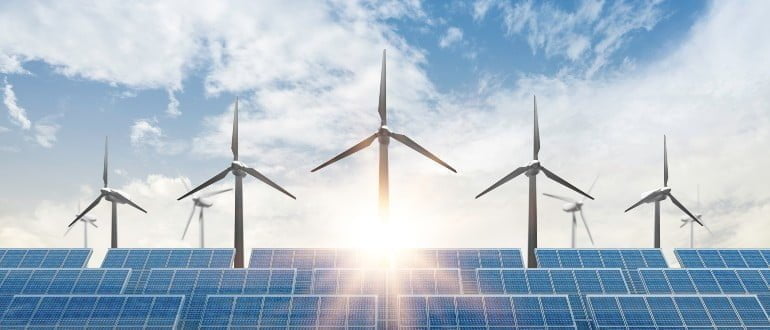
While it may surprise people to learn that just like any other piece of electrical equipment, solar panels can be slightly less effective in extreme temperatures, but the panels don’t just stop working as soon as it heats up outside. So what is too hot for solar panels?
Solar panels generally range between 15ºC and 35ºC. At 35ºC, they will still be delivering 97% of their maximum output, so they have to get. a lot hotter before they start to falter. They can get up to temperatures of 65ºC, but even at this extreme heat, solar panels will still function. At a temperature as high as 65ºC, they will begin to lose output efficiency
As solar panels can withstand temperatures of 65ºC, it’s very unlikely that solar panels will fail. Whilst efficiency will be lost, they should still function and provide energy. Solar panels are built to work from temperatures ranging between -40ºC to 85ºC, which means they should not reach either of these extreme weather conditions and it is almost impossible for it to get too hot for solar panels.
The most important factor for solar panels is too see sunlight. However, having solar panels at a temperature between 20ºC to 25ºC is generally considered to deliver the best efficiency. As you creep over 25ºC and into hotter weather, this is where you are likely to see small drops in efficiency.
Solar panels function by creating electricity from light. Sunlight is absorbed by the photovoltaic (PV) cells in the panels and converted into direct current (DC) energy. Then the DC energy is converted into alternating current (AC) which in turn is used to power your business’ appliances with electricity. The hotter the panels are, the more reduced the voltage they’re able to generate becomes, which can take them slightly less efficient for a short time. But to be honest, if we ever reach temperatures where it becomes a serious problem, your solar panels probably won’t be your top priority anyway.
Established trade association Solar Energy UK maintains that more solar power is created in the summer than any other time, regardless of the temperatures. So the idea that it will get too hot for solar panels or they’ll cease to function as soon as it starts to heat up outside is most certainly misinformation. Solar Energy UK Chief Executive Chris Hewett even stated: “Solar power works perfectly well in the Saudi Arabian desert – and the same panels are being installed there as on rooftops in Birmingham or a field in Oxfordshire”. So it’s safe to say if you’re considering solar panels for your business and you’ve been wondering ‘can solar panels get too hot’, the answer in the vast majority of cases is: no, they can’t.
So, now that’s cleared up, if you’re thinking of installing some solar panels for your own business, or if you’ve got any questions, you can count on us to have all the answers you need – our experts have over 30 years of combined experience, having helped SMEs and large corporations across a wide variety of sectors transform their business’ energy supply.
Each of our installations is bespoke, tailoring your solution on your specific energy profile, helping us to maximise carbon reductions and saving you thousands in energy bills. Feel free to look at our case studies for just a few examples of businesses which have reaped huge rewards from solar, such as Boeing and Irish Water. To find out how we can help you, feel free to give us a call today on 01282 421 489!
July 28, 2023
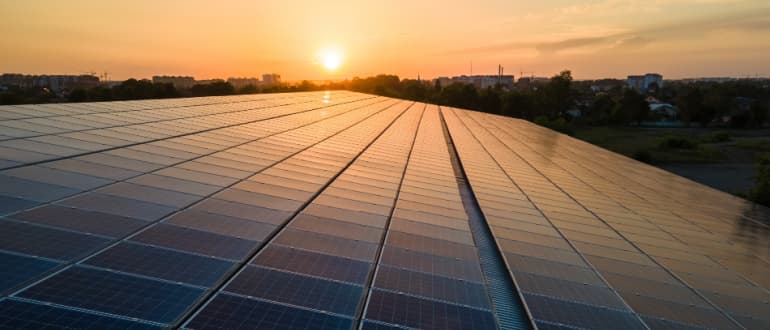
Roof-mounted commercial solar panel installations are the default for many businesses, especially those working in factories and other large commercial or industrial sites, as it allows them to effectively utilise a space that generally would have gone unused otherwise. The size of a roof-mounted installation is dependent on a couple of factors – not just how much available space you have on your roofs, but also your specific energy profile (which we can calculate on your behalf here at Low Carbon Energy, drawing on our own industry-leading expertise).
In case you’re wondering, you’re unlikely to need planning permission for your roof mounted commercial solar panel installation, as the majority of them fall under the category of Permitted Development. This varies slightly if you’re trying to have it installed on (or very close to) a listed building, but if that’s the case, we can always provide you with tailored support and advice as to your available options.
The requirements for ground mounted solar panels are slightly more stringent than they are for roof mounted installations – but only slightly. As you’d expect, ground-mounted installations have the potential to affect their immediate surroundings a bit more than their roof-mounted counterparts, and so most of the planning stipulations are focused on limiting the possibility for any negative aesthetic or practical impacts.
For example, the size of the array should be no more than 9 square metres, or 3m wide by 3m deep. Similarly, they have to be installed at least 5m from the boundary of a property. In the exact words of the government’s planning portal, a ground mounted solar installation “should be sited, so far as is practicable, to minimise its effect on the amenity of the area”. That may make them a trickier option for smaller businesses, but don’t forget our experts are always on hand to lend their expertise here at Low Carbon Energy.
In most cases, the choice will probably be fairly clear at a reasonably early stage. But if you need any specific advice, you can always count on us to help. We have over 30 years of experience, having assisted SMEs and large corporations across a wide variety of sectors transform their business’ energy supply.
Our installations are bespoke and tailored to your specific energy profile, and can help you to save thousands in energy bills. Feel free to look at our case studies for just a few examples of businesses which have reaped huge rewards from solar, such as Boeing and Irish Water. To find out how we can help you, feel free to give us a call today on 01282 421 489!
July 13, 2023
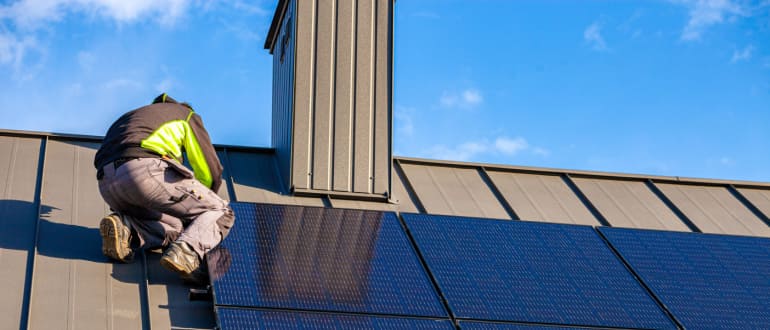
In today’s ever-more environmentally conscious world, it’s probably no surprise that so many people are increasingly worried about the environment. It’s particularly clear to see in younger generations, who will have longer to live in a world full of catastrophic climate events that are only growing in frequency and ferocity. This summer alone, we’ve already seen plenty of major climate events that are all key concerns in themselves – the lengthy heatwaves in Europe for example, or the wildfires causing surreal orange skies over New York.
It all serves to illustrate how climate change is not a distant and obscure concern anymore – the effects are real, and being felt right now. That’s having an understandably dramatic effect on people’s behaviour, and in turn, affecting their purchasing decisions. Specifically, more and more customers are re-considering their options when it comes to companies they choose buy from, which has made CSR and ESG a bigger priority for businesses than ever.
(Investing in eco-friendly energy alternatives like commercial solar panels is not only a great way to demonstrate to your commitment to mitigating your carbon footprint, but it’s also the perfect opportunity to gain a deeper understanding of climate anxiety and how it’s affecting the customer mindset when it comes to spending.)
Now, while this rise in climate-related anxiety is certainly a cause to be taken seriously – is it an objectively bad thing? Well, as it goes the answer is slightly more complicated than a simple yes or no. While anxiety of any kind can be awful for those experiencing it, and we don’t dispute that, climate anxiety, in particular, does seem to have some interesting effects on people – and not all of them are as negative as you might think.
To put it simply, climate anxiety is a sense of distress, fear or worry that’s linked to the effects of climate change. And, while many people in the UK are able to cope relatively easily with this steady thrum of worry, for young people especially, that worry can be a lot more intense. In fact, Save the Children found that 70% of the world’s children are worried about the planet they will inherit. So, while it’s not considered a diagnosable condition, mental health experts recognise that the culmination of mental health and climate change – two of the greatest crises of our time – is cause for concern.
As we’ve touched on above, it’s really not that surprising that climate anxiety is on the rise. When the news is almost always negative, and weather-based disasters like floods and wildfires get worse on a seemingly yearly basis – it can be frightening, particularly so for the younger people who stand to be most affected by the outcomes of climate change. But experts have suggested that while climate anxiety doesn’t feel great for us, it could actually be good news for the planet.
The first-ever study of UK adults and climate anxiety finds that while the overall scores of climate anxiety were relatively low, climate change worry is widespread, with almost half (46.2%) of participants being very or extremely worried about climate change. This study also highlights that a fear for the future could be the ideal motivator when it comes to triggering a necessary switch from our carbon-heavy lifestyles to more eco-conscious ones.
In other words, it could spark more determined efforts from the general public and businesses, and when combined with the UK’s pledge to reduce its greenhouse-gas emissions to Net Zero by 2050, that could set the world on a pathway to a cleaner, brighter and most importantly, greener future. Especially when renewable power like commercial solar panels and wind farms are finally kicking fossil fuels to the curb!
As we touched on earlier, climate worry and climate anxiety are going to have a major impact on customers and their buying habits for the foreseeable future – potentially even forever. This means they’re more likely to expect more from you as a business in terms of sustainability, so if you want to stay competitive, you’ll need to ensure that customers can see you doing your part to mitigate climate change. Changing supply chains and exploiting reuse opportunities from waste are both great ways to accomplish this, but they’re long-term goals. One way to effect change immediately is by creating your own clean energy through commercial solar panels. And that’s where we come in.
If you’re thinking of installing some solar panels for your own business, or if you’ve got any questions, you can count on us to have all the answers you need – our experts have over 30 years of combined experience, having helped SMEs and large corporations across a wide variety of sectors transform their business’ energy supply.
Each of our installations is bespoke, tailoring your solution on your specific energy profile, helping us to maximise carbon reductions and saving you thousands in energy bills. Feel free to look at our case studies for just a few examples of businesses which have reaped huge rewards from solar, such as Boeing and Irish Water. To find out how we can help you, feel free to give us a call today on 01282 421 489!
June 23, 2023
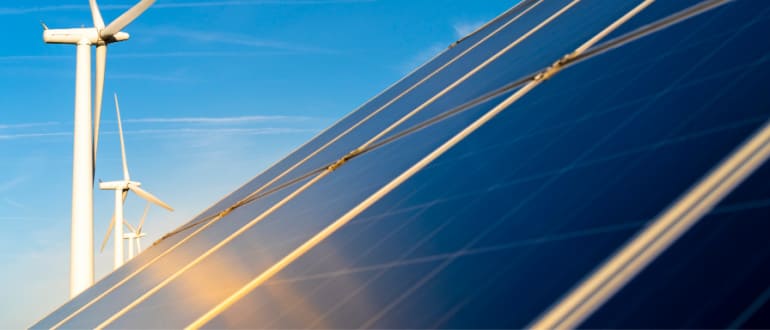
Net Zero remains a critical item on the UK’s climate agenda, and it’s never been more important. Back in 2019, the British government passed a law mandating the UK to achieve Net Zero greenhouse gas emissions by 2050, effectively ending our contribution to climate change.
In case you need a quick refresher on the concept behind Net Zero, it’s essentially a more practical alternative to the idea of reducing the UK’s emissions completely (an incredibly difficult goal that’s widely seen as unrealistic). Instead, this alternative refers to effectively taking as many emissions out of the atmosphere as we put into it, so that our net emissions effectively come to zero. (Hence, Net Zero.)
Here at Low Carbon Energy, we already have decades of experience in helping organisations across the UK reduce their carbon footprint with commercial solar panels, bringing them a significant step closer to achieving their Net Zero ambitions. Not only that, but with our decades of experience and national reach, in 2022 we were invited to join the Advisory Business Group (ABG) serving a pivotal role in putting together a key report aiming to help the government devise the best ways to help the UK reach Net Zero. Here’s what it’s all about.
In August of 2022, the Climate Change Committee convened an Advisory Business Group, comprising senior leaders from a range of sectors, regions and experience.
We were invited by the East Lancashire Chamber of Commerce to get involved, and happily accepted. Working closely together with other business leaders, we’ve been contributing our expertise and insight into the different ways in which UK businesses can accelerate progress towards Net Zero. During the process, we’ve been identifying any key barriers, and identifying any opportunities that could be unlocked.
All this collected insight has been collated into a comprehensive report drawn up for the CCC to submit to the government. It will also be presented by the ABG to businesses, policymakers and political parties, essentially serving as a manifesto for strengthening business action on Net Zero.
The report itself mainly focuses on the “Five I’s”, which together comprise a new framework for action. These Five I’s are:
Within the report, we join the other authors in examining each of these in turn, exploring the ways in which they can unlock the potential of a close partnership between the government and the business community. Along the way, we also look at some of the key factors that can drive action, such as ethical obligations and shareholder pressure.
Here’s a quick summary of some of the report’s other key conclusions:
With the final draft of the report complete, it’s now been sent to the government’s Climate Change Committee for consideration. The CCC will review the report firsthand, and then use it to make final recommendations to the government.
So that’s how things are progressing on a national scale – the question is, how can we help you achieve your own Net Zero ambitions? Our experts have over 30 years of combined experience with commercial solar panels, having helped SMEs and large corporations across a wide variety of sectors transform their business’ energy supply.
Each of our installations is bespoke, and we tailor your solution on your specific energy profile, helping us to maximise carbon reductions and save you up to thousands of pounds in energy bills. Feel free to look at our case studies for just a few examples of businesses which have reaped huge rewards from solar, such as Boeing and Irish Water. To find out how we can help you, feel free to give us a call today on 01282 421 489!
June 16, 2023
One criticism that’s been levelled at the government in recent years is that its stance on the renewable sector has been, at best, inconsistent – and that’s not been helped by the constantly rotating door of 10 Downing Street. Whether you like or loathe Boris Johnson, even his critics conceded that his green ambitions were apparently sincere (even if the execution sometimes left a lot to be desired). Liz Truss on the other hand was – to put it politely – generally very pro-fossil-fuel, which is probably to be reasonably expected of a politician who spent several years working for Shell.
Right now, her successor Rishi Sunak seems to fall somewhere between the two – there are few signs of open hostility, but as Chancellor he was apparently more inclined to see “the costs rather than the benefits.”
Optimists in the industry hope his stance may be softening in that regard, but even so, he’s inherited a long legacy of government flip-flopping, as various schemes are announced and ultimately discontinued, incentives launched and eventually revoked.
In Mr Skidmore’s report, he makes it clear that this overarching theme of inconsistency on green energy has led to a lack of support in the government (whose latest measures include a new electricity tax). That’s ultimately resulted in putting investment at risk. The report argues that a key priority now therefore should be to de-risk investment by committing to a consistent policy of support for the renewables industry, and – crucially – sticking to those promises in the long-term.
You don’t necessarily have to be an expert to surmise that cost is one of the most enduring obstacles to widespread take-up of solar panels, especially for small businesses and homeowners. So far, affordable loans are one of the primary measures being trialled in an effort to resolve the issue. The government is considering the assessment of low-cost finance options from retail lenders, mainly aimed at homeowners and small businesses. That could then open the door for a greater uptake of solar.
It’s also worth mentioning that Caroline Lucas of the Green Party is strongly in favour of a more radical – but potentially effective – measure. Namely, for the government to legally mandate solar panels for all suitable new build homes. The argument is that this will increase the value of the property, and help to reduce the energy expenses of anyone living there.
As Mrs Lucas points out, 80% of the buildings that will exist in 2050 have already been built, but that still leaves 20% – so there’s a good opportunity to make the most of it. And the public seems to agree: a YouGov poll conducted in December 2022 found that 80% of people across the UK would support the government introducing regulations to make solar panels are the default on all new houses.
The finer details have yet to be set in stone, but it’s definitely all working towards a single aim: ensuring that the markets, finance and support exists to ensure that solar is accessible for all.
Battery storage has always been a key consideration for businesses and homeowners – helping them to make the most of their stored electricity – but it’s now increasingly becoming a more significant consideration on a national scale too, especially since the publication of the report.
Essentially, under the current rules, there are still some minor obstacles that prevent them from being as widespread and affordable as they could be. For example, right now, if a battery were to be installed retrospectively, then it would still be subject to VAT. Consequently, prominent groups like the Environmental Audit Committee are now urging the Chancellor to extend a VAT discount to household battery storage, which would help to drive costs down further.
There are a couple of other encouraging recent measures too – the UK Infrastructure Bank has recently announced plans to invest £200m into short-term and long-term electricity storage. The hopes are that this will attract further private capital into the sector.
Infrastructure comprises one of the key priorities for the government’s newly-created solar taskforce. Specifically, the body needs to address the need for major improvements in network capacity and management.
This is a particularly pressing issue that’s already having a tangible effect on lots of current projects – some larger projects are unable to connect to the grid, and in a significant number of cases, waiting times for the necessary upgrades are extending well into the 2030s. That’s holding back the UK’s renewables economy, making it harder to people to cut their bills, and for Britain as a whole to reach Net Zero.
There are a couple of specific issues that are contributing to the overall problem with infrastructure. Crucially, it’s about a lack of actual physical infrastructure like cables and transformers. The poor availability of national data on solar PV generation doesn’t help, particularly when it comes to small-scale installations.
There are some positive steps being taken to resolve the issues though. As we touched on above, the newly-formed joint taskforce is already hard at work looking at solutions. What’s more, the Electricity Networks Commissioner Nick Winser has said that he intends to halve delivery times for new infrastructure (due in June), which has been very welcome news for lots of industry observers.
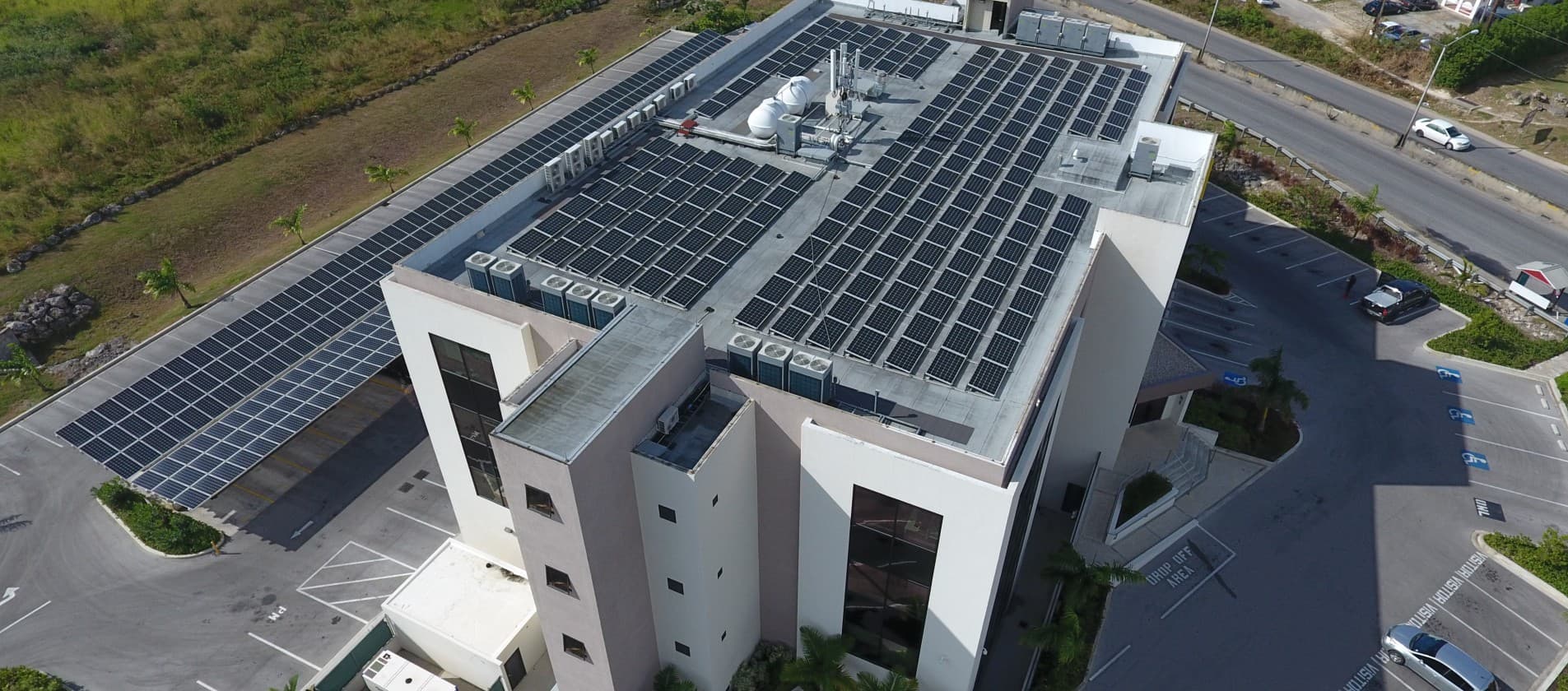
Evolving technologies generally require (and create) new skills, and it’s no different when it comes to solar. In fact, it’s an industry that’s growing at a particularly rapid pace, making it all the more crucial for the government to make sure that the UK sector’s workforce grows in line with demand. Installers, technicians and engineers are obviously critical to installing the actual technology and keeping it in optimal condition, but the industry also needs support staff to handle the sales, administration, and ongoing management of large and small projects alike.
It’s not an issue unique to the UK – it’s one that the EU as a whole is currently grappling with, too. There are various options currently being explored: industry resources are strongly recommending that employers tap into what they’re calling local workforce development resources, such as training providers and community colleges. Others point to the potential of expanding work-based training programmes that facilitate on-the-job training for newcomers to the industry, alongside more established apprenticeships.
Solving any one of these problems alone will be a huge step towards finally reaching Net Zero – but with enough creative thinking, innovation and political will, all of them should be well within our means. And achieving that will bring a true solar revolution.
Personally, we’re committed to doing our part here at Low Carbon Energy, by helping you enjoy the fantastic range of benefits from commercial solar panels. Our experts have over 30 years of combined experience, having helped SMEs and large corporations across a wide variety of sectors transform their business’ energy supply.
Each of our installations is bespoke, and we tailor your solution on your specific energy profile, helping us to maximise carbon reductions and save you up to thousands of pounds in energy bills. Feel free to look at our case studies for just a few examples of businesses which have reaped huge rewards from solar, such as Boeing and Irish Water. To find out how we can help you, feel free to give us a call today on 01282 421 489!
May 15, 2023
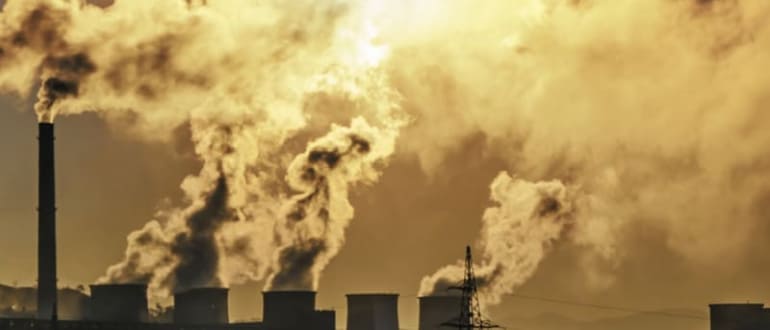
Unfortunately, as far as the majority of observers are concerned, it’s failed to do so. It also doesn’t go far enough to boost energy security, or lower bills for the British public. If the critics are right – and it has to be said, the science is on their side – then the government will have a range of consequences to contend with in the very near future. For starters there will be legal implications for falling short of their commitments, and there are also concerns that the UK will forfeit its status as a world leader on climate action. And that’s to say nothing of the environmental consequences themselves.
Now, we should say at this point that it’s crucial not to get too pessimistic. It’s worth noting, for example, that the government has recently formed a joint taskforce to “power up solar energy” – which was a key recommendation of the Chris Skidmore report. That’s good news if you’re considering commercial solar panels for your own business! Before we get into that though, let’s stick with examining the government’s climate strategy, and exactly why so many commentators aren’t happy with it.
The government’s new strategy contains a number of action plans across an array of specific areas. First released in late March, it’s worth highlighting that this one comes nine months after the High Court ruled that an earlier version breached legally binding emissions targets. So this is the government’s second try.
It details how the country will cut emissions by 68% by 2030, and reach Net Zero by 2050. The 1000-page report includes:
Notably, it also covers support for nuclear energy, a heat pump subsidy scheme, and money for offshore wind farms. (For the time being though, a ban on onshore wind remains in place.)
However, the big problem is that by the government’s own admission, these will only achieve 92% of the emissions cuts required to meet its 2030 Net Zero target. And 8% might not sound like much, but neither does 1.5°C – and we all know how important that is!
To be honest – negative. One particular Good Law project spokesman said that the government has failed “a moral and legal duty” to get the policy right.
The main issue that most critics have identified is that essentially, the plans don’t go far enough. They might have been an excellent step at some distant point in the past, but in today’s rapidly accelerating climate emergency, they’re not drastic enough to meet the requirements of the situation at hand. Crucially, they rely largely on existing government commitments, and won’t benefit much in the way of new dedicated funding.
There’s also the fact that global competition is fiercer than ever, and if the UK’s commitment stalls, it risks becoming less competitive and therefore being left behind. For one good example we need look no further than America and US President Joe Biden’s $370bn green plan to lower energy costs and accelerate private investment in green energy, as part of the president’s ‘Inflation Reduction Act’, announced by the White House last autumn. The fear is that this could lure UK’s key green industries overseas.
Some industry observers have pointed out that it was only a few months ago that Prime Minister Rishi Sunak was promising strong action on climate change at international talks – and this plan falls way short of that. Others have highlighted that companies are making decisions right now, not in six months’ time, so the government cannot afford not to fully deliver on its promises. (A recent Guardian piece hinted that lobbying may well have played a role in watering down these climate plans; in 2022, the Conservatives received £3.5 million from entities linked to climate denial and the fossil fuel sector.)
The UK is still current a world leader in climate action. But for how long?
Amongst all the (understandable) concern caused by the government’s widely-decried climate strategy, it’s still worth noting that there have been some positive steps forward. One such positive step has been the creation of a joint solar taskforce, which was one of the key policy recommendations set out in Chris Skidmore’s Net Zero Review. For this, the government has partnered with Solar Energy UK, whose Chief Executive Chris Hewett has said he looks forward “to working closely with ministers to lay the path towards a five-fold increase in solar capacity in the UK by 2035 and addressing the key barriers to unlock the full potential of all scales of solar and energy storage”.
Notably, he also pointed out the “need for major improvements in network capacity and management, and support for skills and training and ensure that finance and markets are available for solar to be accessible to all businesses and individuals.”
That’s certainly an aim we can get behind here at Low Carbon Energy. With more than 30 years of combined experience behind us, we have a long history of helping our customers make huge cost savings and reduce their carbon footprint through the use of commercial solar panels.
Each of our installations is bespoke, and we tailor your solution to your specific energy profile, helping us to maximise carbon reductions and save you up to thousands of pounds in energy bills. Feel free to look at our case studies for just a few examples of businesses which have reaped huge rewards from solar, such as Boeing and Irish Water. To find out how we can help you, feel free to give us a call today on 01282 421 489!
April 27, 2023