

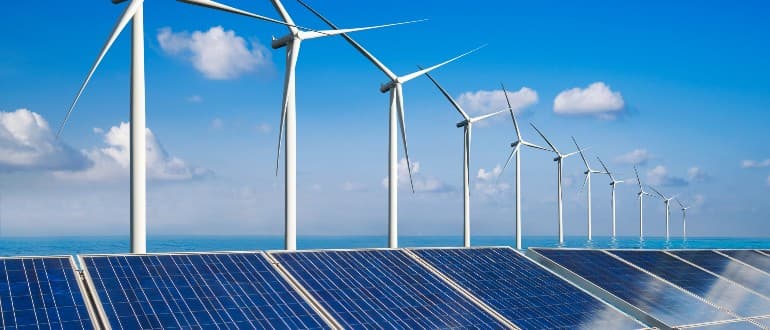
August 25, 2026
Looking to keep yourself up to speed with the latest solar news and developments? You’re in exactly the right place. Here, we cover everything from our own company updates and exciting project announcements to breaking industry news, emerging solar technology and important developments across the renewable energy sector.
Whether you’re researching solar for your business, keeping an eye on the latest industry trends or simply looking to understand how solar energy is evolving, our articles are designed to give you useful, straightforward information. You’ll also find in-depth guides, expert insights and practical advice to help you make informed decisions and get the most out of your energy technology.
2023 marks the first ever annual drop in the use of coal, oil and gas to produce electricity. (Notably, the steepest fall outside of a global recession or pandemic.) It’s pretty big news, largely because generating electricity is widely agreed to be the single biggest contributor to global warming. Cutting out coal, oil and gas in the sector is hugely important to help us as a species avoid the most devastating effects of climate change.
So, what exactly is going on?
International experts agree that the world is experiencing a boom in renewable energy right now, and one that’s mainly being spearheaded by China – with plenty of excellent progress being made across a number of other countries and continents, too. The combined forces of wind and solar are particularly influential – together they now produce 12% of the world’s electricity, or about 1/8th of the total energy mix.
Globally, solar grew by 24% last year, which is significant enough to theoretically meet the annual demands of a country the size of South Africa. And it’s worth highlighting that the UK remains a world leader in wind generation – in 2022, enough wind turbines were added to our energy mix to power almost all of the UK.
Now, in the interests of full disclosure, Ember did highlight that the use of coal edged up too. That’s because overall demand for electricity grew in 2022, and not all of it was supplied by clean sources. The hydrogeneration and nuclear generation sectors each experienced issues – several major French generators were offline, and multiple rivers in Europe were too low for hydrogeneration to happen on a practical scale. However, elsewhere, countries like Brazil managed to successfully capitalise on their hydrogeneration potential, which allowed them to cut their use of gas by 46%.
As we move further into 2023 though, the Ember report predicts that the growth of wind and solar will exceed the global rise in demand for electricity – possibly allowing us to finally turn the tide against fossil fuels.
In short, commercial solar panels will continue to become an even more economical way of generating electricity. Having become continually cheaper almost year-on-year for the past decade, they now stand poised to benefit from the global economy becoming even more favourable towards them.
If you’re planning on installing commercial solar panels on your own premises, that means that it’s never been easier to enjoy the many and varied range of benefits they offer. First, there’s the significant savings they can offer you on your energy bills. Crucially though, they also offer energy security – allowing you to generate your own power on-site means you’re less reliant on the National Grid, which insulates you from the peaks and troughs of the market.
There’s also the cultural shift. As the climate emergency becomes more pronounced and renewables become increasingly widespread, customers and potential investors will tend to be most strongly drawn to the businesses and organisations that demonstrate a more proactive approach to cutting their climate footprints – and commercial solar panels provide the perfect way to do that.
Those are just a couple of key advantages of solar – you can check out our previous post to find out more!
And if you’re in the midst of considering plans for commercial solar panels, you’re in exactly the right place. Our experts have over 30 years of combined experience, having helped SMEs and large corporations across a wide variety of sectors transform their business’ energy supply.
Each of our installations is bespoke, and we tailor your solution on your specific energy profile, helping us to maximise carbon reductions and save you up to thousands of pounds in energy bills. Feel free to look at our case studies for just a few examples of businesses which have reaped huge rewards from solar, such as Boeing and Irish Water. To find out how we can help you, feel free to give us a call today on 01282 421 489!
April 19, 2023
However, it’s not a panacea by any stretch of the imagination. Inflation is easing, true, but with the way things are at the moment, that simply means prices are rising less swiftly. And businesses without access to commercial solar panels will have plenty to think about too; this year’s Spring Budget has given no indication that business energy support will continue on the same scale as it will on domestic, prompting worries from some owners on their prospects of long-term survival.
Quite simply, a huge number of business owners, big and small, are concerned that the Spring Budget does not give them the support they need to stay viable, and the government is failing to recognise the immediate concerns over rising energy bills. Specifically, the Chancellor has been very clear about an energy price guarantee for households, but so far he hasn’t mentioned one for businesses.
That’s particularly worrying when lots of companies are in such dire situations already – many hospitality bosses, for example, have already stopped paying their own wages to keep their businesses afloat. Sacha Lord, the night time economy adviser for Greater Manchester, pointed out that the government’s phasing out of this business energy support will likely add an approximate £4.5 billion to the nation’s commercial energy bills, which is going to put small businesses in particular under unrivalled pressure.
It’s obviously difficult to say for certain without being privy to the inner workings of government, but as far as anyone can tell, unfortunately the answer to that question currently seems to be no.
It’s worth saying that the Chancellor did not specifically rule it out in his speech to the Commons on Wednesday. In fact, he didn’t mention them at all – and that in itself is giving countless business owners reason to think that any further support is likely not forthcoming, at least for the foreseeable future.
The Treasury did say in an accompanying document that businesses will be able to benefit from a discount on their bills. However, business leaders are saying that measure along is not nearly enough to keep their members out of financial difficulty in April, when the current raft of support ends.
The general feeling was perhaps summed up best by Kate Nicholls, the boss of UKHospitality, wo said: “It remains the case that we need to see urgent action on the market failures identified by Ofgem in its non-domestic review update yesterday. The current timeline of further action by the summer is not good enough.”
As to whether the government has more measures in its back pocket, or any still being finalised in conference rooms – well, that remains to be seen. Whatever happens though, you can always count on us here at Low Carbon Energy to remain focused on our core mission; helping you achieve greater energy security (and peace of mind) with commercial solar panels.
Increased energy security is one of the key advantages of commercial solar panels, as it can help your business to reduce your reliance on the National Grid, which can in turn help to insulate you from the more dramatic shocks in the market. (Especially the unprecedented peaks and troughs of recent years!)
Our experts have over 30 years of combined experience, having helped SMEs and large corporations across a wide variety of sectors transform their business’ energy supply.
Each of our installations is bespoke, and we tailor your solution on your specific energy profile, helping us to maximise carbon reductions and save you up to thousands of pounds in energy bills. Feel free to look at our case studies for just a few examples of businesses which have transformed themselves with solar, such as Boeing and Irish Water. To find out how we can help you, feel free to give us a call today on 01282 421 489!
March 27, 2023
It makes sense to start with the most intuitive option! Many would regard ESG reporting as being naturally in the domain of the Chief Sustainability Officer, or equivalent – which is fair, as it does make up a key part of the brief. After all, most CSOs are primarily in charge of implementing sustainability initiatives, and ESG reporting is closely tied to their progress, so it makes sense for the CSO to take on overall responsibility for that too.
It can also allow for a more flexible and dynamic approach to achieving sustainability objectives, as the CSO’s background and expertise gives them a headstart on understanding the nuances in ESG reporting, such as how the information can be best collected and presented, especially to a lay audience.
With their knowledge of the practicalities and implementation of sustainability strategies, they’re also arguably best placed to respond and adapt to any issues that the collected data might have identified, and take internal action to rectify them accordingly.
Notably, there are some quite high-profile proponents of the idea that CFOs should be responsible for ESG reporting, including the executive director at Antithesis Group, a British environmental consultancy. Their argument is that financial data is intrinsically linked to ESG reporting. And what’s more, the rise in mandatory reporting means that for many companies, the CFO increasingly seems like the most intuitive choice to handle it.
It’s also worth noting that the Chief Financial Officer is the person best placed within the company to support investment for sustainability programmes. Plus, where any large sums of money are involved, some organisations find it makes the most sense to expand the CFO’s brief to taking a more hands-on role in implementing the company’s broader sustainability vision.
It’s easy to see why so many CEOs choose to take an active role in ESG. They have the ultimate authority over the direction of the organisation, and they’re a defining influence on the overall company culture, setting expectations from the top down. In the eyes of many, that makes CEOs the very best people to set the broader sustainability vision, especially since they often choose to take personal accountability for the results.
The thing that sets the CEO’s influence apart is that it’s all-encompassing – as the most senior figure in the company, the chief executive has the power to change the mindsets of company leadership in the way that their peers (such as CSOs) might sometimes find tricky. They can also eliminate the most common types of red tape that can sometimes be associated with sustainability strategies, such as requiring multiple levels of approval to sign off on specific initiatives.
This is a solution that might not work for every business, but it’s a strategy that’s notably being utilised to great effect by BUPA, the British private healthcare giant. Its sustainability goals are handled by a Sustainability Steering Committee, which is chaired by its chief sustainability officer Nigel Sullivan.
However, the thing that sets it apart is that BUPA has made sure that representatives from each of its market units are all sitting on its Sustainability Steering Committee. In other words, more or less all of their employees are represented on the SSC. That has the end result of embedding sustainability deep into the company culture from the ground up – which many proponents argue is even more effective than a top-down strategy that’s dictated solely by senior leadership.
We personally don’t have strong opinions on any particular option here at Low Carbon Energy – like so many of these things, it’s all about finding the precise solution that works best for you. We’ll leave you to make the final decisions!
As for us, we’ll focus on what we do best – helping you reach the next key stage in your sustainability strategy with commercial solar panels. Our experts have over 30 years of combined experience, having helped SMEs and large corporations across a wide variety of sectors transform their business’ energy supply.
Each of our installations is bespoke, and we tailor your solution on your specific energy profile, helping us to maximise carbon reductions and save you up to thousands of pounds in energy bills. Feel free to look at our case studies for just a few examples of businesses which have reaped huge rewards from solar, such as Boeing and Irish Water. To find out how we can help you, feel free to give us a call today on 01282 421 489!
March 20, 2023
According to Bloomberg Intelligence, solar is likely to be the fastest-growing energy sub-segment in 2023, with demand set to increase anywhere between 20% to 30%. This follows a record-breaking rise of 40% in 2022, when industry revenues increased about 50%. In fact, it’s estimated that global solar energy generation will (for the first time), pass a terawatt by the end of 2023. And of course, the cost of solar is likely to get cheaper in the future as the efficiencies of the technology improve.
Now, the International Energy Agency has already announced that it’s confident solar energy will surpass coal power by 2027, in part due to the ongoing energy crisis, and the illegal war in Ukraine having an impact on the wider global economy.
A recent IBM survey found that 71% of people want to work for a company that makes a positive difference to the world, demonstrating that there’s a growing sense of personal responsibility amongst the population that plenty of people are now extending to their careers too. (It certainly lines up with what we’ve found here at Low Carbon Energy, meeting the applicants who’ve put themselves forward for recent job openings at our company!)
This career aspiration appears to be part of a gradual behavioural shift – more than a third of global consumers are willing to pay more for sustainability, and 32% of millennials are shifting their behaviours to be substantially more sustainable. All this goes to show that this growing sense of climate responsibility and passion about the wider world isn’t just being felt in the UK; there are also swelling numbers of international young climate activists too, determined to spur our global leaders on to make a change.
Somewhat unsurprisingly, just as countless consumers are making changes to their own lifestyles, they’re ever-more demanding of companies too. In particular, consumers are demanding that large corporations place a greater focus on Net Zero for their corporate emissions, especially across their extended global supply chains and the associated networks of businesses they cover.
As experts have pointed out, this isn’t something that can be done simply with spreadsheets and emails. Instead, it needs sophisticated tools and big data approaches to collate and manage datasets, in order to make informed decisions on how to reduce this carbon footprint.
Consumers are also becoming more wary than ever of greenwashing – a term used to refer to the practice of making products, services or entities more environmentally friendly than they actually are. Ryanair, Innocent Drinks, Hyundai, Pepsi Lipton and Volkswagen have all been caught doing it, which in many causes has resulted in lasting damage to their reputations. As they’re all now learning, consumers have long memories – and they may forgive, but they don’t necessarily forget.
All that goes some way to demonstrating why there’s never been a better time than now to make firm climate commitments in the eyes of your customers and investors – and solar panels are a great way of doing that. If it’s something you’re already considering, that’s where we can help. Our experts have over 30 years of combined experience, having helped SMEs and large corporations across a wide variety of sectors transform their business’ energy supply.
Each of our installations is bespoke, and we tailor your solution on your specific energy profile, helping us to maximise carbon reductions and save you up to thousands of pounds in energy bills. Feel free to look at our case studies for just a few examples of businesses which have reaped huge rewards from solar, such as Boeing and Irish Water. To find out how we can help you, feel free to give us a call today on 01282 421 489!
February 24, 2023
Essentially, one of its crucial aims is to highlight the risk of what would happen if we don’t move fast enough. And in the words of Chris Stark, chief executive of the Climate Change Committee, “to have that from a Conservative MP is very significant indeed.”
However, it’s not just 323 pages of dire warnings – the report also takes care to expound on the numerous economic opportunities posed by a Net Zero economy. The UK has been making significant strides towards that vision, but we’re not quite there yet. In his report, Mr Skidmore makes a total of 25 recommendations that he’s urging the government to achieve within the next two years. One of those focuses on the UK’s solar capacity, which ideally needs to increase five times over by 2035. That’s where our nation’s commercial solar panels will play a major role.
To be honest, not too bad at the moment – we could just be doing a lot better. Britain successfully installed 556MW of new solar capacity within the first six months of 2022. That’s an 80% growth in new solar PV installations compared to the same period in 2021.
That now puts our solar capacity at over 15 gigawatts (as of July 2022), which is roughly 2% of the global solar capacity (more than 716.2GW). Granted, that doesn’t sound like too much, but it still puts us in the world’s top 15 solar-producing countries. And on a planet of almost 200 nations, that’s not bad going.
Most of our national growth is being driven by residential installations, ground-mount sites, and large commercial rooftops. That marks a major change from our pre-pandemic years, when there was a more relaxed demand. In these post-pandemic years though, there’s been a renewed focus for business owners on making the most of their commercial rooftop space.
That reaction has partially been sparked by the demonstratively stricter standards to which modern consumers hold brands today. And of course, there’s the unfolding energy crisis that’s been deepened by Russia’s illegal invasion of Ukraine, prompting businesses across the world to look for alternative ways to gain energy security.
All of which makes it fairly easy to believe Chris Hewett, the Chief Executive of Solar Energy UK, when he says that “in a time of economic crisis, growth in UK solar has more than doubled in 12 months, and the trend will continue.”
So then, that’s the situation as it stands. What’s next?
While we’ve made decent enough progress so far, we’ve still got quite a bit to buckle down on.
According to Mr Hewett, the economics of solar development had been reaching a “tipping point” before the Russian invasion of Ukraine, but now the subsequent war and energy crisis has made the technology unquestionably economic in the UK, as we seek to untangle ourselves from our nation’s reliance on Russian oil. He’s now confident that the UK’s solar and storage capacity will double in the next few years, growing to account for about 10% of our energy mix by 2025.
In the more immediate future, the Solar Power Portal says that rooftop solar looks likely to see 30% growth year-on-year. Combine that with the probable 1GW we’ll get from ground-mount solar, and that could bring us easily up to 2GW growth in 2023. That’s encouraging progress, and puts us well on the way to reliably adding to our capacity with each passing year.
However, there are a couple of major obstacles that the industry is still working out how to tackle. Chiefly amongst these are grid constraints, land use debates, and market structures. Right now, grid connection dates and transmission projects are out into the 2030s, which is slowing down the addition of clean solar power to the energy mix. There are also concerns surrounding overdevelopment, where solar farms can end up having a major impact on communities. (All that’s been outlined at the recent Solar Finance and Investment Europe conference earlier this month.)
And while our overall progress towards our energy ambitions may be encouraging, some industry experts are still worried about the current pace of the government’s response. In particular, there are concerns about the “stop-start” policies on Net Zero, especially from people like Tanya Steele, the chief executive of the World Wide Fund for Nature (WWF). Now, Ms Steele wants to see the government “deliver on its promise to meet the Net Zero target with a clear strategy”.
She’s not alone. Various high-profile groups and commentators are joining Mr Skidmore in calling on the government to provide demonstrable pledges and actionable strategies on how to implement these 25 recommendations. Time will tell how the government will respond.
In the meantime though, there’s nothing stopping you from transforming your own business energy supplies with commercial solar panels. As Chris Hewett pointed out, the technology has never been more economical, and in fact the cost of solar panels has dropped by over 80% in the last decade.
And if it’s something you’re already considering, that’s where we can help. Our experts have over 30 years of combined experience, having helped SMEs and large corporations across a wide variety of sectors transform their business’ energy supply.
Each of our installations is bespoke, and we tailor your solution on your specific energy profile, helping us to maximise carbon reductions and save you up to thousands of pounds in energy bills. Feel free to look at our case studies for just a few examples of businesses which have reaped huge rewards from solar, such as Boeing and Irish Water. To find out how we can help you, feel free to give us a call today on 01282 421 489!
February 14, 2023
Let’s start with one of the most prominent recommendations from the report. Namely that Ofgem, the energy regular, should have its remit expanded to include the Net Zero target. It’s also pointed to nuclear power, emphasising the need for a ‘clear strategy’ and urging the government to focus on achieving the UK’s “baseload requirement”. It’s not been hugely specific in how the government should go about achieving these, only highlighting ‘new projects’ like ‘small modular reactors’.
Another area in need of a clear strategy is hydrogen, which the report says should have a 10-year delivery plan by the end of this year. That means the government has to make some firm calls on decisions for funding and technology, including the potential of hydrogen for use in home heating.
The report also discusses the idea that ministers should consider requiring fossil fuel companies to (in its own words) “take back” the CO2 that’s being produced from burning their fuels, and store 10% of it underground using carbon capture and storage technology.
Another one of the most prominent recommendations – and one with the potential to be one of the most controversial – is that the government should consider replacing the windfall tax on North Sea and gas with a Net Zero fund. That fund would then essentially ringfence the subsequent proceeds for investment in offshore wind, and other low-carbon projects.
Yes. To be honest, quite a lot. There’s nothing significant about how individual behaviour change from consumers could help, or how the government should go about encouraging these changes. (Let’s be honest, it’s quite an uncomfortable topic.) It also doesn’t get to the crux of the issue about home heating and insulation, which is a major factor in the current cost of living crisis, and a challenging but rewarding energy-saving opportunity that the government continues to largely overlook.
The report also doesn’t outline anything about specific onshore wind and solar farms, and makes no clear recommendations for targets on the UK’s solar capacity. It only goes as far as recommending that taskforces are set up for the deployment of them.
You can read the full report here, but in a nutshell: it’s not encouraging reading for the government, as it clearly demonstrates that we’re not on track with virtually all of our targets. Transport, housing, family or energy generation – they all need serious improvement.
On the upside, the review is at least unequivocal in its support for Net Zero, and makes its case clear by outlining clear economic benefits to the UK. If we’re able to get back on track with our targets as a nation, that could bring us significant rewards in the form of green jobs, health and wellbeing benefits, and economic growth to regions most in need of it. What’s more, it will help fulfil the UK’s international obligations that we’ve already made on the world stage.
The author of the report, outgoing Conservative MP Chris Skidmore, said that “the independent review ‘Mission Zero is the largest ever engagement with organisations, business and industry on Net Zero… [the review] is as comprehensive as I could make it – with over 130 recommendations in the 330 page report.”
“Above all,” he added, “I hope it demonstrates how to implement and deliver on Net Zero effectively, efficiently and in the most cost-effective way. [Net Zero] is a huge investment opportunity for the UK and I have sought to set out the positive case for why we should be making it easier to invest in sustainable and renewable energy.”
We can fully get on board with that last sentiment here at Low Carbon Energy – we’re fully aware of the advantages of solar panels, and why so many businesses across the UK are choosing them. And if it’s something you’re considering for your own organisation, that’s where we can help.
Our experts have over 30 years of combined experience, having helped SMEs and large corporations across a wide variety of sectors transform their business’ energy supply.
Each of our installations is bespoke, and we tailor your solution on your specific energy profile, helping us to maximise carbon reductions and save you up to thousands of pounds in energy bills. Feel free to look at our case studies for just a few examples of businesses which have reaped huge rewards from solar, such as Boeing and Irish Water. To find out how we can help you, feel free to give us a call today on 01282 421 489!
January 30, 2023
We had a record-breaking 2022 at Low Carbon Energy, celebrating some huge project wins and expanding our already great team. There’s no “New Year, New Us” to be found here – we’re carrying our dedication to our customers and partners through into the new year.
With tonnes of great projects already planned for 2023, and plenty more to follow, we needed to make sure we had the team to match. We recruited an additional 7 members of the Low Carbon family last year, and we’re not done yet!
If you want to be part of a growing, supportive team, head over to our careers page to have a look at the great opportunities we currently have available.
“Inspiring change today, that protects future generations.”
For us, this is more than just a slogan. It’s an ethos that’s woven into the core of the business, and is present in everything that we do.
Our solar PV systems don’t just save our customers money, but also help them to take a huge step in creating a more environmentally conscious, sustainable future. So far our systems alone have saved a whopping 15,570,000 tonnes of carbon from being emitted into the atmosphere.
We’re also big on giving back. We want to make sure that the change towards a more climate driven future is not just a pipe dream, but is something that’s tangible and achievable. That’s why we have partnered with Positive Footprints, a charity based here in Burnley, enabling us to go into local schools and talk to students and we work on ways to inspire the next generation to pursue a career in STEM.
It’s not just the planet we’re passionate about looking after – we care about our team, too. We are well aware of the importance of a healthy work / life balance, and our staff are as important an asset as any in our success, creating an atmosphere where they feel happy and valued is crucial for bringing the best out in them.
We offer a range of benefits to our team members, to support their growth and development in the workplace. These include: flexible working hours, training opportunities, a friendly and supportive environment and the opportunity to be a part of a rapidly expanding, current field of work.
An increasing amount of people are quitting their jobs to work for businesses aiding in the fight against climate change. A recent article published by Bloomberg states that number of “climate quitters” is growing, as people look for new opportunities in environmentally responsible businesses. If you’re looking for a new job, why not be a part of the change for good?
We’re currently recruiting some new members to fill some great roles here at Low Carbon, so head over to our careers page if you want to be a part of a growing business which not only does good for the planet, but for the people as well.
We look forward to hearing from you.
January 27, 2023
There are a lot of words you could use to describe the state of world affairs in the past few years. Major events like the pandemic and the Russian invasion of Ukraine have had countless far-reaching implications, and they’ve had a particularly dramatic effect on energy prices, which have soared and peaked at a dizzying rate.
That means the costs for businesses have been accordingly unpredictable, and resulted in their fair share of stress for owners. And while we might hope that this year will be the one where things settle down a bit, realistically there’s no guarantee that will happen.
That’s where commercial solar panels can provide such tangible benefits, especially in today’s uncertain times. Having solar panels installed on your premises gives you access to a cheap, stable supply of electricity, and one that will remain insulated from the many peaks and troughs of market rates. That means you save money, and get to enjoy peace of mind while you’re doing it.
To be honest, that already seems to be the headline in 2023. The growing climate crisis has been an item on the public’s agenda for years, and it’s more true now than ever before. It seems to be a particular concern in the UK. For evidence you need to look no further than a recent Nielsen IQ study, which says that 61% of UK customers (almost two thirds) feel that sustainability is more important to them now than it was two years ago.
It also found that 55% of UK consumers say that living sustainably is important for society, and that they try to make sustainable choices when they can. Crucially, the study also reported that 3 in 4 consumers (76%) want companies to take the initiative to reduce their environmental footprint.
One of the most important things to remember is that although the study is framed in terms of everyday consumers, the responses aren’t just the voices of your customers. They’re also those of your shareholders, investors, and potential business partners. All of whom will be judging your business against your competitors to find out how committed you really are to your green goals for 2023. Commercial solar panels are a physical, tangible demonstration of your commitment.
And that’s exactly where we can help. Low Carbon Energy! You can count on us to have all the answers you need – our experts have over 30 years of combined experience, having helped SMEs and large corporations across a wide variety of sectors transform their business’ energy supply.
Each of our installations is bespoke, and we tailor your solution on your specific energy profile, helping us to maximise carbon reductions and save you up to thousands of pounds in energy bills. Feel free to look at our case studies for just a few examples of businesses which have reaped huge rewards from solar, such as Boeing and Irish Water. To find out how we can help you, feel free to give us a call today on 01282 421 489!
January 23, 2023
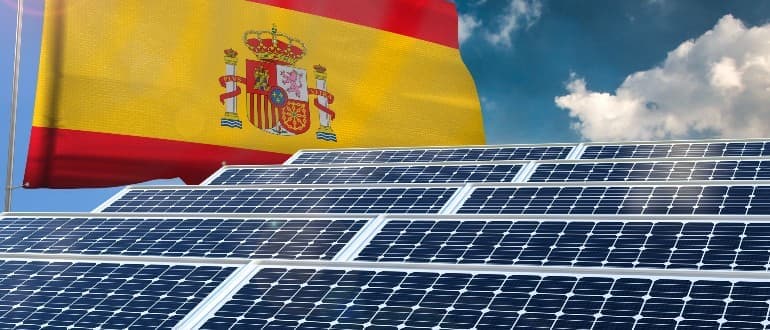
Spain is one notable example – back in August, it instituted energy restrictions for public facilities and commercial properties (but not necessarily private homes). The international community has been observing with interest, and now some people are asking – could we start to see similar restrictions in the UK?
Back in early August, Spain brought in strict measures to save energy by limiting air conditioning in commercial businesses. The government order mandated that businesses like hotels, restaurants, shops and bars can lower their air conditioning no further than 27C.
Businesses are also now obligated to close their doors to stop cold air from escaping – by the end of September, any air conditioning or heated premises had to have an automatic door-closing mechanism installed to avoid energy waste. Lights were also to be turned off by 10pm. Obviously the air conditioning is less of a concern in winter – but businesses cannot turn their heating systems up further than 19C.
Similar measures were already in place for public buildings, and they’re voluntary in individual households for now.
The new plans are part of an EU agreement to cut gas use by at least 15% between August 2022 and March 2023, in an effort to reduce reliance on Russia’s gas in the wake of its invasion earlier this year. In fact, the European Commission is planning to end its reliance on Russian supplies entirely before 2030.
Spain isn’t as dependent on Russian energy supplies as other EU members (such as Germany), but has nevertheless agreed to a 7% – 8% reduction in gas usage. The measures will remain in force until November 2023.
There appears to be a significant amount of public support for the measures, however awkward they might be – according to the National Grid, energy usage in Spain fell by 5.3% on the first day in which the measures came into effect.
However, not everyone was happy about the measures. There was particular resistance in the tourism sector back in August, when the rules were first brought in, as there were concerns that it would make business premises too uncomfortable (and therefore unappealing) to tourists. Tourism makes up 12% of the Spanish GDP.
Francisco Salado, president of the Costa del Sol tourism authority, notably told Sky News that “We wanted satisfied tourists, not roasted tourists or those that are afraid to walk the dark streets.”
The regional leader of Madrid, conservative populist Isabel Díaz Ayuso, also rejected the new measures, saying “Madrid isn’t going to switch off.”
It’s certainly possible, but it’s difficult to say with certainty at the moment. It’s worth noting that Spain and the UK have different energy mixes – in 2020 alone, Spain imported just over 10% of its natural gas imports from Russia. In the UK meanwhile, Russian fossil fuels only made up 4% of the gas used in the UK in 2021.
However, although we’re not hugely reliant on direct imports from Russia, we do import a significant amount of our energy from European neighbours, so we’re far from immune to European market factors – any scramble for supplies by other countries on the continent threatens to have a knock-on effect on supplies to Britain too.
Now, there have been talks about energy rationing in the UK for months, and even though ministers have recently ruled out a national initiative like Spain’s over the winter, the unfortunate truth is that some people think the reality may end up being at odds with the government messaging.
When Liz Truss came to power on in early September this year, she was quick to state firmly that the government would not mandate energy restrictions on a national scale. Fast forward barely a few weeks to Rishi Sunak’s premiership, on the other hand, and there was already a planned campaign in the works to ask households to turn their thermostats down and use dishwashers and washing machines at times when national demand was lower.
The plan was being developed by the government’s Business Department, energy companies and National Grid. By early October though, the government’s official line was that there were now “no plans for the government to tell the public to reduce usage for the sake of our energy supplies”.
This may come as something of a comfort to the general public initially, but it’s also worth bearing in mind that there are still reports the National Grid is preparing for blackouts across the next few months. If there were gas shortages and the weather was severe, Britain may experience power cuts for around four days in January. There are also smaller, less large-scale plans to nudge the UK into using less energy this winter – some energy suppliers have already been asking their customers to reduce their electricity supplies in a bid to stave off the prospect of national blackouts.
Both the National Grid and the UK government are providing official reassurances that Britain is prepared for the prospect of energy shortages over the winter, but it does all go some way to underlining the importance of energy security. And while we may not be policymakers here at Low Carbon Energy, we can certainly help your business achieve energy security through a tailored commercial solar panel installation.
Our experts have over 30 years of combined experience, having helped SMEs and large corporations across a wide variety of sectors transform their business’ energy supply. Each of our installations is bespoke, and we tailor your solution on your specific energy profile, helping us to maximise carbon reductions and save you up to thousands of pounds in energy bills.
Feel free to look at our case studies for just a few examples of businesses which have reaped huge rewards from solar, such as Boeing and Irish Water. To find out how we can help you, feel free to give us a call today on 01282 421 489!
December 16, 2022
2022 has been an eventful year for energy. The world’s economies are still recovering from the lingering effects of Covid-19, and millions of people across the world have been faced with the impacts of severe economic shocks, with governments scrambling to find solutions. There’s no question that it’s been an uncertain and difficult period for countless people, especially those dealing with unstable governments, political deadlocks, and devastating wars.
However, there are rays of hope. A huge range of countries across the globe are still hard at work on their renewable energy infrastructures – with more businesses than ever choosing commercial solar panels, for example – and the sector’s global job market is expanding accordingly. Plus, the scenes on display this year at the ‘Conference of Parties’ (COP27), demonstrated that the public will for a greener future is stronger than ever – now it’s up to leaders to deliver it.
Obviously, it’s all quite a lot to keep up with. So here at Low Carbon Energy, we’ve rounded up five of the year’s biggest stories in energy. You may already be familiar with at least one or two…
You didn’t necessarily have to read the headlines to notice this one. The vast majority of the UK has felt the squeeze of rising energy prices in one way or another. As for why they’re all rising now… well, there’s no one single answer, rather a number of different factors combining to create a perfect storm.
The world’s major economies are still all climbing out of their pandemic-induced recessions, leading to a surge in demand for energy from historic lows. Northern Europe in particular had to deal with a notable cold winter, depleting international supplies – not helped by the fact that our storage capacities are especially low here in the UK. The situation was further complicated by concerns over increasingly intermittent gas supplies from Russia in light of its invasion of Ukraine in February 2022, prompting countries across the globe to try and reduce or eliminate their reliance on Russian oil and gas.
Notably, many have instead focused with even greater enthusiasm in improving their renewable energy capacity. Solar energy, for example, is well-known for its ability to provide greater energy security for individual homeowners and businesses – although obviously it’s a little more demanding to roll out on a national scale!
Despite the global energy prices (or because of it, depending on who you ask), the global renewable job market continues to grow at an incredible pace. According to a UN report released in September of this year, worldwide employment in the renewable energy sector reached 12.7 million last year. That’s a jump of about 700,000 new jobs in just the last 12 months.
Solar energy was identified as the fastest growing sector, providing 4.3 million jobs alone in 2021. That’s more than a third of the current global workforce in global energy.
In fact, we’re proud to be contributing to that ourselves here at Low Carbon Energy – we currently have a variety of roles available on our Careers page, and one of our recent posts goes into a little more depth about the kind of culture that new staff can expect here in our offices!
New capacity of generating electricity from solar, wind and other renewables increased to a record level across the globe in 2021, and grew even further this year. As far back as May, solar PV was already on track to account for 60% of global renewable power growth in 2022, followed first by wind and then by hydropower.
That excellent growth was actually faster than most people initially expected, with its strong performance boosted by fervent policy support from China, the European Union, and Latin America. The US solar industry didn’t perform quite as well, but American industry figures have made it clear that they’re determined to make up for that. This outstanding growth also makes it all the more competitive in the face of prices rises affecting natural gas and other fossil fuel alternatives.
However, while renewables have seen record breaking-growth this year, the unfortunate flipside is that fossil fuel emissions have reached record levels too. And that leads us neatly on to…
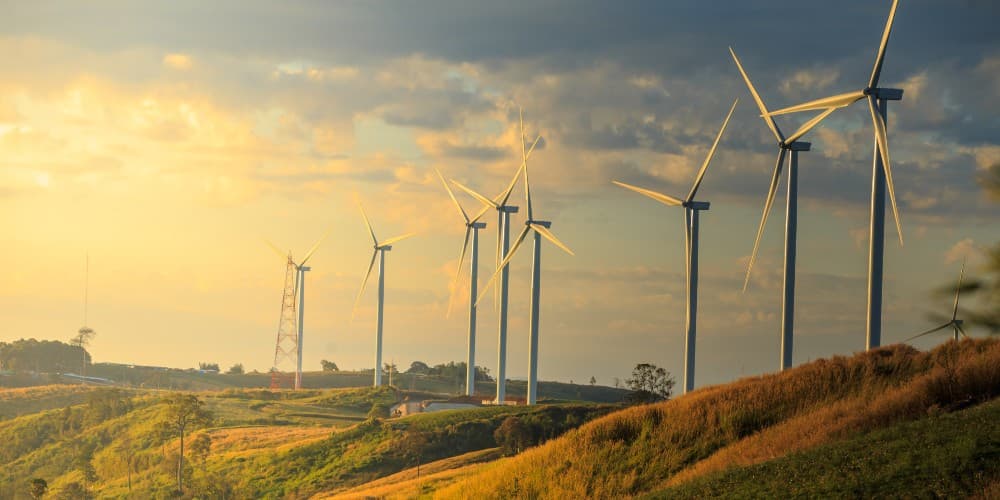
This year’s UN climate summit, the 27th Conference of All Parties (COP27), was a high-stakes affair, and its legacy is mixed. Bad news first – one of the first notable results is that we’ve now likely missed the target of limiting global warming to under 1.5 degrees Celsius. It sounds small, but experts are unanimous in their predictions that this will cause dramatic environmental consequences, with severe events like droughts, floods and crop failures more likely – especially in developing countries.
While the 1.5C target is not yet physically possible, observers have said that it’s almost certainly ‘politically impossible’. The event was notable for having large delegations of fossil fuel lobbyists in attendance – over 600 of them, more than any actual national delegation – and some of the top oil-producing countries and big emitters attempting to water down commitments on fossil fuels.
There were some small encouraging signs though. Brazil and Australia are now both making conscious efforts to rehabilitate their image as climate pariahs in the eyes of the rest of the world – especially Brazil, whose new leader Luiz Inácio Lula da Silva has pledged to reverse the worrying deforestation of his country’s Amazon rainforests.
And while this may mark a notable shift in global efforts from prevention to adaptation and mitigation, there has been a notable victory for developing countries…
For a long time, one of the most controversial recurring discussions at historic COPs has been that developed countries are causing the most environmental damage, but it’s the developing countries that are paying the price, given that so many are far more vulnerable to the effects of climate change. One stark example brought up at the conference was Pakistan’s recent devastating floods, which were demonstrably linked to climate change.
In recognition of this, the world’s richer countries finally agreed on a climate support package, or a ‘loss and damage fund’ to help rescue and rebuild poorer countries coping with the most dramatic instances of climate related disasters. It’s a massive achievement for those who’ve been asking for it since the very first COP back in 1992, and it’s worth noting that it’s also something that the UK’s own population supports.
However, America and European countries came in for heavy criticism, even though the deal was signed. That’s partially because oil producing countries stepped in to modify the language on the final text, weakening the ultimate commitment to 1.5C. The EU was also accused of making a U-turn at the 11th hour, which left campaigners unimpressed.
Still though, it was a big victory for developing countries, and while the outlook for some observers is (quite fairly) pessimistic, this achievement alone is enough to make COP27 the moment of a long-awaited triumph.
These are just some of the biggest stories of the year, but obviously the list is by no means exhaustive! With only a few weeks left in 2022, we can only hope that 2023 proves to be a less challenging year for the world – and in the meantime, personally here at Low Carbon Energy, we’re committed to doing what we can to making it a better place.
Our own passion about the climate crisis is a big part of what drives our mission to help you revolutionise your own energy supply.
Our experts have over 30 years of combined experience, having helped SMEs and large corporations across a wide variety of sectors transform their business’ energy supply. Each of our installations is bespoke, and we tailor your solution on your specific energy profile, helping us to maximise carbon reductions and save you up to thousands of pounds in energy bills.
Feel free to look at our case studies for just a few examples of businesses which have reaped huge rewards from solar, such as Boeing and Irish Water. To find out how we can help you, feel free to give us a call today on 01282 421 489!
December 9, 2022
You can find out more about the specifics of each role by following the links above. They’ll tell you a little bit more about what we’d expect from you – so here’s what you can expect from us!
As a multi-award winning accredited installer of solar PV solutions here at Low Carbon Energy, we pride ourselves on being both socially and personally aware. In terms of social awareness, that means using our expertise to help move towards a greener, brighter future by helping our customers transform their businesses with renewable energy. In 2023 we will support two local charities, the Pendleside hospice and Positive Footprints, as part of our “inspiring change” agenda
In terms of personal awareness meanwhile, it means paying close attention to the needs and skills of our staff, so that we can make our organisation a brilliant place to work. We take care to understand and support all our staff, and while we’re always looking to increase productivity and efficiency, we’re careful to ensure that doesn’t involve creating added pressure on our team.
“There’s absolute awareness from our management that there needs to be a work / life balance,” says Ged Ennis, managing director at Low Carbon Energy. “Our staff are immensely important to us – the right expertise and attitude is just as crucial to our success as any physical asset or technology. That’s why we’re so focused on creating a really exciting environment to be in, and why we put personal development at the heart of everything we do.”
• Flexible working is a given as long as it meets the needs of the company
• Funded training to improve your skills
• Opportunity to grow and be part of a rapidly growing business
• Joining a fast-moving, committed and happy workplace
We recently appointed five additional staff here at Low Carbon Energy, including a finance manager, project co-ordinator, technical support executive, design engineer, and project manager.
Our project manager, Neil Stretton, has now been with the business for three months, and had this to say; “Everything that the management and I spoke about on Day 1 has been exactly that – I’m proud to be part of a supportive team who work together to deliver the best projects we possibly can for the customer.”
Here’s what some of our other colleagues said:
• “It is what it says on the tin. A well run, driven family business that has objectives and works towards the goals. A great office team and atmosphere that work hard and are rewarded accordingly”
• “I enjoy the diversity of work in a very friendly working environment where you feel looked after and appreciated.”
• “It is everything and more that was discussed in my interview and great to work for people that care about their staff too.”
• “The first time I have ever enjoyed coming into work!”
Interested? You can apply online using any of the direct links to our available job roles above, or if you’d like to know more about our business in general, you can have a quick read of our About page or our sections on Corporate Social Responsibility and ESG. Alternatively, if you’ve got any specific questions we’ve not answered here, by all means give us a call on 01282 421 489. We’re always happy to hear from you!
November 25, 2022
We’ve recently written a more in-depth post on exactly when you need planning permission for solar panels. To summarise it very briefly, in most cases you won’t do, as they’re classed as ‘permitted development’. Even so, it’s still a good idea to check with your local authority in case. That might seem a bit of a hassle, but breaching local planning laws, accidentally or not, could mean that you’re forced to take your entire installation down, even if it’s complete. It’s rarely worth the risk!
Once you’ve settled the question of planning permission, and you’re ready to move on to the next stage of the process, the next task will involve a general assessment of the roof you have earmarked to host your commercial solar panels.
It’ll need to be checked for any potential obstructions throughout the day, such as any surrounding tall buildings, walls, or even trees which might end up blocking the sunlight as it moves across the sky. That can end up having a noticeable impact on how much energy your solar panels are capable of producing. If it looks like any of these might be an issue, it’s worth double checking with an expert whether there are any solutions, or even any suitable alternative roofs on your premises that you could consider instead.
As part of the overall planning process, at some stage you’ll need a detailed breakdown of your organisation’s individual energy profile. It’s important to know how much energy you’re currently consuming, as it can then help you to work out how much energy you plan to cover with your new commercial solar panels – ultimately helping you come to an informed decision about how many you want to install.
Happily, this is something we do as standard for all of our clients anyway here at Low Carbon Energy, so if you choose us, you can always count on our knowledge and expertise to make the entire process go as smoothly and efficiently as possible.
Once you’ve finalised your decision as to which roof you’re going to use, it will need to undergo a professional inspection to ensure that it’s fully capable of safely supporting your solar panels. The average weight of a solar panel is 20kg, so depending on how many you intend to install, it can all add up to extra weight that can run into three figures, so your roof needs to be able to handle it!
It’s worth us saying that once again, this is a service we provide as standard here at Low Carbon Energy, so you can always enjoy complete peace of mind.
A final consideration to look at – before you get on with the business of actually installing your solar panels – is the question of government incentives. As part of the UK’s commitment to achieving Net Zero within the next few decades, the government periodically launches various initiatives and schemes to encourage greater take-up of solar in commercial businesses and the general public.
The Feed-In Tariff is one particularly high-profile example, but unfortunately at the time of writing this has long since ended. At Low Carbon Energy, our experts make it our business to keep up to speed with the latest government initiatives, so when you approach us to help you with your solar panel installation, you can count on us to let you know of any currently-running schemes that you might be able to benefit from.
That’s the basics covered! If you’re already all set to move forward with your commercial solar plans, that’s exactly where we can help.
Our experts have over 30 years of combined experience, having helped SMEs and large corporations across a wide variety of sectors transform their business’ energy supply. Each of our installations is bespoke, and we tailor your solution on your specific energy profile, helping us to maximise carbon reductions and save you up to thousands of pounds in energy bills.
To find out how we can help you, feel free to give us a call today on 01282 421 489!
November 8, 2022
Several teams of scientists from the Netherlands essentially joined forces to create a four-pin silicon-tandem device. Don’t worry if you’re not fully up to speed on the technical jargon involved – basically the device makes better use of the solar spectrum because it uses a mixture of silicon solar cells with perovskite solar cells.
Silicon works exceptionally well with light in the visible and infrared spectrums, while perovskites can use wavelengths in ultraviolet and visible light, all the while remaining transparent to infrared light. What’s more, in a four-pin tandem device, the top and bottom cells can operate independently, which allows the use of two-way tandems – effectively increasing the architecture’s overall power output.
Overcoming the ‘energy efficiency barrier’, as it’s sometimes referred to, will enable commercial solar panels to be adopted on an even more widespread and industrial scale, especially to businesses and organisations which may not have been able to consider them as viable options before. Most commercial solar panels right now have an energy efficiency of about 22%. (In case that doesn’t sound like much though, you can still achieve a massive amount with that 22% – just take a look at our case studies for examples!)
If this improvement in energy efficiency can be rolled out on an international scale, it’ll enable countless organisations to produce cleaner electricity in greater quantities at a lower cost per unit. That ultimately increases energy availability and reduces the final cost – so your organisation can save more on your energy bills during a period of skyrocketing prices, and future-proof your business against any more market shocks like the ones we’ve been seeing lately.
We’ll keep you posted with any further updates on this developing story! In the meantime, if you’re thinking about installing some solar panels for your own business, but you’ve still got questions, it might be worth taking a look at our post on whether or not you need planning permission for solar panels on commercial buildings.
Or if you’ve got any more specific questions, you can always ask us!
if you need some quick answers, you can always ask us right here at Low Carbon Energy! You can count on us to have all the answers you need – our experts have over 30 years of combined experience, having helped SMEs and large corporations across a wide variety of sectors transform their business’ energy supply.
Each of our installations is bespoke, and we tailor your solution on your specific energy profile, helping us to maximise carbon reductions and save you up to thousands of pounds in energy bills. Feel free to look at our case studies for just a few examples of businesses which have reaped huge rewards from solar, such as Boeing and Irish Water. To find out how we can help you, feel free to give us a call today on 01282 421 489!
October 24, 2022
So, to help you out, we’ve put together a small glossary of some really common terms used within the energy industry that you can refer back to if you’re unsure on anything!
Those are the basics! If you keep this glossary handy, you won’t have any issue navigating the technical jargon associated with our industry. Of course, If you’re interested in making a purchase from us and you’re still a bit unsure on a few things, we’re more than happy to help guide you through thee process.
Our experts have over 30 years of combined experience, having helped SMEs and large corporations across a wide variety of sectors transform their business’ energy supply. Each of our installations is bespoke, and we tailor your solution on your specific energy profile, helping us to maximise carbon reductions and save you up to thousands of pounds in energy bills. Feel free to look at our case studies for just a few examples of businesses which have reaped huge rewards from solar, such as Boeing and Irish Water. To find out how we can help you, feel free to give us a call today on 01282 421 489!
September 22, 2022
Now, there are plenty of ways to future proof your business with sustainability in mind, especially if you’re already focusing on the key elements of ESG. One effective way to future proof your business, of course, is to invest in commercial solar panels, particularly when they’re built in as part of a wider sustainability strategy.
Today, the concept of sustainability for businesses is built around what’s called its three pillars, or if you like, its Triple Bottom Line, that collectively encompass all of the different key priorities for a sustainable business. So, let’s take a look at each one in a little more detail, shall we?
This one more or less does what it says on the tin. The Environment pillar is concerned with caring for the world around us, and encourages everyone – individuals and organisations alike – to reduce wastage, reduce pollution, and work towards a vision of a cleaner and greener Earth.
So, as a business, where can you start? Well, energy consumption is probably a good place to focus on first. Investing in energy efficient appliances can help significantly reduce your energy wastage (and expenditure) given enough time, and of course investing in renewable energy sources like wind – and crucially, solar – can reduce your dependence on the National Grid, making you less vulnerable to sudden price hikes.
It’s also worth noting, of course, that studies indicate environmentally conscious firms are more likely to attract funding – which leads us neatly on to our next point.
Sometimes referred to simply as profitability, or the governance pillar. Now, this is one that obviously gets a fair bit of attention because at the end of the day, if you own and run a business, you do it to make a living. But crucially, it’s not about being profitable about any cost. The Economic or Governance pillar also focuses on encouraging organisations to properly observe government policies, and be transparent in their accounting process. That means giving due care and attention to risk management, for example. It also aims to ensure that the goals of the director (or directors) align properly with the interests of the shareholders, customers, and wider business community.
The Social pillar is concerned with the more human aspects of running a business; namely the treatment of employees, and the company’s role in the wider community. That means, for example, giving proper attention to employee benefits, providing decent renumeration, and of course family and maternity benefits.
Giving employees the choice to work remotely is one example – since the Covid-19 pandemic, there’s been a massive rise in the use of home working for countless business, and as a result it’s something that many jobseekers are looking for as a baseline incentive from employers.
Another element of the Social pillar is about engaging with the wider local community – for example through charity drives – ultimately ensuring that the business is supported by employees, stakeholders, and the community in which they live and work.
That’s just a brief overview of each pillar in turn, of course – but if you’re already forging ahead with your plans for the Environment pillar, that’s exactly where we can help here at Low Carbon Energy.
Our experts have over 30 years of combined experience, having helped SMEs and large corporations across a wide variety of sectors transform their business’ energy supply. Each of our installations is bespoke, and we tailor your solution on your specific energy profile, helping us to maximise carbon reductions and save you up to thousands of pounds in energy bills.
Feel free to look at our case studies for just a few examples of businesses which have reaped huge rewards from solar, such as Boeing and Irish Water. To find out how we can help you, feel free to give us a call today on 01282 421 489!

September 20, 2022
As you’ll already know by now, the UK has pledged to reduce its greenhouse-gas emissions to Net Zero by 2050. While the government has come under fire from the UKCCC, it’s insisted that the UK is forging ahead of most other countries in regards the de-carbonisation of its vehicles, power sources and home efficiency.
We’re very aware of the progress being made by the UK on the carbon front here at here at Low Carbon Energy. We’re at the forefront of the green revolution here in this country, developing new technologies to help businesses reduce their carbon footprint. Products like our commercial solar panels, battery storage systems and Electric Vehicle charging stations have helped many companies meet their own carbon neutral goals, and we’re determined to help keep the the country on track along the road to Net Zero.
And if that’s something you’re focused on too, you might like to know the latest on how it’s all going!
Outgoing prime minister Boris Johnson set a target back in 2021 that aimed to get all the UK’s electricity from clean sources by 2035. It’s one of the latest milestones in the UK’s fairly successful decarbonisation strategy over the last few decades, with emissions from energy falling by 40% between 1990 and 2019. This can mainly be attributed to the closing down of coal-fired power stations, and the diversion of funds towards more eco-friendly sources like solar, wind and nuclear.
However, the UKCCC report has pointed at a lack of a clear strategy moving forward as a cause for concern. There have been significant delays facing the construction of new nuclear power stations, which means the government could risk failing to reach its 2035 goal.
On the flip-side though, the UK is a world leader when it comes to offshore wind. At present, the UK currently sources about 10GW from offshore wind, and the government wants to increase this to 50GW by 2030, which would be enough to power every home in the UK. However, at the moment storage is an issue, and the ACCC warns that the government needs to come up with better storage solutions for when the wind isn’t blowing.
Housing in the UK accounts for about 14% of the country’s greenhouse-gas emissions, and this is mainly down to a combination of our reliance on gas-boilers, and our poorly insulated housing. To tackle this, the government has committed to installing 600,000 heat pumps in UK homes a year by 2028, as a means of replacing gas boilers. These pumps transfer heat, air and water around a property into its heating system, reducing the amount of wasted energy.
Government grants of £5,000 are available to help homeowners install a heat pump, but this is not enough in the opinion of environmental groups, some of whom have questioned how the government plans on delivering on its target of 600,000 pumps installed in UK homes by 2028 – given that only 55,000 pumps were installed in 2021. Comparatively, about 1.7 million gas boilers are sold in the UK each year.
Insulation has long been regarded as a key way of reducing the amount of energy lost through the walls of your home, but the report points out that the UK has some of the least energy-efficient homes in Europe, and states that the national roll out of insulation is “too slow” If we plan on meeting our Net Zero goals.
Government statistics have showed that cars and taxis accounted for 16% of UK emissions in 2019. Obviously, the figures that followed weren’t representative of a typical year, due to the Covid-19 pandemic forcing everyone off the roads and into their homes. The aim as it stands is to stop the trade of new petrol and diesel cars as of 2030. The government says it wants 52% of car sales to be electric by 2028. The Climate Change Committee is currently very happy with the natural growth of the EV market, and as a result the government has withdrawn its £5000 grant scheme for electric cars.
Instead, the funding will be put towards testing out zero-carbon HGVs, taxis and motorcycles, as well as to boosting public charging infrastructure. With these added funds, the government aims to build 300,000 publicly-accessible charging points by 2030 (a 10x increase on the current structure). As an added bonus, the government has also promised to build a “world-class” cycling network by 2040, the details of which are unknown at this time.
That’s all the key points covered – if you want to read any of these points in detail, you can take a look at the CCC report in full. Or, if you’re ready to move forward with your own Net Zero plans, that’s where we can help here at Low Carbon Energy. Our commercial solar panels not only provide an excellent way to take the edge off your own business energy bills, but also provide the means to meet your own Net Zero and decarbonisation targets.
Our experts have over 30 years of combined experience, having helped SMEs and large corporations across a wide variety of sectors transform their business’ energy supply. Each of our installations is bespoke, and we tailor your solution on your specific energy profile, helping us to maximise carbon reductions and save you up to thousands of pounds in energy bills. Feel free to look at our case studies for just a few examples of businesses which have reaped huge rewards from solar, such as Boeing and Irish Water. To find out how we can help you, feel free to give us a call today on 01282 421 489!
August 18, 2022
We’re over the moon to have been named as the winner of the Environmental Excellence award at the Burnley Business Awards!
You’ve probably heard of the Burnley Business Awards – the annual event is organised by Burnley Council, with the singular aim of recognising, promoting and celebrating local enterprise. After an enforced hiatus over the last few years, the event enjoyed a stunning return to form this year with a glittering ceremony at Towneley Hall, attended by almost 500 people from the Burnley Business community.
As you’d expect, that meant competition for the awards themselves was quite intense, and things were no different for the Environmental Excellence category. We were up against some hugely impressive businesses, so it was a close contest, but ultimately we came out on top.
The judges specifically highlighted that we were chosen not just because of our focus on developing our own in-house team, but also our commitment to furthering environmental awareness and education in the community at large. (For example, we work closely with a respected charity to install solar panels in schools, and distribute a monthly e-book to our growing list of email subscribers.)
“It’s an absolutely amazing achievement for our team,” said Ged Ennis, our managing director. “We’ve always been very proud of being a Burnley-based business, and we take great pride in our continuing work with so many brilliant individuals and organisations in this fantastic community.
It’s heartening to do business with so many people in Burnley who are as passionate about the environment and sustainability as we are, and we’re excited to see what the future brings!”
The Chief Executive at Burnley Council, Mick Cartledge, said: “Yesterday evening truly was a celebration of the resilience of the people and businesses in our borough.
“It was an incredibly uplifting event and I know myself, UCLan and all of the judges and sponsors were blown away by the tenacity shown, as well as the incredible success stories.
“After a three-year break, the 2022 Burnley Business Awards will certainly be remembered. A huge congratulations to everyone who entered, who was shortlisted and who took home a coveted award.”
We are thrilled beyond measure to win this highly competitive award, but ultimately what matters most to us is, quite simply, helping customers like you to realise your own low-carbon ambitions.
Here at Low Carbon Energy, our experts have over 30 years of combined experience, having helped SMEs and large corporations across a wide variety of sectors transform their business’s energy supply with commercial solar panels.
Each of our installations is bespoke, and we tailor your solution on your specific energy profile, helping us to maximise carbon reductions and save you up to thousands of pounds in energy bills. Feel free to look at our case studies for just few examples of businesses which have reaped huge rewards from solar, such as Boeing and Irish Water. To find out how we can help you, feel free to give us a call today on 01282 421 489!

July 8, 2022
The main thrusts of the government’s solar energy targets include a review of planning laws in England, which ministers hope will promote the development of new solar farms on non-protected land. Officials are also going to launch a consultation that will focus on how to make it easier to put solar panels on rooftops, including those of public buildings.
The aim is to increase solar from its current capacity of 14 gigawatts, all the way up to a planned capacity of 50 gigawatts. The Department for Business, Energy and Industrial Strategy (BEIS) also wants to get offshore wind up from 11 gigawatts to 50 gigawatts, and onshore wind from 15 gigawatts to 30 gigawatts.
Many of the government’s key initiatives are centred around establishing and developing new solar farms, which supporters say could provide enough energy to power hundreds of thousands of homes. But not everyone is fully on board – some plans for new farms are currently facing local resistance, as well as the scepticism of some Conservative MPs.
These proposals were all set out by the government in its British Energy Security Strategy, which was published on the 7th of April this year. We’re already on to the next step – on the 30th of May, the BEIS Committee launched a new inquiry with a focus on ‘Decarbonising the Power Supply sector’.
Essentially, the aim of the inquiry is to scrutinise the proposals set out in the Energy Security Strategy. That’ll be done by a cross-party group of MPs, who are going to use a series of public evidence sessions to examine what infrastructure the UK currently possesses, what else will be required to meet the Strategy’s targets, and what actions need to be taken immediately to further these goals. As a secondary focus, it also plans to take a closer look at the relationship between these proposals and other policy objectives in the government’s 2020 Energy White Paper, as well as its Net Zero Strategy.
As the preliminary stages of the inquiry have been getting underway, we’ve also had climate diplomats meeting in Bonn, Germany, for the latest round of UN negotiations. Amongst the attendees was John Kerry, the US envoy on climate change, who criticised a number of countries for not living up to the promises they made at the COP26 climate summit – an event which was widely regarded as underwhelming by climate activists.
At the most recent gathering in Bonn, Mr Kerry made sure to clearly state that the Russian war in Ukraine is no excuse for other countries to prolong our dependence on fossil fuels, warning that ‘we are cooked’ if the conflict leads to a rise in demand for oil, and re-emphasising the importance of all countries pursuing their own realistic, actionable decarbonisation strategies.
And looking a little closer to home, if you’re currently thinking about your own decarbonisation plan, that’s exactly where we can help here at Low Carbon Energy. Our experts have over 30 years of combined experience, having helped SMEs and large corporations across a wide variety of sectors transform their business’ energy supply.
Each of our installations is bespoke, and we tailor your solution on your specific energy profile, helping us to maximise carbon reductions and save you up to thousands of pounds in energy bills. Feel free to look at our case studies for just a few examples of businesses which have reaped huge rewards from solar, such as Boeing and Irish Water. To find out how we can help you with solar energy targets, feel free to give us a call today on 01282 421 489!
June 14, 2022
The sheer scale of oil giants’ profits is largely what’s prompted calls for a windfall tax. While the soaring prices for gas and oil have hit most of the UK population hard at the pumps, they’ve also meant massive profits for energy firms so far in 2022. (We should clarify here that this largely applies to energy producers like Shell, rather than energy retailers like British Gas and SSE. A relatively subtle distinction, but an important one!)
Shell and BP in particular have been making record gains – the former made a staggering £7 billion in the first three months of the year, while BP made a decade-high £5 billion. This is despite actively reducing their involvement with Russian oil and gas, following the country’s invasion of Ukraine.
There are a number of reasons for this. First and foremost amongst them; as countries around the world ended their national lockdowns, demand rebounded far more quickly than expected. However, there were lower reserves on hand than there would otherwise be. The same was true for national renewable sources, such as solar and wind, which created more reliance on gas. The lack of supply meant that producers were able to make more money selling oil and gas.
And looking at those figures, it’s probably no surprise that Labour, the Liberal Democrats and the Scottish National Party have all been lobbying the government to impose a windfall tax to pay for tax cuts and benefit boosts for the UK population, who are struggling to cope with the spiralling inflation.
All that is putting rising pressure on the government, especially Rishi Sunak.
Mr Sunak has said he’s not “naturally attracted” to the idea of a windfall tax, a phrase he took care to emphasise several times in a recent interview with the BBC. Prime Minister Boris Johnson struck much the same tone an interview with LBC, saying that he wasn’t keen on the idea because of its potential to deter future investment in UK energy projects.
In an ideal scenario, they said, they’d prefer for the biggest energy companies to invest in new energy projects in the UK, allowing the British economy and population at large to ultimately benefit from a share of those massive profits.
But if that investment doesn’t materialise, then the government has said that it will take a look at the proposal for a windfall tax. Reportedly, Treasury officials have already been ordered to examine a potential tax, and explore some ways in which it might be implemented.
Now, that doesn’t necessarily mean that it’s happening for certain, but it does mean that energy companies will have to consider their next steps very carefully.
To be honest? Largely scepticism. In the eyes of many – certainly those on the Labour and Lib Dem benches – it would be a step in the right direction. Crucially though, not many people are convinced that the government are committed enough to the idea.
Critics have pointed out that a windfall tax has been championed by Labour for quite some time now, and the government is only now getting around to properly considering it after intense pressure. That’s signal enough for some people that the chancellor simply doesn’t possess the conviction to follow through on it.
On the other side of the benches, some Conservative backbenchers share the few that it’ll discourage future investment, and that the government should be using the carrot rather than the stick to encourage investment in UK energy projects.
The head of BP, Bernard Looney, has told journalists that his company intended to proceed with all of its UK investments, regardless of whether or not the government decided to impose a windfall tax. Notably, Shell boss Ben van Beurden refused to give a definite answer on whether the company would scale back its investment if it was forced to pay a windfall tax.
But for Frances O’Grady, the TUC general secretary, it wasn’t an either / or situation.
“Multinational companies like Shell and BP have British workers over a barrel,” She said. “Because they control the supply of oil and gas they can set eye-watering prices that are then passed down to households.
‘In the short-term, the government must impose a windfall tax to help pay for support for struggling families. But we also need urgent investment in renewable energy and home insulation so that we are not the mercy of greedy firms, and a shift to public ownership of our energy system.”
We realise it’s a bit of an obvious answer, but: we don’t know yet.
It’s worth noting that this wouldn’t be the first government to impose a windfall tax. David Cameron’s government did it, as did Margaret Thatcher’s before him. But as the chancellor’s been at pains to clarify, a windfall tax is not instinctively in his nature. He may also be concerned about the precedent it sets, and the expectations it may create in future. Oil and gas prices are notoriously volatile, and nobody rushed to help oil and gas producers when they lost billions in 2020. The Treasury may be worried that if you tax them when times are sunny, you might have to compensate them when the stormclouds start to gather.
There is also the fact that it’s a very delicate balancing act. The government has publicly outlined its plan for new energy projects to increase energy output from the North Sea, and renewable sources like wind and solar. But it needs energy companies to put in the cash investment, and a windfall tax could make those companies skittish.
Now, massive firms like BP and Shell can take this sort of tax in their stride, but smaller firms may be reluctant to invest in projects on UK shores if they think a tax raid may be likely. They’d probably want firm assurances from the government that it would be a one-off, but even if they get those assurances, there’s no guarantee they’d trust them.
On the other hand, for every day that the decision is delayed, millions of British people are still struggling to pay their bills, with many sliding further into poverty. While the chancellor might be still carefully weighing his options, for others the answer is already clear.
It all serves to highlight that the issue of energy security has never been more important to UK homeowners and businesses alike. Market volatility has long been a staple of the oil and gas industries, and that doesn’t look to change any time soon, especially as prices look set to continually fluctuate due to a variety of factors – including the war in Ukraine, the world’s ongoing economic recovery from Covid-19, and the increasingly urgent transition to a Net Zero economy.
If you’re looking to boost your own energy security though, that’s exactly where we can help here at Low Carbon Energy. Our experts have over 30 years of combined experience, having helped SMEs and large corporations across a wide variety of sectors transform their business’ energy supply.
Each of our installations is bespoke, and we tailor your solution on your specific energy profile, helping us to maximise carbon reductions and save you up to thousands of pounds in energy bills. Feel free to look at our case studies for just a few examples of businesses which have reaped huge rewards from solar, such as Boeing and Irish Water. To find out how we can help you, feel free to give us a call today on 01282 421 489!
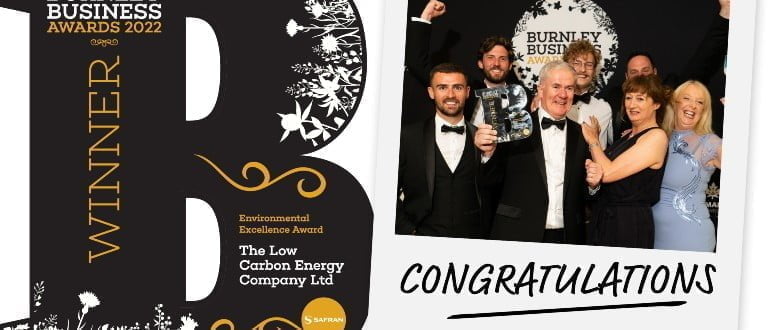
May 18, 2022
In the first few days of April, a landmark new report was released by the United Nations Intergovernmental Panel on Climate Change. As you’d expect, some parts of it make for some pretty stark reading; one of its key conclusions is the observation that while over 90% of global greenhouse emissions are covered by climate targets, as of right now still only 53% are actually covered by direct climate laws.
That’s a staggering amount of emissions that’s still not being properly addressed, so it’s understandable why the UN secretary-general António Guterres referred to it in his introduction as a “file of shame, cataloguing the empty pledges that put us firmly on track towards an unlovable world.”
But that’s not the central message. The key thing that scientists want to communicate is that it’s not too late to address the climate crisis. In fact, we’re currently in one of the single most decisive periods in history – our window is closing to take actions today which can save tomorrow.
With that in mind, UN scientists have laid out a plan that they believe can help the human race avoid the worst impacts of climate change, one that essentially calls for a revolution in how we produce and consume energy. The report is emphatic that for global warming to stay beneath 1.5C, carbon emissions need to peak within 3 years, and fall very rapidly in the years following. (Technologies like commercial solar panels are going to play a crucial role in helping to do that.)
The authors of the report recognise that limiting global emission is going to require “rapid and deep” emissions reductions in all sectors of the global economy. But they’re confident that it’s possible, and they’ve detailed five areas that we need to focus on if we’re going to achieve it.
Now it’s true that there’s a lot of qualifiers and footnotes attached to the report itself, but the key takeaway is undeniable – we need to get rid of coal. If we’re to peak emissions by 2025, and shrink them by 43% by the end of the decade, we’re not going to be able to do that if we’re still using coal on a large scale. Instead, the IPCC recommends shifting focus onto cheaper and cleaner technologies, like wind and solar power.
Notably, the cost of solar panels and similar renewable technologies has plummeted in recent years. In 2020 solar energy was identified as the cheapest form of energy in history by the International Energy Agency, and wind and solar together generated 10% of global electricity for the first time in 2021. (Wind and solar have both doubled their contributions to the international energy mix since 2015, when the Paris climate agreement was signed.)
However, coal power saw a remarkable rise in 2021 as well, and the war in Ukraine is tempting several countries towards coal-fired power again.
Now, the good news is that there seems to be widespread political acceptance that cheap, sustainable energy is the only way out of the intensifying energy crisis. What’s more, several world leaders see it as the best way to end their countries’ reliance on Russian imports, especially since there’s now growing uneasiness about such deals indirectly supporting the Russian military’s actions in Ukraine.
In the blunt words of one of the report’s authors, Professor Jan Christoph Minx, “we need to end the age of fossil fuel. And we don’t only need to end it, but we need to end it very quickly.”
That means no new coal power plants, and putting our energies into wind and solar instead. Both these renewable sectors need to grow at around 20% every year up to 2030, and climate scientists say that this is now “eminently possible”. But not without effort, and not without the political will to do so.
To paraphrase the report with a direct quote, “Methods for removing CO2 from the atmosphere are “unavoidable” if the world is to reach Net Zero – both globally and nationally”.
What that means is as well as cutting down on the emissions we’re currently pumping into the atmosphere, we also need to work on ways to actively undo the damage we’ve already done. Now, this is actually a bit controversial, and not necessarily with the groups you’d expect – environmental campaigners are amongst those who’ve expressed their doubts with carbon dioxide removal.
Obviously, generally their objections aren’t with the idea in principle – if we can make it work, then brilliant. They’re mainly uneasy because the mostly techniques and technologies themselves are largely unproven. In other words, people are worried that relying on these methods essentially means we could just be kicking the can down the road, all the while failing to properly address the root of the problem. After all, why bother making the tough sacrifices if you can just try and invent something that may or may not fix the damage afterwards?
Spraying solutions into the atmosphere to cool the Earth, and constructing space shields for the sun’s rays are both amongst the proposals that have been considered, so you can see why some campaigners aren’t too confident on the idea as a whole!
However, the report’s authors are firm on this point. Cutting carbon emissions is difficult enough, so removal is becoming a major priority, whether that’s via trees, or air filtering machines, or other measures. Prevention, of course, continues to be a major concurrent priority. In fact, on that note…
This is far from the only report that the IPCC has released, but it’s the first one to place such an explicit emphasis on social science as a measure for reducing emissions. Specifically, it discusses the need to help people reduce their demand for energy expenditure in shelter, mobility and nutrition. It needs to be easier for people to use cleaner forms of transport, or eat more plant-based foods.
The report proposes a methodology of Avoid, Shift, Improve. So that means, for example, helping people to avoid unnecessary travel, help them to shift their transport from car to buses or trains, and improving those buses or trains with low-emission alternatives. The benefits for this are myriad – as well as improving our general wellbeing, the IPCC estimates that it could help to limit emissions by anywhere between 40% to 70%.
The authors of the report have noted with ‘high confidence’ that the onset of Covid-19 lockdowns demonstrated that widespread behavioural change on a massive scale is possible, and possible on a very short timescale too. It largely comes down to a question of finding the political will (amongst politicians and voters alike) to act on them.
One of the longstanding concerns around climate change policies amongst sceptics has long been focused on the costs involved. But the IPPC authors, as well as an author over at Carbon Brief, have reiterated a common flaw in many arguments along those lines – namely that many assessments of mitigation costs “have typically not included co-benefits and avoided impacts.”
In other words, lots of people making these comparisons are considering the costs of climate policies in isolation, and properly accounting for the financial costs of the climate disasters that will occur if we take no action.
In fact the IPCC report points out that the costs of enacting climate policies are far outweighed by the financial costs of the environmental disasters that will keep coming if we do nothing. Removal for fossil fuel subsidies alone may reduce emissions by up to 10% by 2030, according to Greenpeace. And of course, as we’ve already mentioned, the costs of low carbon technologies like commercial solar panels are dropping all the time.
Here’s another blunt truth that the report hasn’t shied away from – the richest in society are disproportionately responsible for the greatest number of emissions. Specifically, climate scientists estimate that the 10% of households with the highest per capita emissions contribute up to 45% of consumption-based household greenhouse gas emissions. (Unsurprisingly, luxurious personal transports like private jets have an especially big impact on the global carbon footprint.)
However, there’s a flip side to this, and that’s that those with the highest disposable incomes are also those with the greatest capacity to take decisive climate action, while still remaining capable of enjoying a high level of personal wellbeing and quality of living.
The report is blunt, and at times pretty bleak – but again, it’s worth reiterating that it’s not unnecessarily pessimistic. There is still time to do something, and with enough collective will, the world can still avert some potentially catastrophic disasters in the coming years. Consumers and businesses are more keenly aware of this than ever, which is exactly why Corporate Social Responsibility and ESG have become such a high priority for people all over the world.
And if you’re in the midst of forming your own action plan to transform your business, that’s exactly where we can help here at Low Carbon Energy. Our commercial solar panels not only provide an excellent way to take the edge off your own business energy bills, but also provide the means to meet your own Net Zero and decarbonisation targets.
Our experts have over 30 years of combined experience, having helped SMEs and large corporations across a wide variety of sectors transform their business’ energy supply.
Each of our installations is bespoke, and we tailor your solution on your specific energy profile, helping us to maximise carbon reductions and save you up to thousands of pounds in energy bills. Feel free to look at our case studies for just a few examples of businesses which have reaped huge rewards from solar, such as Boeing and Irish Water. To find out how we can help you, feel free to give us a call today on 01282 421 489!
April 25, 2022
Because of the increased public awareness surrounding the climate crisis, there’s now a greater expectation from investment funds to disclose the carbon emissions of their portfolios. Essentially, investors want to make sure that that any money they put into a fund will be going toward sustainable, environmentally friendly companies.
Don’t just take our word for it. Those were the words of Mark Carney, former governor of The Bank of England. “In the future, climate and ESG considerations will likely be at the heart of mainstream investing. Investors will tailor their investments and fulfil their fiduciary duties through better quality and more widely available data on sustainability and performance, and more informed judgements of strategic resilience.”
It won’t just be your shareholders who’ll want to ensure that your business is implementing an effective sustainability plan, which brings us to our next point.
As the climate crisis has grabbed headlines increasingly often in recent years, consumers in general have become more conscious of the environmental impact of their own shopping habits, as well as those of the businesses they’re shopping with. This trend is gathering pace especially quickly among millennial and generation Z consumers, who account for a growing share of spending. They want to see that businesses have a positive impact on important social and economic issues like the climate crisis, and that they actively address these issues through their sustainability plans.
So how are investors and customers assessing the efficacy of your business’s sustainability plan? Well, it could have a great deal to do with ESG.

ESG stands for Environmental, Social and Governance, and is essentially a list of key criteria used by investors to evaluate companies that they might want to invest in. In other words, it assesses how your business performs from an environmental perspective, how it approaches social issues, and how your business is governed from the top down. (If you need a few more details, we’ve covered the subject of ESG in greater detail in our post about What is ESG.)
It’s becoming a common trend for companies with strong ESG performance rates to give out higher returns to their investors, as well as earn themselves reputations as generally lower risk assets, and display remarkable resilience during a crisis (the most obvious of these being the COVID-19 pandemic). For these reasons alone, ESG is definitely something worth thinking about when it comes to implementing an effective sustainability plan.
By embracing sustainability, you massively increase the odds of maintaining a healthy relationship with investors and customers alike, ultimately keeping your sales high and your business thriving. Falling behind means risking losing out on potential clients to their more sustainable rivals.
An effective sustainability plan is a vital part of making sure your business remains viable for as long as possible, and there’re a number of ways you can improve the sustainability and ESG rating of your business (some of which we can supply you with here at Low Carbon Energy!).
Our experts have over 30 years of combined experience, having helped SMEs and large corporations across a wide variety of sectors transform their business’ energy supply.
Each of our installations is bespoke, and we tailor your solution on your specific energy profile, helping us to maximise carbon reductions and save you up to thousands of pounds in energy bills.
Feel free to give us a call today on 01282 421 489, and we’ll get started on helping you to reduce your carbon footprint even further, cutting energy bills and maximising profits for your business.
March 30, 2022