
Latest Solar News

Featured News.

Our News & Blog

All News & Blogs.

Looking to keep yourself up to speed with the latest solar news and developments? You’re in exactly the right place. Here, we cover everything from our own company updates and exciting project announcements to breaking industry news, emerging solar technology and important developments across the renewable energy sector.

Whether you’re researching solar for your business, keeping an eye on the latest industry trends or simply looking to understand how solar energy is evolving, our articles are designed to give you useful, straightforward information. You’ll also find in-depth guides, expert insights and practical advice to help you make informed decisions and get the most out of your energy technology.

For many UK organisations, energy costs now represent one of the most significant threats to margin stability and the pressure shows no sign of easing. This comes amid a perfect storm of wider financial challenges, from inflation and wage pressures to supply chain disruption. 

National Insurance costs are up again; energy markets remain volatile; supply chains are fragile and ESG reporting rules are stricter than ever. And while inflation appears to be stabilising on paper, operational expenses continue to climb across the board. 

But for businesses investing in onsite solar energy and pairing it with advanced monitoring systems like Metris Energy, the story is very different. 

These companies aren’t watching energy costs rise. They’re watching their own systems generate clean power, day after day and using live data to prove every pound saved and every tonne of carbon cut. 


The grid is a gamble and solar is now strategy 

There was a time when grid power was cheap and dependable, but that time is now over. 

Forecasts suggest that the UK’s energy price cap is expected to rise starting 1st October 2025. Some predictions, including those from Money Saving Expert and EDF, estimate the cap could reach around £1,745, representing an increase of approximately 1.5% compared to the July–September period. 

This potential rise is driven by factors such as ongoing volatility in wholesale energy markets and global geopolitical risks. 

The most successful organisations in 2025 aren’t absorbing that risk. They’re eliminating it by generating their own power with solar and tracking every kilowatt-hour of performance. 

It’s not just about buying energy cheaper anymore it’s about owning the means to generate it and having the data to prove performance. 


Solar isn’t a line of panels. It’s infrastructure. 

Done right, commercial solar is no longer a sustainability initiative. It’s a capital investment that reshapes your profit and loss margins.  

Let’s put it in numbers: 

  • A 50kW system on a medium commercial site saves around £10,625 annually in energy costs 
  • That offsets the increased £3,800/year National Insurance burden for 10 employees 
  • A 200kW system? That’s around £42,500 in yearly savings covering rising labour costs, facility overheads, or reinvestment into core operations 


For T&R Precision, a leading provider of high-quality precision machining and manufacturing solutions, their solar system now produces 222,054 kWh of clean energy per year. That’s enough to: 

  • Cut 104 tonnes of CO₂ every year 
  • Equal the impact of planting 4,900 trees 

But what makes these savings meaningful isn’t just the hardware, it’s the software. 


The power of solar analytics 

When you install solar with Low Carbon Energy, you don’t just get panels on a roof or a ground mount system. You get the ability to track, measure, and optimise every watt your system generates through Metris Energy, one of the UK’s leading energy analytics platforms. 

Think of it as your business’s solar mission control. 


With Metris, you can: 

  • Know exactly how much energy your system is generating, in real time across every site. 
  • Translate sunlight into pounds saved and build confidence at board level 
  • View precise CO₂ offset figures for your ESG and Scope 2 reporting. 
  • Export data for finance, compliance, board meetings, or investor updates. 
  • Compare generation across multiple sites and seasons and flag inefficiencies instantly. 

Your solar system doesn’t just have to work in the background; it becomes an active part of your operational and financial strategy. 


Why visibility is no longer optional 

With the rollout of CSRD (Corporate Sustainability Reporting Directive) across the UK and EU, large businesses are now required to report on environmental impact with a level of detail never seen before. 

It’s no longer enough to estimate and businesses need verifiable, auditable, and timestamped data. 

Solar analytics platforms make this seamless. You can demonstrate the exact carbon reduction tied to your investment and not just to satisfy regulators but to showcase leadership to customers, stakeholders, and investors. 

And because the data is live, it helps with real-time optimisation, not just retrospective reporting. 


Why energy analytics is the final piece of the puzzle 

With analytics, solar becomes a strategic lever, one you can pull, track, and optimise. It ties together cost savings, operational efficiency, sustainability strategy, and business intelligence all in one place. 

In 2025, we no longer ask: “Should we go solar?” 

We ask: “How are we going to prove it’s working?” 

At Low Carbon Energy we integrate Metris into every project, because performance is only as good as your ability to track it. 


Why Low Carbon Energy? 

For over three decades, we’ve been building intelligent energy systems for some of the UK’s leading commercial and public organisations. 

But we’re not just solar installers. We’re infrastructure partners. 


We bring: 

  • Complete system design, installation, and lifecycle support 
  • Seamless integration with Metris Energy for visibility and control 
  • Sector-specific experience across logistics, education, manufacturing, retail, healthcare, and local government 
  • A track record of helping clients unlock savings and measurable emissions reductions 
  • A long-term partnership approach, focused on performance, not just project completion


Ready to build energy you own and understand? 

The smartest energy decision isn’t just to install solar. It’s to install a system that gives you control, insight, and confidence in every kilowatt you generate. 

If you’re ready to cut costs, reduce carbon, and report performance with total clarity we’re ready to help.  

August 6, 2025

Over the last few years, global conflicts have done more than shape the headlines – they’ve driven a surge in energy prices that UK businesses can no longer afford to ignore. From the war in Ukraine to escalating tensions in the Middle East, geopolitical risks have translated directly into higher gas and electricity costs, eating into margins and putting unprecedented pressure on operational budgets.

Why energy prices spike during war

Wars tend to destabilise global supply chains, especially for oil and gas. When a key exporter reduces supply, either through sanctions, damaged infrastructure, or geopolitical manoeuvring, wholesale energy prices rise sharply. We’ve seen this repeatedly in recent history, most notably following Russia’s invasion of Ukraine, where European gas prices surged to unprecedented levels.

This volatility filters directly into UK energy markets, forcing businesses to pay more to keep operations running. Even as energy regulators like Ofgem introduce price caps, businesses are not protected from wholesale market spikes, particularly those on variable tariffs or with high energy demands.

In October 2024, for example, Ofgem increased the electricity unit price by nearly 10% and gas by 14%, a direct consequence of sustained market pressures from ongoing global instability.

Geopolitical risk is now a business cost

The challenge is that energy prices are no longer just about supply and demand, they are about political risk. Every new conflict introduces uncertainty, and for UK businesses, that means unpredictable energy bills, tighter margins, and more difficult financial forecasting.

This is not a short-term issue. Industry forecasts predict that while prices may stabilise, elevated costs are here to stay through 2025 and beyond. Geopolitical instability is now baked into the cost of energy, and businesses must adapt accordingly.

Energy independence as a business strategy

At Low Carbon Energy, we see firsthand how forward-thinking businesses are responding, not by waiting for market correction, but by taking back control of their energy consumption.

Commercial solar is no longer just a sustainability initiative, it’s a hedge against global instability. By investing in on-site renewable generation, businesses are not only reducing their carbon emissions but also insulating themselves from external shocks.

  • Predictable costs: Solar generation offers price stability for 20-30 years, removing a key variable from your cost base.
  • Faster payback: With the current price trajectory, commercial solar payback periods can be as little as 3 to 5 years
  • Energy security: By generating your own power, you reduce reliance on grid energy that is subject to market turmoil.

Real-world business success with solar

This isn’t theory – businesses are already benefiting from making the switch. Crow Wood Hotel, for example, installed a 1,127kWp ground-mounted solar system that now meets 27% of their electricity demand and offsets 196 tonnes of CO₂ annually. The investment wasn’t just an environmental decision, it was a direct response to rising energy usage and market unpredictability.

We’ve delivered similar outcomes across multiple sectors, helping manufacturers, leisure operators, and corporate offices cut costs, secure energy independence, and meet sustainability goals in one move.

Don’t wait for the next crisis

Energy price spikes caused by war and conflict are not going away. Businesses that take proactive steps to control their energy supply will be in a stronger financial and operational position. Solar offers a practical, long-term solution that delivers immediate cost savings and long-term security.

If you’re looking for a way to stabilise your energy costs and future-proof your business against global market pressures, now is the time to consider solar.

Low Carbon Energy delivers commercial solar systems that cut costs from day one while securing your energy future. Contact us today to explore how solar could transform your operations.

July 21, 2025

As more UK businesses invest in solar PV to reduce costs and carbon emissions, one critical factor often gets overlooked: ongoing maintenance.

Your solar system isn’t a ‘fit and forget’ solution. Commercial solar PV installations are a significant capital investment but without a clear maintenance strategy in place, system efficiency can fall, return on investment can be delayed, and long-term energy savings reduced.

There are two critical reasons businesses typically come to us for maintenance support.

Building insurance requirements

When your business installs a commercial solar PV system, it becomes part of your building’s fixed infrastructure. As a result, your insurer will typically view it as part of the overall asset they’re covering. Insurers include clauses that require evidence of regular inspection and servicing of solar PV systems. This isn’t just a formality – it’s tied to their risk assessment. A neglected solar system could lead to:

  • Electrical faults
  • Fire risks
  • Weather-related damage
  • Structural integrity issues (i.e. loose panels on roofs)

If systems are not maintained and something goes wrong, your insurer may refuse to pay out. Even if the incident isn’t directly related to the panels, any failure to meet maintenance conditions could void your policy. Consequently, this would put the full financial liability back on your business.

Warranty protection

Commercial solar systems involve high-value components like inverters, optimisers, and panels. These typically come with manufacturer warranties ranging from 5 to 25 years, but those always come with conditions.

To keep the warranty valid, manufacturers often require:

  • Routine visual inspections
  • Electrical safety checks
  • Inverter diagnostics
  • Record-keeping of all maintenance carried out

They do this because neglect, not manufacturing defect, is the most common reason for system failure. If you can’t demonstrate that your system was properly maintained, you may lose your right to claim.

What does solar panel maintenance involve?

Commercial solar PV maintenance covers more than just cleaning panels. At Low Carbon Energy, our maintenance and asset management programme is built around maximising system uptime and long-term performance. For commercial systems, especially large-scale roof or ground-mounted arrays, this requires more than just a reactive approach.

Our asset management typically includes:

  • Performance monitoring and diagnostics – Early detection of issues such as drop-offs in output or inverter faults.
  • Routine inspections – Electrical inspections, checking for wear, damaged wiring or connections, shading, or structural damage and panel inspections.
  • Panel cleaning – Removing debris and build-up of lichen and soiling that can reduce efficiency and cause hotspots.
  • System optimisation – Adjustments and device software updates to maximise generation and returns.

This isn’t just good practice – it’s a commercially sound decision that secures long-term value.

The cost of poor maintenance

While the long-term benefits of solar are well understood, the impact of system underperformance is often underestimated. Without regular maintenance, even minor issues can erode output, increase operational costs, and compromise business continuity.

Here’s what that looks like in practice:

Financial loss from underperformance

  • A commercial 500kWp solar system would average at around 300,000kWh per year, with savings of around £60,000 at 20p per kwh. In this instance, 10% of savings would be about £6,000, not considering earnings from the export.

Increased grid dependency

  • Without timely maintenance, system faults lead to higher reliance on grid electricity – which is subject to volatile pricing. The October 2024 price cap rise confirms this unpredictability, with business energy costs increasing by up to 14%.

Component degradation and safety

  • PV systems fall under BS 7671 wiring regulations, which states that any electrical installation may be subject to degradation and the detrimental effects of external influences. In this case, they would pose serious risks if not addressed through scheduled maintenance.

Missed ESG and Net Zero targets

  • Your solar PV system is part of a broader sustainability plan. If it’s under-delivering, you may fall behind on published environmental targets or carbon reporting obligations.

Optimising ROI through maintenance

Solar is a long-term asset and like any asset, it needs to be looked after to generate full value.

Regular servicing extends system life, protects your warranty, and ensures your payback period stays on track. Many of our commercial clients see ROI in as little as 3–5 years. With proper maintenance, solar systems can deliver reliable returns for two decades or more.

Maintenance is also vital if your business plans to take advantage of schemes like energy buyback, as underperformance could limit the excess energy you can sell back to the grid.

A smarter way to manage your solar asset

Our Asset Management services are part of a full-service offering – from initial design and installation through to long-term performance oversight.

We work with clients across the UK, managing large-scale systems on warehouses, hotels, distribution centres, and manufacturing plants. We know the demands of commercial infrastructure and tailor our services to meet them.

With full visibility over your system’s health and output, you stay in control of your energy strategy.

The bottom line

Investing in solar PV is a smart move. Maintaining it is a necessary one.

If your business relies on solar energy to reduce operating costs, hedge against grid volatility, and strengthen your ESH credentials, then system performance must be protected.

Our decades of experience allow us to offer a fully comprehensive Asset Management service that provides total peace of mind. We have a deep understanding of not just the technology underpinning your solar panels, but also the regulatory and legal processes that govern them, so we can take care of everything from preventative maintenance to enhancing performance through detailed data analysis.

This allows you to focus on the day-to-day operations of your business while enjoying the maximum benefits of your solar panel system, including a reduced carbon footprint, cost savings, enhanced energy independence and security, and a solid return on investment.

Interested in performance benchmarking or maintenance for your existing solar PV system?

Call us on 01282 421489 or click here to learn more.

July 11, 2025

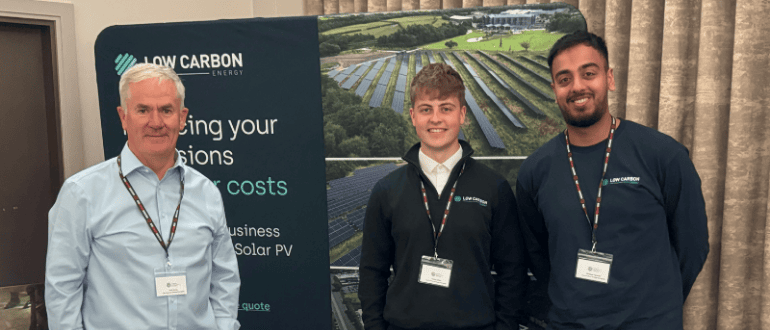
We were proud to be joint headline sponsor at today’s Lancashire Net Zero Carbon Conference at Crow Wood Hotel Burnley. Hosted by Lancashire Business View the event brought together a full room of business leaders, educators and policymakers for a refreshingly honest look at the Net Zero challenge and the opportunities right here in Lancashire.

As ever, our focus is clear: solar is ready. It’s proven, cost-effective and available now. If your business has roof space, you have an opportunity to cut emissions and costs at the same time.

Solar is Ready, and So Are We

At Low Carbon Energy, we’re helping organisations across the region take control of their energy strategy, with solar PV, battery storage and integrated solutions that deliver practical, lasting value.

Today’s conference confirmed what we already know. Lancashire is primed for solar. There’s huge potential sitting unused on commercial rooftops across the county, and with planning, technology and funding support all improving, there’s no reason to wait.

We don’t need to reinvent the wheel. We just need to install it.

Opportunity, Honesty and Urgency

From the opening talk by Charles Wood of Energy UK, the tone was set. Net Zero isn’t something far away it’s an immediate business opportunity. Not just good for the environment, but good economics too.

Across the panels, the themes were consistent:

· Solar and wind are underutilised but viable now

· 70% of Lancashire businesses are already engaged with Net Zero

· Language around sustainability must become more practical

· Community energy projects build pride and resilience

· There’s a growing gap in green skills, especially in solar and tech

For us, it reaffirmed our belief that solar is the fastest, most tangible step a business can take. It reduces energy bills, cuts emissions and demonstrates action and not just ambition.

And the return on investment? It’s compelling. For every £1 invested in the low carbon transition, there’s a £4 return in long-term benefits – from reduced operating costs to energy security and reputation. That’s a business case no one can ignore.

Wind Power and Community Ownership

While we focus on solar, it was good to see the important conversations happening around wind. Lancashire has strong wind potential, particularly in locations like Scout Moor near major demand centres. But there’s clearly work to do in engaging communities early, building trust and creating benefit-sharing models.

As several speakers highlighted, when communities feel involved — not sidelined — these projects gain momentum. We fully support that direction.

The Skills to Match the Strategy

A recurring theme throughout the day was the need for a serious green skills push. Solar, like all renewables, needs qualified people to install, maintain and optimise systems.

We heard calls to back apprenticeships, T Levels, and retraining programmes, as well as direct partnerships between industry and education. That aligns with our own approach and we’re already working to support the skills base required to grow this sector locally and sustainably.

Funding and Support Are Available

One of the most practical messages from the day was simple: help is out there, and businesses don’t have to figure this out on their own. We heard from Rosebud, Innovate UK and others about the financial and advisory support available right here in Lancashire. Whether it’s grants, investment or strategic partnerships, the support exists but you have to go and get it.

We’re always happy to advise businesses on how to make these steps, especially where solar is concerned.

A Live Example: Crow Wood Hotel & Spa

Hosting the conference at Crow Wood Hotel & Spa gave us the chance to show guests what solar looks like in action.

As a sustainability-focused luxury resort, Crow Wood partnered with us in 2023 to install a 1,127 kWp ground-mounted solar PV system.

Over 2,200 panels now generate 981,927 kWh of clean energy per year, cutting 196 tonnes of CO₂ and meeting 27% of the resort’s electricity needs.

It was a fitting venue and a clear demonstration of how solar is already powering Lancashire’s Net Zero progress.

What’s Next: From Talk to Action

Conferences are important but only if they lead to action.

Today made it clear that solar should be top of the Net Zero agenda for commercial buildings in Lancashire. It’s scalable, it’s visible and It delivers immediate benefit. And we know how to do it.

We’d like to thank Lancashire Business View for hosting a brilliant and much-needed event, and all the speakers and fellow sponsors for their insight.

We’re committed to helping Lancashire’s business community lead the way. Not by waiting for change, but by building it one rooftop at a time.

If your business is ready to talk solar, we’re ready to make it happen.

Get in touch with our team at Low Carbon Energy to start your journey to Net Zero today.

June 23, 2025

Imagine racks upon racks, full of powerful servers on the verge of overheating. Bingo. That is exactly what data centres look like, not the abstract “cloud” we often picture.  

Data centres are placed in areas with robust infrastructure that support the streaming of all applications you use daily: social media, photo storage, Netflix, and now, Artificial Intelligence (AI). 

The rise of ChatGPT and other AI interfaces caught us all by surprise. As a result, many of us had to integrate, adapt and reinvent ourselves to keep up with technology. On the other hand, some have taken a stance against its use, whether for ethics, energy consumption or fear of the unknown.  

For better or for worse, AI is here to stay. And while its energy consumption is raising some concerns, ChatGPT isn’t the enemy, and it won’t destroy the planet. That being said, we believe data centres must step up in the search for renewable energy solutions to combat this issue.

In this article, we’ll cover: 

  • How much energy does AI use? 
  • Why do data centres require so much energy? 
  • Is AI energy use expected to grow? 
  • Solar and renewable energy: our best hope 

How much energy does AI use? 

AI is power-hungry. In fact, the amount of electricity needed to sustain AI operations is growing rapidly. Currently, AI accounts for 12% of data centre electricity use, and that number is only expected to climb in 2026.  

To put it into perspective, the energy consumption of data centres is comparable to the annual electricity usage of small countries like Finland, Belgium, Chile, or Switzerland. Even scarier, the daily usage of AI in data centres based on that statistic is 48 GWh per day, which is enough to power around 4.8 million UK homes for a full day. 

How much energy does ChatGPT use? 

ChatGPT was never meant to be a search engine like Google, and for good reason. You see, every time you type a question into ChatGPT, a powerful AI model processes your query in seconds. But at what cost?  

Estimates suggest that a single ChatGPT query consumes 2.9 watt-hours of electricity – almost 10 times as much as a simple Google search. When you multiply that by millions of daily users, the numbers become staggering. However, on a more positive note, new research claims that ChatGPT-4o is likely to consume “less than a laptop consumes in a few minutes”.  

In any case, data centres running AI applications must operate 24/7, meaning the energy consumption is constant. Without intervention, this could lead to greater strain on our nation’s energy grid and higher carbon emissions. 

Why do data centres require so much energy? 

Even though AI takes the largest percentage of energy usage, data centres house the servers that power AI, cloud computing, and digital services. These facilities require vast amounts of energy to function efficiently, primarily due to: 

1. Servers and cooling systems 

Servers are responsible for handling vast amounts of data in real-time. 

Since these high-performance servers must always be active without fail, they generate enormous amounts of heat. So, to prevent servers from overheating, the air conditioning system must be always functioning too. 

2. Data storage and backup systems 

At a larger scale compared to our phone’s storage and backup, data centres must ensure that information remains secure, accessible and recoverable. And since they play a crucial role in disaster recovery, they must be constantly running to ensure reliability.  

Is AI energy usage expected to grow? 

The short answer: yes. With models becoming more advanced, AI energy consumption is expected to increase by 160% over the next decade. With businesses across industries integrating it into daily operations, data centres will have to expand for more storage and backup systems. 

Consequently, if AI continues to rely on traditional energy sources, the carbon footprint of data centres will surge significantly, contributing to the global energy crisis. As expected, integrating renewable energy solutions is no longer optional; it’s essential. 

Solar and renewable energy production: our best hope 

After all this information, it’s fair to assume that solar panels can’t generate enough energy for data centres. However, that’s not the case. In fact, it has already been proven possible. Just last year, Iomart became the first data centre in the UK to run their facility on 560 solar panels. 

David Gammie, CTO at Iomart, said: 

“We’ve already committed to powering all our data centres with 100% renewable energy. This installation at Maidenhead takes that commitment one step further – generating our own energy onsite, and in addition the potential to export energy back into the grid network in the future.” 

For data centres, renewable energies present a viable solution to AI’s rising energy demands. Whether it’s solar, wind, geothermal, or hydropower, all these options share one key trait: these natural forces exist in large amounts and can be replenished as quickly as they are used. 

Among these, solar energy stands out due to its relatively easier installation process, making it a top-tier choice for data centres. Solar panels can be installed on existing rooftops or nearby land. This approach not only reduces operational costs but also enhances a company’s environmental profile, positioning them as leaders in sustainability. 

How much energy does a solar panel produce? 

Commercial solar panels can generate between 500 – 700 watts per panel, per hour. Large-scale solar installations can provide substantial amounts of electricity, reducing reliance on fossil fuels. Some key benefits include noticeable cost savings, enhanced energy security, and a significantly reduced carbon footprint. 

At the end of the day, this investment offers a clean, renewable, and cost-effective way to offset electricity usage, helping data centres stay ahead in the journey to Net Zero. 

Speak to renewable energy consultants 

At Low Carbon Energy, we’re committed to helping data centres transition to renewable energy. Our tailored solar PV solutions support various industries, making sustainability both practical and cost-effective.  

By switching to solar, you can cut energy costs, reduce your carbon footprint, and lead the way in sustainable innovation.

Contact our team today to explore your options. 

February 19, 2025

Imagine racks upon racks, full of powerful servers on the verge of overheating. Bingo. That is exactly what data centres look like, not the abstract “cloud” we often picture.  

Data centres are placed in areas with robust infrastructure that support the streaming of all applications you use daily: social media, photo storage, Netflix, and now, Artificial Intelligence (AI). 

The rise of ChatGPT and other AI interfaces caught us all by surprise. As a result, many of us had to integrate, adapt and reinvent ourselves to keep up with technology. On the other hand, some have taken a stance against its use, whether for ethics, energy consumption or fear of the unknown.  

For better or for worse, AI is here to stay. And while its energy consumption is raising some concerns, ChatGPT isn’t the enemy, and it won’t destroy the planet. That being said, we believe data centres must step up in the search for renewable energy solutions to combat this issue.

In this article, we’ll cover: 

  • How much energy does AI use? 
  • Why do data centres require so much energy? 
  • Is AI energy use expected to grow? 
  • Solar and renewable energy: our best hope 

How much energy does AI use? 

AI is power-hungry. In fact, the amount of electricity needed to sustain AI operations is growing rapidly. Currently, AI accounts for 12% of data centre electricity use, and that number is only expected to climb in 2026.  

To put it into perspective, the energy consumption of data centres is comparable to the annual electricity usage of small countries like Finland, Belgium, Chile, or Switzerland. Even scarier, the daily usage of AI in data centres based on that statistic is 48 GWh per day, which is enough to power around 4.8 million UK homes for a full day. 

How much energy does ChatGPT use? 

ChatGPT was never meant to be a search engine like Google, and for good reason. You see, every time you type a question into ChatGPT, a powerful AI model processes your query in seconds. But at what cost?  

Estimates suggest that a single ChatGPT query consumes 2.9 watt-hours of electricity – almost 10 times as much as a simple Google search. When you multiply that by millions of daily users, the numbers become staggering. However, on a more positive note, new research claims that ChatGPT-4o is likely to consume “less than a laptop consumes in a few minutes”.  

In any case, data centres running AI applications must operate 24/7, meaning the energy consumption is constant. Without intervention, this could lead to greater strain on our nation’s energy grid and higher carbon emissions. 

Why do data centres require so much energy? 

Even though AI takes the largest percentage of energy usage, data centres house the servers that power AI, cloud computing, and digital services. These facilities require vast amounts of energy to function efficiently, primarily due to: 

1. Servers and cooling systems 

Servers are responsible for handling vast amounts of data in real-time. 

Since these high-performance servers must always be active without fail, they generate enormous amounts of heat. So, to prevent servers from overheating, the air conditioning system must be always functioning too. 

2. Data storage and backup systems 

At a larger scale compared to our phone’s storage and backup, data centres must ensure that information remains secure, accessible and recoverable. And since they play a crucial role in disaster recovery, they must be constantly running to ensure reliability.  

Is AI energy usage expected to grow? 

The short answer: yes. With models becoming more advanced, AI energy consumption is expected to increase by 160% over the next decade. With businesses across industries integrating it into daily operations, data centres will have to expand for more storage and backup systems. 

Consequently, if AI continues to rely on traditional energy sources, the carbon footprint of data centres will surge significantly, contributing to the global energy crisis. As expected, integrating renewable energy solutions is no longer optional; it’s essential. 

Solar and renewable energy production: our best hope 

After all this information, it’s fair to assume that solar panels can’t generate enough energy for data centres. However, that’s not the case. In fact, it has already been proven possible. Just last year, Iomart became the first data centre in the UK to run their facility on 560 solar panels. 

David Gammie, CTO at Iomart, said: 

“We’ve already committed to powering all our data centres with 100% renewable energy. This installation at Maidenhead takes that commitment one step further – generating our own energy onsite, and in addition the potential to export energy back into the grid network in the future.” 

For data centres, renewable energies present a viable solution to AI’s rising energy demands. Whether it’s solar, wind, geothermal, or hydropower, all these options share one key trait: these natural forces exist in large amounts and can be replenished as quickly as they are used. 

Among these, solar energy stands out due to its relatively easier installation process, making it a top-tier choice for data centres. Solar panels can be installed on existing rooftops or nearby land. This approach not only reduces operational costs but also enhances a company’s environmental profile, positioning them as leaders in sustainability. 

How much energy does a solar panel produce? 

Commercial solar panels can generate between 500 – 700 watts per panel, per hour. Large-scale solar installations can provide substantial amounts of electricity, reducing reliance on fossil fuels. Some key benefits include noticeable cost savings, enhanced energy security, and a significantly reduced carbon footprint. 

At the end of the day, this investment offers a clean, renewable, and cost-effective way to offset electricity usage, helping data centres stay ahead in the journey to Net Zero. 

Speak to renewable energy consultants 

At Low Carbon Energy, we’re committed to helping data centres transition to renewable energy. Our tailored solar PV solutions support various industries, making sustainability both practical and cost-effective.  

By switching to solar, you can cut energy costs, reduce your carbon footprint, and lead the way in sustainable innovation.

Contact our team today to explore your options. 

February 19, 2025


Late last year, the National Farmers’ Union (NFU) told the BBC that the ambitious plans to make British farming ‘net zero’ by 2040 simply may not be achievable.  

But why has the agricultural industry been set lofty targets 10 years ahead of the rest of the UK’s legally binding national target in the first place? And how achievable do we believe the goals are? 

Let’s take a look… 

What is ‘net zero’ farming? 

The concept of ‘net zero farming’ is an approach to agriculture that aims to balance the amount of greenhouse gases produced and removed from the atmosphere.  

The goal is to reach “net zero” emissions by reducing on-farm emissions and offsetting the remainder through practices that absorb carbon, such as planting trees or improving soil health. 

The UK government is legally obligated to reach net zero by 2050, and since farming makes up about 12% of the country’s greenhouse gas emissions, it has a key role to play. 

Most emissions in farming come from nitrous oxide (released by fertilisers), methane (from manure and livestock) and ammonia.  

Since the industry is deeply connected to natural processes, achieving net zero requires innovative approaches. These include using renewable energy sources like solar panels, improving livestock management, and adopting low-carbon farming practices. 

How farming impacts net zero 

In 2019, the NFU set its own target for the English and Welsh agricultural industry to achieve net zero by 2040. This is ten years ahead of the government’s legally-binding 2050 target. In Scotland, the net zero target is 2045.  

Let’s take a closer look at the impact of agriculture on the environment… 

Figures 1: Emissions from agriculture in 2022 (percentage)  

Source: UK territorial greenhouse gas emissions national statistics, BEIS, Emissions of air pollutants, Defra. 

As you can see, in 2022, agriculture accounted for 87% of the UK’s ammonia emissions, 70% of its nitrous oxide emissions, and 49% of its total methane emissions. While the industry only contributed 2% towards the UK’s carbon emissions, this doesn’t mean that reducing CO2 in agriculture isn’t important.  

In fact, reducing carbon emissions in farming is still crucial for sustainability. Farms rely on fossil fuels for machinery, transportation, and energy use. By using renewable energy sources like solar power, farming can lower CO2 emissions and become more sustainable. 

This explains why the NFU has set a target of 2040. Taking action now to cut carbon emissions will help farming play its part in reaching national climate goals much sooner than the government’s 2050 target. 

Doubts over the 2040 net zero farming target 

But just how realistic are these targets?  

In September 2024, the NFU told the BBC that the goals to achieve net zero by 2040 may well not be achievable. 

Tom Bradshaw, NFU President, told the BBC he believed farming was “very much part of the solution to decarbonising the UK economy” but that more government investment was needed. Likewise, the Soil Association warned that the industry would not be able to reach net zero greenhouse gas emissions “without radical changes”. 

Ways for you to achieve net zero farming 

At Low Carbon Energy, we’re here to support the agricultural industry and farmers in achieving net zero goals. Below, we’ve compiled three top tips to help you take the first steps to making your farm more sustainable in the long-term.  

1. Assess the diets of livestock 

Making sure livestock diets meet their nutritional needs is key to both cost savings and improved environmental performance. 

For dairy herds, reducing crude protein levels to below 18% can lower emissions and improve efficiency in converting protein into milk, potentially reducing herd size while maintaining output and decreasing environmental impact. 

In beef production, improving feed quality enhances efficiency and daily weight gain, shortening the time to slaughter and contributing to long-term reductions in greenhouse gas emissions. 

For herds already achieving high protein efficiency, you could focus on factors like feed palatability, dry matter intake, and cow comfort to boost performance and climate scores. Cows that feel comfortable and use less energy on non-productive activities will be more efficient overall. 

2. Invest in renewable energy sources  

Secondly, switching to renewable energy, particularly solar power, can be a game-changer for your farm’s sustainability. 

 Installing solar panels can help: 

  • Reduce reliance on fossil fuels 
  • Lower electricity costs 
  • Decrease your farm’s carbon footprint 

Solar energy is a clean, renewable resource that can power everything from irrigation systems to farm machinery, allowing you to run your operations more efficiently and sustainably. 

By making the move to renewable energy, you’ll not only be helping your farm achieve net zero goals, but also improving its long-term viability and resilience against rising energy prices. A win-win for many in our current economy 

There is a huge untapped potential for savings within the agricultural industry, due to often underutilised roof spaces. Solar power provides an opportunity to generate your own electricity, giving you greater control over your energy needs and contributing to a cleaner, greener farming future. 

3. Reducing use of fertilisers 

Finally, the farming industry is responsible for approximately 70% of the UK’s nitrous oxide emissions. The vast majority of this is produced by fertiliser – therefore, reducing the amount of fertiliser used reduces your overall greenhouse gas emissions.   

  • Only apply fertiliser when it’s needed most 
  • Use deep placement of fertilisers  
  • Apply fertiliser close to plant roots 
  • Consider planting legumes to improve soil quality 
  • Invest in the health of your soil  

Achieve net zero with solar  

To conclude, despite the NFU’s concerns over how realistic the 2040 net zero farming targets are, at Low Carbon Energy we remain optimistic that there are steps you can take to put your business in good stead.  

Whilst we back the NFU in pushing for further investment from the government, we are committed to playing our role in providing farms with green, clean energy sources through solar PV installations and systems.  

Find out more about why solar energy is a great investment for agricultural sectors here. Alternatively, if you’re ready for a conversation about how we can support you – call us on 01282 421 489.  

January 27, 2025

Net zero might feel like a buzzword that’s been dominating headlines since the UK committed to its 2050 target in 2019. But beneath the noise lies a genuine opportunity for businesses to take meaningful action.

Whether you’re driven by sustainability goals, cost-saving potential, or pressure from clients and stakeholders, achieving net zero doesn’t have to be as complex as it seems.

In fact, the path to net zero can be surprisingly straightforward – when you know where to start. At Low Carbon Energy, we’re breaking it down into five practical steps that any business can take to reduce its emissions, boost efficiency, and make a real difference.

Let’s take a look…

What is net zero?

Net zero refers to the balance between the amount of greenhouse gases emitted and the amount removed from the atmosphere. A business achieves net zero when it reduces emissions as much as possible and offsets the rest through methods like carbon capture and storage, renewable energy projects, or reforestation.

Why does it matter? The stakes couldn’t be higher. Limiting global warming to 1.5°C – the central goal of the Paris Agreement – requires drastic reductions in global CO2 emissions. Businesses play a pivotal role in reaching this target. By achieving net zero, companies can not only comply with upcoming regulations but also enhance their reputation, attract ecoconscious customers, and potentially make long-term cost savings.

The UK has set a legally binding target to achieve net zero by 2050, and many industries are already feeling the push. Large businesses must disclose their carbon reduction strategies, while SMEs are increasingly expected to align with net zero principles.

➤ Learn more about the importance of net zero and the strategies involved from the National Grid.

How does your business achieve net zero?

To achieve net zero emissions by 2050, all businesses – regardless of size – must implement clear strategies and actions. This includes:

  • Measuring carbon emissions: Accurate data is essential to identify where reductions are needed.
  • Reducing emissions: Investing in cleaner technologies and energy-efficient processes
  • Offsetting residual emissions: Partnering with verified carbon offset programs.

Businesses must also align with government regulations, which will tighten as the 2050 deadline approaches.

➤ This guide is a great place to start to understand the necessary steps you may want to consider.

1. Setting net zero targets

Firstly, do not underestimate the importance of targets. Targets give your business a clear roadmap to success.

Instead of focusing solely on 2050, which might feel too far away or seem overwhelming, set shorter, incremental targets – such as achieving a 20% reduction by 2030 or 50% by 2040. These milestones keep your business on track and make progress measurable.

To set effective targets, we’d recommend:

1. Measuring your current carbon footprint.

2. Identifying actionable areas for reduction.

3. Committing to transparent reporting and accountability.

2. Find your carbon hotspots

Secondly, realise that not all emissions are created equal. To make meaningful progress, identify the areas in your business that produce the most carbon. Common culprits include:

  • Energy usage in offices, warehouses, or factories.
  • Transportation and logistics.
  • High-carbon suppliers or products.

Conducting a thorough carbon audit can help you pinpoint these hotspots. From there, you can implement energy-saving measures, switch to low-carbon alternatives, or renegotiate supplier contracts.

3. Business communication

Next on our list is communicating your goals throughout your wider business. It may sound simple, but achieving net zero isn’t just a leadership goal – it’s a company-wide effort. Transparent communication is key to getting everyone on board. Here are some tips to get employees on board with net zero:

Educate your employees
Share your net zero targets and why they matter.

Encourage sustainable practices
Recycling, waste reduction, and energy-saving initiatives can have a significant impact.

Embed sustainability into company culture
Make net zero a core value to drive long-term change.

Better communication leads to better engagement, ensuring your workforce actively contributes to your sustainability goals.
4. Use sustainable energy sources

green supply chain

Switching to renewable energy is one of the most effective ways to reduce carbon emissions. Solar panels, for example, offer a long-term solution to achieving net zero energy goals. They not only lower emissions but also help businesses cut energy costs.

Beyond solar panels, consider:
  • Electric vehicles (EVs)
  • Energy-efficient equipment
  • Optimising workflow to reduce carbon emissions

5. Implement and report your usage

solar finance

Finally, setting targets is only half the battle – you’ll also need to track and report your progress. Regular reporting ensures accountability and helps you adjust strategies as needed.

To get started:

  • Monitor your carbon footprint with tools or software
  • Compare current data to your targets
  • Publish reports to demonstrate progress and build trust with stakeholders.

By staying transparent and adaptable, you’ll keep your business well on the way to meeting net zero.

Ready to begin your journey to net zero?

At Low Carbon Energy, we specialise in helping businesses meet their net zero targets with tailored renewable energy solutions. There’s a reason 100% of our clients surveyed in 2024 would recommend us to other businesses. We’re committed to helping you save money, reduce your carbon footprint and make a difference.

➤ Download our Net Zero Checklist here, or contact us to discuss your goals on 01282 421 489.
January 21, 2025

Energy policy rarely grabs headlines outside of industry circles, but 2025 is proving to be an exception. With energy bills still causing significant concern and pressure mounting on businesses to meet sustainability targets, this year’s strategy review has drawn intense interest. 

In April 2022, the UK government released its exhaustive energy strategy. The document outlines how the country plans to reduce dependence on fossil fuels and accelerate investment in renewables, infrastructure, and low-carbon technologies.  

For businesses, especially commercial property owners considering solar power, the plan includes a range of new policies, targets, and support mechanisms that could reshape how energy is generated, priced, and regulated. 

In this article, we break down the key elements of the 2022 energy strategy that directly impact commercial decision-makers, and why it’s still relevant. 

The plan with fossil fuels

Fossil fuels are obviously the big sticking point in the UK’s existing energy mix, and there’s been a lot of noise about trying to break the country’s addiction to coal. Now, while there have been a few recent pieces of encouraging news about decarbonisation, we’re still using a lot more fossil fuels than we should be. So what is the government doing about it?

Oil and gas

The government has openly said that it doesn’t want to encourage the UK to burn more gas per se – instead, the focus is on producing more of it domestically. To that end, there will be a new licensing round this summer for new oil and gas projects in the North Sea. Ministers also plan to set up a new taskforce to oversee new developments. As you’d expect, that doesn’t sit particularly well with some climate activists.

Even more controversially, the government has made clear that it’s potentially open to restarting the process of fracking – extracting shale gas from the ground – but only if certain health and safety conditions are met. The practice has been banned since 2019, having been fiercely opposed due to the earth tremors it can cause, as well as the amount of water it requires. (Transporting this water to each site incurs significant environmental cost.)

Kwasi Kwarteng, the business secretary, has said that the ban will remain in place unless it can be scientifically proven to cause “minimal disturbance” to local people living around the fracking sites. A new scientific study has been commissioned to investigate the possible ramifications, but many observers think that it’s unlikely to reveal much that we didn’t know already.

What’s happening with renewables?

Here at Low Carbon Energy, we’ve already spoken in detail about how renewable energy is the only way out of the current energy crisis, so like many others, we were particularly curious to see what the government had in store for two key sources of renewable energy in the UK – wind and solar.

Wind

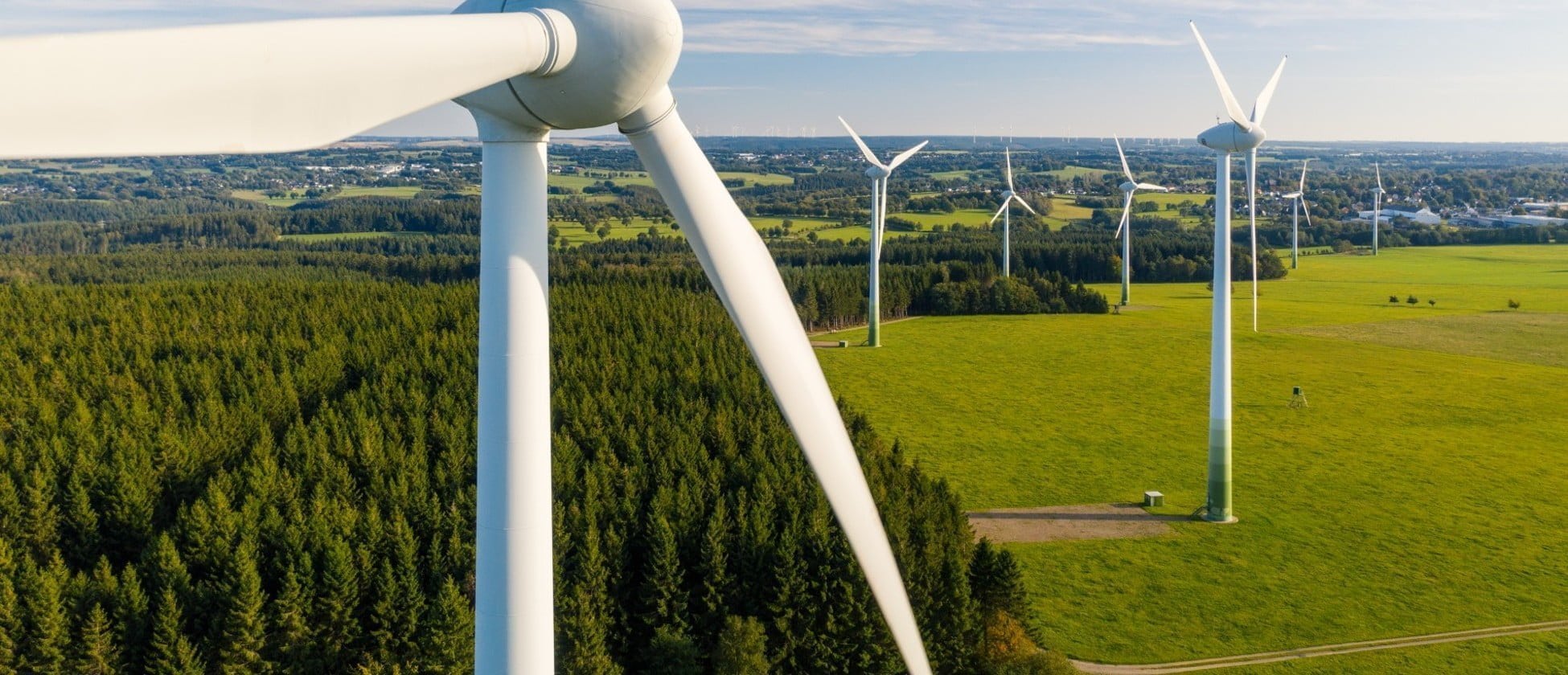
The government has set itself the target of generating 50GW of energy by 2030. It’s hoping for about a tenth of this to come from turbines on floating structures, which can be placed further out to sea. Ministers are also planning an overhaul of the planning rules, speeding up the approvals process for new projects (down from four years to one), and enabling certain priority projects to be fast-tracked.

There are also plans to appoint a central figure to oversee new projects, in much the same vein as Dame Kate Bingham, who chaired the UK government’s Vaccine Taskforce in 2020, responsible for procuring vaccines and deploying them across the country.

Notably, the government hasn’t set itself any new targets for onshore wind farms (i.e. those actually on British soil), and as of the time of writing, it’s not planning to make any changes to the 2015 laws which set limitations on the locations for onshore sites. However, ministers do plan to hold discussions with a number of supportive communities about potentially hosting certain wind farms, in exchange for guaranteed discounts on their energy bills – so we’ll see how those discussions pan out!
Solar

The UK’s current solar capacity is reasonably impressive, standing at about 14GW nationally – but ministers hope to quintuple that capacity by 2035. There’s a growing appetite for solar across Britain amongst everyone from SMEs to large corporation, all the way up to individual consumers, as evidenced by the rising reliance on ESG methodology. But the government isn’t going to meet its targets with commercial solar alone, so it’s currently looking at reviewing English planning laws to promote the development of new solar farms on non-public land.

It also plan to hold a consultation to investigate how to make it easier to install solar panels on rooftops, including public buildings. If the UK successfully realises its ambitions, this approach could ultimately end up helping to power hundreds of thousands of homes.

Looking ahead to developing technologies

Can we build our way out of the current climate crisis? It’s been a fairly consistent question that industry experts have been asking for a number of years now, and it’s still a matter of some debate. But whether or not we’ll be able to to invent some miraculous new technologies to solve the climate crisis in future years, there’s certainly some encouraging potential in certain power sources still currently in development; nuclear and hydrogen being first and foremost amongst them.

Nuclear power

The latest energy strategy lays out the government’s ambition to deliver up to 8 new nuclear reactors before 2030. Right now, about 13 are in various stages of development in several different regions throughout the country. (The two main obstacles are funding and new site approval.)

The UK has 15 reactors in active operation, providing 20% of our total energy demand. However, most of them are scheduled to cease operating by the end of the decade, which is a big part of why the government is so keen to get newer facilities up and running to replace them.

If everything goes according to plan, nuclear energy will supply 24 gigawatts of electricity by the middle of the century, which equates to about 25% of the UK’s likely energy demand. The strategy also mentions the intention to create a new government body called Great British Nuclear, which will be charged with overseeing the ongoing operations of these new facilities.

Hydrogen

Hydrogen also makes up a key prong of the government’s energy strategy, albeit to a slightly lesser extent than some of the other subsectors. Specifically, the government wants hydrogen production to contribute 10GW by 2030. The idea is that at least half of this will come from electrolytic hydrogen, which relies on electricity to split water into hydrogen and oxygen.

If these visions are fully realised, this could end up being significantly more environmentally friendly than the current widespread method of production; which involves using natural gas to cause a chemical reaction with steam. As we’ve covered, it’s very much still a developing technology, but it certainly looks promising. Of course though, it comes with a caveat, as ministers make it clear that the only way they’ll pursue it is if it can prove that it guarantees affordability and value for money.

So that’s all the basics covered! You can read the entire strategy here. Alternatively, if you’re ready to start harnessing the power of renewable energy for your own business, you’re in exactly the right place. Here at Low Carbon Energy, our experts have over 30 years of combined experience, having helped SMEs and large corporations across a wide variety of sectors transform their business’ energy supply.

Each of our installations is bespoke, and we tailor your solution on your specific energy profile, helping us to maximise carbon reductions and save you up to thousands of pounds in energy bills. Feel free to look at our case studies for just a few examples of businesses which have reaped huge rewards from solar, such as Boeing and Irish Water. To find out how we can help you, feel free to give us a call today on 01282 421 489!

January 12, 2025

Three years ago, the UK government introduced a wave of green policy ambitions. At the time, it signalled a shift in how the country intended to tackle climate change. Businesses were told the 2020s would be a defining decade for climate action, with long-term frameworks laid out for energy, waste, food, skills, and sustainability in education. 

Now that we’re in 2025, it’s time to take a step back. Have those policies translated into meaningful change? Have businesses had the tools, or the clarity, to take the next step? And just as importantly, are we still heading in the right direction? 

Here’s where we are now, what we’ve learned, and what comes next for businesses looking to move forward.  

Why did the 2022 green agenda set the stage for urgent action? 

In late 2021, the UK government released its Net Zero Strategy: Build Back Greener. It marked a shift in tone and urgency, laying out detailed plans across energy, transport, buildings, and more. For many businesses, this was the push they needed to start taking sustainability more seriously. 

To provide a comprehensive overview, here are seven key UK green policies that continue to shape the business landscape in 2025: 

  • Resources and Waste Strategy: Designed to increase national efficiency and cut waste, this strategy proposed a national deposit return scheme, reforms to extended producer responsibility, and weekly food waste collections. 
  • Environment Act: After years of delays, the Act established frameworks for environmental protection in a post-Brexit UK. It also empowered the Office for Environmental Protection to enforce accountability around water, air quality, biodiversity, and waste targets. 
  • Skills Strategy: Though controversial in its early detail, the strategy committed to creating up to 2 million green jobs by 2030. Debate continues over definitions, but its focus on upskilling and reskilling remains key to the net zero transition. 
  • Sustainability and Climate Change Strategy for Education: Introduced during COP26, this strategy aims to embed climate awareness into the UK’s education system, supporting both curriculum reform and decarbonisation of school estates. 
  • National Food Strategy: This independent review proposed major reforms to improve food system sustainability, including reducing red meat consumption and linking agricultural subsidies to environmental outcomes. 
  • Plans to Meet New Energy Targets: These include the end of unabated fossil-fuel electricity generation by 2035, and renewed investment in nuclear, hydrogen, solar, and wind to secure long-term supply and reduce emissions. 
  • The Climate and Ecological Emergency Bill: Gaining momentum in Parliament and beyond, this proposed legislation would reshape how the UK calculates its emissions footprint, accounting for international trade, shipping, and aviation. 

These policies set expectations across the board. Businesses were encouraged to align with long-term goals and were given clearer guidance on where to focus. As a result, we saw real momentum the following year. 

In 2022, the UK recorded its highest-ever level of zero-carbon electricity generation, reaching 138 terawatt-hours. It was a tangible sign that national direction, backed by policy and business engagement, can produce meaningful results. 

This wasn’t just political theatre. The figures showed that when government leads clearly and businesses respond with action, measurable progress follows. It proved that coordinated effort can move the needle on emissions, and that real change is possible when there’s alignment between policy, infrastructure, and business action.

What the UK has achieved so far?

So, what has the UK achieved so far? There has been real progress in key areas.  

For example, the closure of the last coal-fired power station in 2024 marked a symbolic and practical step forward. Investment in offshore wind has accelerated. And more school sites are being powered by renewable energy, showing how sustainability can be embedded into public infrastructure. 

The Climate and Nature Bill is a good example too. Although it was introduced more recently, it’s gaining traction across Parliament. In 2025, it reflects a growing recognition that environmental accountability must be embedded not just in policy, but in business strategy and infrastructure planning. 

How solar supports the UK’s net zero goals

Among all the available options for businesses, solar remains one of the most accessible and proven ways to contribute to net zero. But how did we get here? 

Since 2022, the role of solar has expanded significantly. Businesses are choosing to invest in renewable energy on-site, especially as grid prices remain unpredictable.  

At Low Carbon, we’ve supported organisations across multiple sectors to incorporate solar into their energy strategies. From large-scale hospitality sites to manufacturing operations. 

With more incentives and funding options becoming available for commercial installations, the case for solar is stronger than ever.  

Speak to Solar Energy Experts

At Low Carbon Energy, we help businesses take practical steps toward energy independence and carbon reduction.  

We want to help organisations like yours build resilience through infrastructure. The right time to start was probably three years ago, but the next best time is now. 

January 1, 2025

The figures are simple – solar panels are revolutionising how we power our world, offering clean, sustainable energy for businesses and homes alike. However, just like any other electrical system, safety is key. Understanding and mitigating potential solar fire safety risks ensures your solar PV system operates efficiently and securely. 

This month at Low Carbon Energy, we’re exploring the various safety measures that keep solar installations safe and reliable, so you can enjoy peace of mind while embracing renewable energy… 

Do solar PV systems pose fire risks? 

Solar panels are designed to be safe and reliable, but like any complex system, they do require proper care to function optimally.  

While fires associated with solar panels are incredibly rare, risks are typically linked to electrical components like connectors, inverters, and cabling rather than the panels themselves. Issues such as overheating or electrical faults can occasionally arise but are preventable with regular maintenance.  

Additionally, external factors, such as debris accumulation or extreme weather, can also play a role in system performance and safety. By addressing these issues proactively, you can ensure the safety of your business or property while continuing to reap the benefits of solar energy. 

To learn more, visit the FPA’s guide on solar panel fires.

Importance of safety in solar panels 

If you’re still concerned about solar fire safety risks, it may reassure you to know that proper system design and professional installation are the first lines of defence against potential hazards. 

Fire risks often stem from poor planning or shoddy workmanship. Mismanaged wiring, faulty connectors, or low-quality materials can lead to overheating or electrical faults, while improper cable management – such as loose or poorly insulated cables – can cause dangerous electrical arcs.  

It is also worth noting that substandard components or poorly integrated systems not only compromise safety but also reduce the efficiency and lifespan of your solar PV setup. The solution is simple: start with a professional installation to ensure your system is safe, reliable, and built to last. 

How can we reduce solar fire safety risks? 

Regular inspections ensure that all components, from inverters to wiring, remain in optimal condition. Meanwhile, professional maintenance services often detect and address any vulnerabilities, such as loose connections or deteriorating components, before they escalate further. 

Key steps to reduce solar fire risks include: 

  • Installation from a trusted and reputable solar company. 
  • Thermal imaging inspections to detect overheating components. 
  • Routine cleaning and debris removal to prevent blockages and hot spots. 
  • Adherence to fire safety standards for solar systems, ensuring all installations meet regulatory requirements. 

Maintain your solar system safety 

Don’t let one of your biggest investments go unprotected. At Low Carbon Energy, we provide tailored maintenance services to ensure your solar panels operate efficiently and safely, avoiding fire risks.   

Learn more about our solar maintenance solutions or call us on 01282 421 489 for detailed advice and guidance.  


December 17, 2024

If your business, like thousands of others out there, has turned to solar energy as a key component of your Energy Savings Opportunity Scheme (ESOS) Phase 3 action plan, then it’s crucial to make sure it fits into your overall energy strategy and helps achieve your long-term goals. This ensures that when you complete your annual reviews in 2025 and 2026, you’ll have made real, meaningful progress. 

Here’s a structured approach to help you manage this: 

1. Incorporate solar into your ESOS audit

To fully capture the potential of solar, include it in your energy audit. This ensures that its benefits are considered as part of your overall energy-saving measures.  

Key metrics to highlight include:  

Annual energy generation – Estimate how much electricity your solar installation will produce (kWh). 

Grid electricity reduction – Quantify the percentage decrease in reliance on grid energy. 

Cost savings – Calculate any projected reductions in electricity bills. 

ROI and payback period – Provide clear financial projections for the future. 

2. Assess technical and financial feasibility

Secondly, conduct thorough technical and financial assessments. This will ensure that solar energy investments are both practical and sustainable for your business in the long term. 

Technical viability  

During a technical viability assessment, you’ll want to analyse site suitability, system size, and the compatibility of solar PV systems with your existing infrastructure. 

Financial analysis

Meanwhile, during the financial analysis, your business should account for upfront costs, operational expenses, and any incentives, such as Renewable Energy Guarantees of Origin (REGO). 

3. Align with ESOS Recommendations 

Next, show how solar complements other energy-saving measures identified in your ESOS audit. This could include: 

  • Further reduction in carbon emissions. 
  • Contribution toward net-zero goals (if applicable). 
  • Compliance with regulatory standards and corporate sustainability initiatives.

4. Engage stakeholders

It’s also worth noting that engaging decision-makers and stakeholders early is critical to gaining support for your solar initiative. Ideally, you should present the case for solar with a focus on both compliance and broader benefits such as: 

  • Long-term cost savings. 
  • Environmental impact. 
  • Enhanced corporate reputation. 

If necessary, you could consult with third-party experts to strengthen your proposal with independent validation. These experts may provide you with unbiased insights, data analysis and recommendations that reinforce the business case for solar, helping to secure buy-in from stakeholders.

5. Plan for Implementation

Next, if solar is selected as an energy-saving measure, it’s wise to develop a detailed project plan. This should: 

  • Secure the necessary permits and planning permissions. 
  • Procure high-quality equipment and select reliable contractors. 
  • Establish clear timelines for installation and reporting mechanisms.

6. Ensure compliance and documentation

Once the plan has been implemented, your solar initiatives should be well-documented to meet ESOS requirements. Work with your ESOS lead assessor to ensure the following: 

  • Transparency in calculations and assumptions. 
  • Clear evidence of how solar contributes to compliance and savings goals.

7. Monitor and evaluate post-implementation

Finally, remember that solar performance doesn’t stop at installation. Regular monitoring of the solar system ensures it is delivering the projected energy and cost savings you had planned for. You can use these insights in future ESOS reviews and reports to demonstrate your continuous improvement and commitment to making real, tangible progress. 

Bonus tips for success: 

To further enhance your solar implementation, here are some additional bonus tips for ensuring success: 

  • Stay informed – ESOS regulations and deadlines can change – make sure you keep up with the latest updates.
  • Explore funding options – Research grants and incentives to lower upfront costs. 
  • Combine solar with other initiatives – Maximise impact by integrating solar with other energy-saving measures from your ESOS audit. 

By following this structured approach, your business can effectively integrate solar energy into your ESOS Phase 3 action plan, ensuring it aligns with your broader energy management strategy and sustainability goals.  

For detailed and advice, support or guidance – reach out to our team here at Low Carbon Energy on 01292 421 489 or message us here. 

December 16, 2024

If your business, like thousands of others out there, has turned to solar energy as a key component of your Energy Savings Opportunity Scheme (ESOS) Phase 3 action plan, then it’s crucial to make sure it fits into your overall energy strategy and helps achieve your long-term goals. This ensures that when you complete your annual reviews in 2025 and 2026, you’ll have made real, meaningful progress. 

Here’s a structured approach to help you manage this: 

1. Incorporate solar into your ESOS audit

To fully capture the potential of solar, include it in your energy audit. This ensures that its benefits are considered as part of your overall energy-saving measures.  

Key metrics to highlight include:  

Annual energy generation – Estimate how much electricity your solar installation will produce (kWh). 

Grid electricity reduction – Quantify the percentage decrease in reliance on grid energy. 

Cost savings – Calculate any projected reductions in electricity bills. 

ROI and payback period – Provide clear financial projections for the future. 

2. Assess technical and financial feasibility

Secondly, conduct thorough technical and financial assessments. This will ensure that solar energy investments are both practical and sustainable for your business in the long term. 

Technical viability  

During a technical viability assessment, you’ll want to analyse site suitability, system size, and the compatibility of solar PV systems with your existing infrastructure. 

Financial analysis

Meanwhile, during the financial analysis, your business should account for upfront costs, operational expenses, and any incentives, such as Renewable Energy Guarantees of Origin (REGO). 

3. Align with ESOS Recommendations 

Next, show how solar complements other energy-saving measures identified in your ESOS audit. This could include: 

  • Further reduction in carbon emissions. 
  • Contribution toward net-zero goals (if applicable). 
  • Compliance with regulatory standards and corporate sustainability initiatives.

4. Engage stakeholders

It’s also worth noting that engaging decision-makers and stakeholders early is critical to gaining support for your solar initiative. Ideally, you should present the case for solar with a focus on both compliance and broader benefits such as: 

  • Long-term cost savings. 
  • Environmental impact. 
  • Enhanced corporate reputation. 

If necessary, you could consult with third-party experts to strengthen your proposal with independent validation. These experts may provide you with unbiased insights, data analysis and recommendations that reinforce the business case for solar, helping to secure buy-in from stakeholders.

5. Plan for Implementation

Next, if solar is selected as an energy-saving measure, it’s wise to develop a detailed project plan. This should: 

  • Secure the necessary permits and planning permissions. 
  • Procure high-quality equipment and select reliable contractors. 
  • Establish clear timelines for installation and reporting mechanisms.

6. Ensure compliance and documentation

Once the plan has been implemented, your solar initiatives should be well-documented to meet ESOS requirements. Work with your ESOS lead assessor to ensure the following: 

  • Transparency in calculations and assumptions. 
  • Clear evidence of how solar contributes to compliance and savings goals.

7. Monitor and evaluate post-implementation

Finally, remember that solar performance doesn’t stop at installation. Regular monitoring of the solar system ensures it is delivering the projected energy and cost savings you had planned for. You can use these insights in future ESOS reviews and reports to demonstrate your continuous improvement and commitment to making real, tangible progress. 

Bonus tips for success: 

To further enhance your solar implementation, here are some additional bonus tips for ensuring success: 

  • Stay informed – ESOS regulations and deadlines can change – make sure you keep up with the latest updates.
  • Explore funding options – Research grants and incentives to lower upfront costs. 
  • Combine solar with other initiatives – Maximise impact by integrating solar with other energy-saving measures from your ESOS audit. 

By following this structured approach, your business can effectively integrate solar energy into your ESOS Phase 3 action plan, ensuring it aligns with your broader energy management strategy and sustainability goals.  

For detailed and advice, support or guidance – reach out to our team here at Low Carbon Energy on 01292 421 489 or message us here. 

December 16, 2024

From Netflix and Instagram to YouTube, TikTok and ChatGPT – how many times have you tapped, streamed or scrolled in the last week?  

The truth is harsh. Our insatiable demand for digital content, from web browsing to binge-streaming and doom-scrolling, has driven a steep increase in data centre energy consumption. The UK, with 514 data centres, now surpasses both China and Canada individually in the number of centres. 

However, as artificial intelligence (AI) booms and energy consumption surges, the BBC highlights rising operational costs and mounting environmental concerns. 

The rapid expansion of AI, with its power-hungry algorithms and constant data processing, requires massive computational resources. As technology advances, its energy demands are expected to rise exponentially, placing even more strain on data centres.  

“Today, just like the 1950s, we find ourselves with a network that’s constrained,” explained Chief Executive Officer of National Grid, John Pettigrew, “Future growth in foundational technologies like artificial intelligence and quantum computing will mean larger scale, energy-intensive computing infrastructure.”  

Renewable resources for data centres 

With the artificial intelligence (AI) industry alone poised to consume as much energy as a country the size of the Netherlands by 2027 – where will this energy come from? 

Traditionally, energy sources for data centres involve non-renewable resources, which contribute to greenhouse gas emissions and fluctuating energy prices. With AI’s rapid growth, this poses a significant threat to the UK’s ambitious Net Zero goals. 

A promising solution? Renewable energy sources. Solar panels, in particular, provide a clean, renewable, and cost-effective option for powering data centres. By tapping into the sun’s abundant energy, data centres can not only reduce their reliance on the grid but also lower their carbon footprint.  

Can a data centre be powered by solar?  

Yes, data centres can be fully powered by solar technology. Solar panels offer a reliable and renewable energy source that can be tailored to meet specific energy requirements. This shift can significantly reduce long-term operational costs, especially as energy prices and the usage of energy-intensive AI applications increase.  

 As a bonus, adopting solar energy not only cuts expenses but also enhances a company’s environmental profile, positioning them as a leader in sustainability. In 2024, this is a real competitive advantage within many industries. 

Data centres energy consumption 

So, all this may sound alarming, but how much energy are data centres actually consuming?  

Average-sized data centres typically use an average of 500-800 kWh per square meter annually, depending on the size and operations. However, larger facilities can consume a staggering 100-200 megawatts per month.  

While these figures are considerable, strategically designed solar panel installations can produce enough energy to offset significant portions of this consumption, making it a feasible investment for energy-intensive data centres. 

Making your data centre green  

Concerned by the latest projections for data centres? You’re not alone. Transitioning your data centre to renewable solar power is a significant step toward sustainability and cost efficiency. Low Carbon Energy can support your shift to a green, energy-efficient future with bespoke solar solutions that cater to your specific needs.  

Make your data centre environmentally responsible and reduce your energy costs by partnering with Low Carbon Energy.

Get in touch with us on 01282 421 489 or contact us here. 

November 12, 2024

How much will energy prices rise in October 2024? The question on all of our minds at the moment.

As we approach October 2024, households and businesses across the UK are once again preparing for a significant rise in energy costs. 

The energy regulator Ofgem has confirmed changes to the Energy Price Cap, which will affect gas and electricity prices. These changes, set to take effect from 1st October, are driven by ongoing fluctuations in wholesale energy prices, and most of us will feel the impact. 

At Low Carbon Energy, we’re exploring exactly how much energy prices will rise, what it means for consumers, and why now might be the time to explore alternative energy options such as solar energy…

Who is Ofgem, and what is the Energy Price Cap?

Ofgem, the Office of Gas and Electricity Markets, is the independent regulator for energy companies in Great Britain.

Its job is to oversee gas and electricity suppliers, ensuring fairness for consumers. One key measure is the Energy Price Cap, which limits what suppliers can charge per unit of gas and electricity, as well as the daily standing charge (the fee for keeping your home connected to the grid).

The Price Cap is reviewed every three months and, from October, it will rise due to recent increases in wholesale energy prices. Here’s a breakdown of the new rates:

Electricity

  1. Standing charge: 60.99p daily (from 60.12p) – an overall increase of 1.4%
  2. Unit charge: 24.5p per kWh (from 22.36p) – an overall increase of 9.6%

Gas

  1. Standing charge: 31.66p daily (from 31.41p) – an overall increase of 0.8%
  2. Unit charge: 6.24p per kWh (from 5.48p) – an overall increase of 14%

energy efficiency

What does this mean for your energy bill?

In short, the Energy Price Cap has risen by 10%, which will directly affect what most households pay. Here’s how it breaks down:

  • If you pay by monthly Direct Debit: A typical dual-fuel household will see a 10% increase, bringing the average annual cost to £1,717. This affects anyone on a standard variable tariff (basically, anyone not on a fixed tariff).
  • If you prepay for your energy: Expect a 10% increase, with an average cost of £1,669 per year.
  • If you pay on receipt of a bill: You’ll see a 10% rise, bringing your yearly cost to around £1,829.

Will energy prices rise again?

The rise in energy prices this October is not an isolated event. According to industry forecasts, prices are expected to stabilise, but gradual increases are likely to continue as we move further into 2025. Factors such as global energy demand, geopolitical instability, and changes in government policy all play a role in these potential price hikes.

One major influence is the UK’s progress toward becoming more energy-independent and eventually a net energy producer. By generating a significant portion of our own energy – ideally from renewable sources – the nation would be far better positioned to handle fluctuations in global markets.

Producing more of our own energy means fewer price spikes and less reliance on external factors, such as international conflicts like the war in Ukraine, which currently has a significant impact on prices. 

If the UK can shift toward renewable energy sources, this would also lead to more predictable energy costs, eliminating many of the storage and supply challenges associated with imports.

climate change

How much does solar energy cost?

With energy prices rising, many businesses are looking at alternative energy sources, particularly solar energy, to reduce their reliance on the grid. But how much does solar energy actually cost? 

The cost of installing a commercial solar energy system depends on several factors:

  1. Size of the system –  Larger systems will naturally cost more but generate more energy.
  2. Installation complexity – Roof space, structural considerations, and accessibility all affect installation costs.
  3. Technology and equipment –  Higher-efficiency solar panels come at a premium but may provide better long-term savings.
  4. Location –  Solar energy systems are more effective in sunnier regions, which may influence overall returns.

On average, commercial solar panel systems can range anywhere from £50,000 to £250,000, depending on the size and complexity of the project. However, these upfront costs can be recouped over time through lower energy bills and government incentives.

Is it cheaper to use solar energy?

The potential savings from solar energy make it an appealing choice for businesses looking to cut costs. In fact, many commercial properties can expect to see around a 60-70% reduction in their annual energy bills after switching to solar. Compared to fluctuating gas and electricity prices, solar energy offers a more stable and predictable energy cost over the long term.

Additionally, businesses can take advantage of surplus energy generated by their solar panels by selling it back to the grid. This can further offset costs and provide an additional revenue stream, making solar energy an even more attractive option.

How soon do solar panels pay for themselves?

One of the most common questions businesses ask when considering solar energy is, how soon will the panels pay for themselves? For commercial solar panel systems, the payback period typically ranges from 3 to 5 years. This can vary based on factors such as:

  1. System size –  Larger systems may take longer to recoup the initial investment but provide greater long-term savings.
  2. Energy usage – The more energy your business consumes, the quicker the payback period, as you’ll offset more of your grid-based energy consumption.
  3. Government incentives – Businesses can benefit from tax breaks and incentives that help shorten the payback period.

In some cases, businesses can see returns on investment in as little as three years, making solar panels a worthwhile investment for the future.

solar energy

Reduce your energy bills

With energy prices set to rise this October and further increases likely in the coming years, now is the perfect time to explore solar energy as a solution for your business. Not only can you reduce your reliance on the grid, but you’ll also enjoy long-term savings and contribute to a more sustainable future.

Ready to take the next step? Contact Low Carbon Energy today to learn how solar panels can help your business cut costs and reduce its carbon footprint.

Call us on 01282 421 489 or begin your quote here. 

September 30, 2024

How are businesses coping with their energy bills

We’ll start off with one particularly sobering statistic – 77% of the survey’s respondents indicated that they’d had to raise their prices of their products or services over the last two years, because of energy-related expenditures. What’s more, 81% of them expect to have to raise prices again within the next two years, again to keep up with ballooning costs.

With that in mind, it’s no surprise that 72% predict negative repercussions on their profits, which likely ties into worries about reduced international competitiveness (71%).

Now, in fairness to the government, it’s not been entirely idle on the issue – as part of the Energy Bill Relief Scheme, it’s provided more than £7bn in funding to help companies with exactly these costs. Around a quarter of the survey’s respondents specifically said that government’s financial support was vital. Even with that though, it’s not been enough to completely alleviate their concerns.

What solutions are being explored?

Now, the companies surveyed have highlighted various solutions they’re trying out to relieve some of the pressure. Over a quarter of them (27%) are focused on reducing their energy consumption as far as they can, and the same proportion (27%) are focusing on lowering their carbon emissions. By the same token, 37% are actively reviewing their energy procurement strategies.

That’s promoted a renewed focus on new energy solutions, like commercial solar panels – which have a great track record for helping businesses to lower their energy bills. Energy security was explicitly named by 61% of businesses as another key motivation for decarbonisation efforts, and 58% also mentioned regulatory compliance as another push along that road.

Considered together, it all makes a fairly strong case for green technologies like commercial solar panels – and that’s exactly where we can help here at Low Carbon Energy. We have over 60 years of combined experience in commercial solar, having helped SMEs and large corporations across a wide variety of sectors transform their business’ energy supply.

Each of our installations is bespoke, tailoring your solution on your specific energy profile, helping us to maximise carbon reductions and saving you thousands in energy bills. Feel free to look at our case studies for just a few examples of businesses which have reaped huge rewards from solar, such as Boeing and Irish Water. To find out how we can help you, feel free to give us a call today on 01282 421 489!
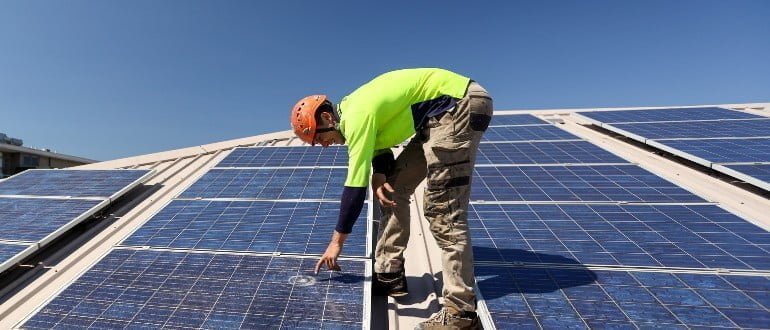

 

February 23, 2024

We’ve passed two key audits with flying colours

We’re proud to announce that we’ve successfully completed the ISO 9001 and 14001 audits, with no non-conformances. As you probably know already, an ISO audit is conducted by ISO-approved auditors, and it’s a particularly extensive examination – encompassing our whole process, from client contact to system delivery. We’re required to evidence a full audit trail, from informing the client on cost and specification, to project management, health and safety, communication, handover, and aftersales.

14001, on the other hand, provides a framework to assess our environmental performance, and essentially how proactive we’re being in working towards our sustainability goals. (As you might expect, it’s something we care very deeply about at Low Carbon Energy!) Specifically, the 14001 looks at elements like our resource usage and waste management, as well as our level of compliance with legal obligations, and what measures we take to ensure we monitor our ongoing progress towards environmental targets.

In both audits, the inspectors found no non-conformances – which means you can have complete peace of mind in objectively high standards of safety, efficiency and performance in any solar PV installation we deliver for you.

Big projects on the horizon

We’ve also secured orders for an additional 3 megawatts of solar energy to be installed across three sites over the next few months, which is going to save a total of about 840 tonnes of carbon emissions annually. To put that into perspective, that’s about 105 times the average household’s annual carbon footprint! It’s a significant figure that reiterates our commitment to the quality of service and delivery, and will help our customers make big progress on cutting their carbon emissions in line with sustainability plans, particularly in the ever accelerating race to Net Zero.

What’s more, these upcoming installations will save a total of about £670,000 for our clients, as well as enabling them to benefit from a variety of further ‘soft’ benefits, like a boosted Corporate Social Responsibility, and an improvement on its scores of Environmental, Social, and Governance – three criteria which are increasingly being used by partners and investors to judge businesses on their long-term commitment to climate goals.

And of course, that’s just a sample of the kind of benefits that your own business can enjoy with commercial solar panels – feel free to check out our post on their full range of advantages for more!

If your business energy supply is one of the areas you’re looking to make more sustainable in 2024, that’s exactly where we can help here at Low Carbon Energy. Our experts have over 60 years of combined experience in commercial solar, having helped SMEs and large corporations across a wide variety of sectors transform their business’ energy supply.

Each of our installations is bespoke, tailoring your solution on your specific energy profile, helping us to maximise carbon reductions and saving you thousands in energy bills. Feel free to look at our case studies for just a few examples of businesses which have reaped huge rewards from solar, such as Board24 and Haven Power. To find out how we can help you, feel free to give us a call today on 01282 421 489!

February 12, 2024

We’ve been installing solar panel systems for over 25 years now and counting here at Low Carbon Energy, working across a wide variety of sectors and industries. Our specialists have installed commercial solar panels, as well as those for retail and educational sectors – just to name a few! The process of solar panel installation is a frequent subject of questions from our customers, so to pre-emptively answer a few of yours, we’ve detailed the process in full below.

What are the various components for solar panel installation?

Before we go into the full details of the solar panel installation process, it makes sense for us to start with all the various parts involved. As you’ll know already, there are essentially no moving parts in a solar panel system – part of the reason they’re quite so cost-effective is because they require very little maintenance! In many ways, the inverter comprises the most complex part of the system, aside from the solar panels themselves.

Solar panels

The number of solar panels required will vary depending on the planned size of your system, but all of them will be made up of individual photovoltaic solar cells, designed to convert sunlight into electricity. These cells are covered in an antireflective glass sheet, and set into an aluminium frame. The end result is an efficient, effective solar panels, and a major means of renewable power for businesses all over the UK. Depending on how large they are (and which manufacturer produced them), solar panels can vary in weight too, often between 15kg and 30kg.

rooftop solar


Inverter

The inverter does what it says on the tin – in a nutshell, it converts Direct Current (DC) into Alternating Current (AC). The vast majority of electrical appliances run on AC, indisputably making the converter one of the most important parts of the system after the panels themselves. For larger installations above 7000 kWh, sometimes more than one inverter is used, as it can otherwise place an undue amount of strain on a single inverter.

Mounting system

A frequent misconception about solar panel installation is that they’re mounted directly onto the roof. Actually, they’re held in place by a simple but effective mounting system, consisting of roof anchors and a mounting frame. These roof anchors (sometimes referred to as roof hooks) are essentially stainless steel hooks that screw into the rafters of your roof.

There are several different types of roof anchors, and the type of roof tile will affect which ones are used. Slates, rosemary and concrete roofs will all require different kinds of anchors. The mounting frame, meanwhile, is made up of two parallel aluminium bars, sometimes referred to as rails. The these rails are attached to the roof anchors attached to your rafters, which all forms the basis of the mounting system.

Clamps

Finally, once the anchors are installed and the mounting system ready, the panels are mounted and secured by clamps. It’s worth noting that clamps and roof anchors are similar but separate. Anchors hold the mounting frame to the roof, whereas the clamps hold the solar panels to the mounting frame. There are two types of clamps – end clamps and mid clamps. The names are fairly self explanatory. Mid clamps sit between each pair of panels, whereas end clamps secure the final panel to the edge of the mounting frame. At least four clamps are used to secure each of the solar panels.

A guide to solar panel installation

How are solar panels installed?

Different installers sometimes have their own individual way of doing things, but all will follow the same basic process. That includes our specialists here at Low Carbon Energy.

Initial roof inspection and survey

Before we do anything in relation to fitting your solar panels, safety absolutely comes first. Therefore, the first thing we’ll do is carry out a detailed inspection of your premises, ensuring that your roof’s pitch, orientation, aspect and strength are all within safe parameters. We’ll also take into account how much shade or direct sunlight the roof gets, and take note of the available surface area (to ensure it fits with the required capacity of the installation). Additionally, we also make sure no planning permission is necessary for your solar panel installation. Planning permission is rare but you may need it for certain types of buildings.

At some point this obviously necessitates a quick inspection of your rafters, so we’ll also need access inside the building. If you have any questions about your solar panel installation or you need anything clarified, the team will always be glad to help.

While most businesses prefer to have their solar panels mounted on their roofs, you could potentially choose to have them mounted on the ground, instead. As long as they’ve got direct access to sunlight, it’s perfectly viable! We’ll take away our findings for further assessment and planning, and finalise an installation date.

Erecting scaffolding and marking out the roof

Most installations are complete within a day or two, but occasionally it may run into three. As we touched on above, one factor which can affect this is the roofing material. Since slate or rosemary are more fragile, it means that the installation will be a far more delicate job. If this is the case, naturally we’ll ensure you’re aware well in advance!

A solar panel company will send a team of around four; generally a project manager, two roofers and an electrician. Sometimes it will be slightly more, sometimes slightly less, but either way, like all reputable installers we’ll always ensure that all areas of expertise are covered. The first step will be to ensure that all the necessary structural framework is present to allow us to fit the panels. Once all scaffolding is erected and secured, the team will then mark out the roof, ready to install the panels.

Attaching the roof anchors

The marks on the roof will then indicate the locations for the roof anchors. This involves lifting some of the tiles on your roof, and adhering the anchors directly to the rafters. As we touched upon above, the more delicate these tiles are, the longer this part of the installation can typically take.

Man fitting solar panels

Attaching the rails of the mounting frame and the solar panels

Once the anchors are in, that clears the way for us to fit the rest of the mounting frame. When the aluminium rails are securely attached to the anchors and lined up appropriately, then we’re ready to fit the solar panels. At first, using the clamps, the panels are only positioned relatively lightly onto the frame. As soon as their inclination has been finalised, these clamps are then tightened, leaving the solar panels affixed firmly in place.

Wiring the solar panels and making final checks

This is where the electrician comes in. The manufacturer of the solar panels will typically be the one to wire them up initially, but they’ll still need to be connected to the inverter that we mentioned above. This inverter will need to be set up elsewhere in your premises, but still close to the main panel.

As we touched upon, the solar panels initially collect DC energy, so the inverter transforms this into AC so that you can use it to power your business. Inverters typically reach peak efficiency if they’re installed in a cooler place. They can feasibly be installed outside, but if this happens then they must be kept out of direct sunlight, or they could overheat and this could damage their efficiency.

As soon as this is all done, the electrician makes the final checks to the unit, and then will install the generation meter near the fusebox. The inspection of the installation is a key part, as it guarantees the safety and maximum effectiveness of the entire system. Finally, they’ll switch the electricity on, and you’re free to start reaping the benefits immediately!

Book UK Solar Panel Installation

That’s just a description of the general process – each solar panel installation can be individually different, depending on the needs of the business involved. Whatever the installation requires, you can count on us to handle it here at Low Carbon Energy. We have over 20 years of experience in solar panel installations, which means we’ve got the knowledge, skills and expertise necessary to deliver the solar panel system that’s perfect for your business. Give us a call on 01282 421 489 to discuss what a solar panel system can do for you, or alternatively feel free to read more about the advantages of solar power, and how it can benefit your business!

February 12, 2024

Where does the UK’s current climate reputation stand?

For the past few decades, the UK’s reputation on climate has undeniably been a strong one; we’re still a world leader in offshore wind power for example. However, over the past few years, that reputation has been slipping. We remain far behind where we need to be in achieving Net Zero, and a review last year from the government’s climate tsar, Chris Skidmore, was fairly damning. 

Similarly strong criticism has come from Lord Deben, the outgoing chair of the Climate Change, who pointed out that the progress towards Net Zero was being severely hampered by the government’s continuing support for the fossil fuel industry, especially by granting hundreds of new oil and gas licences for drilling in the North Sea. 

Our presence at COP27 (2022) was beset by controversy too, with Prime Minister Rishi Sunak first announcing that he was too busy to go, and then promptly bowing under the ensuing outcry and ultimately attending. Showing up apparently under duress to the world’s biggest climate conference is not a good look, especially as a world leader in climate, so it’s no wonder that other countries have started to have their view affected by the UK. In the words of Belize’s ambassador to the UN, it looked rather like the UK had “washed its hands of leadership”.

We were fairly instrumental in pushing for the (ultimately successful) climate agreements at COP28, but then the environment minister left the talks at a critical late stage to fly back to the UK to vote on the Rwanda immigration bill, which can generously be described as controversial. So that didn’t do much for our standing either. No wonder that Sylvie Russell, a prominent figure in the cleantech community, has described the government as having “a worrying degree of ambivalence”. 

Investing in cleantech is a new opportunity – but will ministers seize the day?

Now, while there is a lot of (justified) criticism of the UK’s position on climate, it’s worth noting that a significant proportion is specifically focused on the government and its policies. The market itself, on the other hand, is thriving. The UK is still noted for its thriving innovation scene – it’s home to more than 5200 climate technology pioneers, and according to a report by Tech Nation, it was one of the top names for hosting climate tech startups and scale-ups in 2022. 

However, while those are encouraging signs, the UK needs to rely on more than just market forces if it’s going to maintain its position as a global climate leader. It needs direct support from the government. Industry observers have noted that the UK has no equivalent of the American Inflation Reduction Act. Widely believed to be the most significant piece of climate legislation in American history, in the period of just 12 short months, the bill stimulated about $278 billion. That created over 170,000 jobs, and propelling the US a significant step further towards the achievement of its climate goals.

There are now growing calls for the UK government to draw up something similar. Now, it’s no trivial task – the government needs to invest something like £33 billion in cleantech over the next decade to spend the GDP of the US Inflation Reduction Act, according to campaign group Cleantech for UK. 

It’s easy to see why that will make politicians nervous – but in an echo of the same universal principles that generally apply to climate action, we need short-term pain for long-term benefit. It’s mainly a matter of political will. All too often though, that tends to be the biggest sticking point. And with a general election almost certainly on the cards this year, the political landscape could look very different in just a few short months. 

Of course, one things that ministers would do well to bear in mind is that it’s an issue of growing importance to countless voters, and the general public at large – including your customers. So if you’ve not considered transforming your own business energy supply, 2024 is a great time to think about doing it. And that’s exactly where we can help here at Low Carbon Energy. 

Our experts have over 60 years of combined experience in commercial solar, having helped SMEs and large corporations across a wide variety of sectors transform their business’ energy supply.

Each of our installations is bespoke, tailoring your solution on your specific energy profile, helping us to maximise carbon reductions and saving you thousands in energy bills. Feel free to look at our case studies for just a few examples of businesses which have reaped huge rewards from solar, such as Board24 and Haven Power. To find out how we can help you, feel free to give us a call today on 01282 421 489!

January 29, 2024

Get buy-in from your staff

This is one of the most important steps to any sustainability plan, and yet it’s one that can all-too-easily often slip under the radar. Sustainability strategies work best when everyone on your team fully believes in the mission – otherwise, the risk is that it can feel like just a box-ticking exercise, and let’s be honest, box-ticking exercises don’t always get done. 

So, it’s worth taking the time to talk to your team before you embark on the first (or next) stage of your sustainability plan. Find out what they like about it, or if there’s anything that can be improved, and what you can do to help make it easier for them to play their part in achieving it. These kinds of discussions can also save you time in the long run – you won’t have to go chasing people to do certain jobs, because if they believe enough in the mission on their own, you can count on them to police themselves.  

Gather data to support your plans

There’s no doubt that instinct and intuition both play a vital role in the formation of good sustainability plans, but cold, hard data is what actually helps get them done. It’s how you know what’s working and what’s not, and helps you to identify areas for improvement. Crucially, it can also serve as useful evidence for a certain approach if you’re trying to persuade your staff, managers, customers or partners of its viability. 

There are lots of ways you can go about collecting and categorising this data. For the more simple and straightforward goals, you might find that your monthly or annual statements are perfectly sufficient for measuring your success (like reducing your energy expenditure for example). It’s particularly worth looking to see if there are any areas at the moment where you feel your data collection could be improved – such as within your supply chain, or customer feedback, or emissions production. 

If your sustainability goals are more complex or long-term, it may be an idea to look at more specialised systems or services to help you collect, store and manage your data. And of course, you’ll need to account for your legal obligations under GDPR. 

One step at a time

Sustainability strategies arguably bear some similarities to New Years’ Resolutions in that it’s important to be ambitious, but not overstretch yourself. Now, we’re not saying that you need to go in completely the opposite direction, and set them too small either. In fact, we talked about the importance of being ambitious in one of our last posts of 2023, when we discussed why it’s important to aim high when setting your sustainability goals.

However, there’s a careful balance to be struck. Trying to take on too much at once can be overwhelming, often leading to missed targets, reduced morale, and ultimately slow progress towards your sustainability goals. To avoid that happening, one of the best ways to tackle large goals is to set your ultimate aims high in the form of a ‘stretch goal’, but break up the progress towards it into smaller, more manageable milestones. As we’ve discussed previously, achieving these can help drive forward progress, and keep everyone motivated and on track. 

Of course, these are just some of the most universal ways to help keep your sustainability targets on track – you may be able to think of plenty more of your own! Whatever the case, if your business energy supply is one of the areas you’re looking to make more sustainable in 2024, that’s exactly where we can help here at Low Carbon Energy. Our experts have over 60 years of combined experience in commercial solar, having helped SMEs and large corporations across a wide variety of sectors transform their business’ energy supply.

Each of our installations is bespoke, tailoring your solution on your specific energy profile, helping us to maximise carbon reductions and saving you thousands in energy bills. Feel free to look at our case studies for just a few examples of businesses which have reaped huge rewards from solar, such as Board24 and Haven Power. To find out how we can help you, feel free to give us a call today on 01282 421 489!

January 19, 2024

What are the main types of renewable energy?

Renewable energy is drawn from a diverse array of different sources, including solar power, which we specialise in here at Low Carbon Energy. Here’s a quick overview of some of the most prominent types of renewable energy.

Solar energy

Solar energy is the most abundant of all energy resources, and combined with the plummeting costs of solar panels over the last decade, that’s made them one of the most practical and popular forms of renewable energy solutions for countless organisations across the globe. Solar panels use a process called photovoltaics to convert sunlight into electricity – even on cloudy days – which can then be used immediately, or stored for later use. We have 60 years of combined experience with solar panels here at Low Carbon Energy. 

Find out how we can help you

Wind energy

Wind energy utilises the kinetic energy of moving air currents through the use of large wind turbines, which can be located onshore (on land), or offshore (i.e. out at sea). The UK is currently a global leader in offshore wind energy, operating more than 11,000 wind turbines with a total installed capacity of 30 gigawatts. That’s theoretically enough to power 26,280,000 (over 26 million) homes for a year! Average wind speeds vary considerably by location, but it’s thought that most regions in the world have considerable capacity for wind energy generation. 

Hydropower

Hydropower generates energy from the movement of water from higher to lower elevations, typically through reservoirs and rivers. Currently, it’s the world’s largest source of renewable energy in the electricity sector, and hydropower reservoirs also serve a number of other useful functions, such as providing clean drinking water, and flood and drought control. Since it’s reliant on stable rainfall patterns though, that means it’s vulnerable to the impacts of climate change, such as severe droughts and similar weather phenomena. 

Geothermal energy

Geothermal energy relies on accessible thermal energy from the Earth’s core, typically harnessed from geothermal reservoirs using wells and similar means. The renewable energy technology for harnessing geothermal energy has seen particularly rapid advancement in the past 100 years or so, but some countries have been using various techniques based on the principle for thousands of years. In recent years it’s been used to help encourage plant growth, for melting snow on roads, and for district heating in homes and businesses. 

What can renewable energy do for your business? 

Renewable energy has a wide range of almost universal advantages, potentially making it a powerful asset for your business. As far as businesses are concerned, the most widely-utilised type of renewable energy is solar power. We’ve documented the advantages of solar in detail before, but if you need a quick summary, here’s a brief roundup of some of the most crucial benefits. 

Reduce your carbon footprint

Solar panels can generate significant amounts of renewable energy for business, and they can help you to make a notable impact on your carbon footprint, especially if you work in an energy-intensive sector such as manufacturing. By harnessing a new source of clean, cheap renewable energy, you can cut your reliance on fossil fuels, directly resulting in lower greenhouse emissions. The exact size of the positive impact on your carbon footprint is dependent on a variety of different factors, often including your location, the nature of your business, and the energy consumption of any machines or systems you operate.  

Cost savings and Return on Investment

Renewable solar energy systems generate electricity at a fixed cost, helping you to reduce your reliance on the National Grid, and protecting your business from steadily rising energy costs. Solar panel installations also provide an excellent return on investment – the majority of them end up paying for themselves in a relatively short amount of time (depending on the size of the installation and nature of the business), giving you the freedom to enjoy all the cost savings that come from steady, reliably low energy prices.  

Boost your energy security and independence

Another key advantage of reducing your reliance on the National Grid is that it protects you not just from generally rising prices, but also sudden economic shocks due to global issues or geopolitical events, which have become ever-more prevalent in recent years. (The Covid-19 pandemic and Russian invasion of Ukraine are the first two examples that spring to mind.) By providing you with your own independent source of on-site energy, commercial solar panels can help you stabilise your costs in the long term, and make it markedly easier to protect your business continuity.  

Find out more about energy security

Improve your ESG and CSR credentials

Successive studies have shown that climate concerns and ethical issues are more important than ever to consumers, investors and potential business partners alike – a major factor in the rise of Environmental, Social, and Governance (ESG) principles, and Corporate Social Responsibility (CSR). What’s more, they’re wary of the potential for greenwashing – when companies who seem to be paying lip service to the idea of climate action, without actually taking any meaningful steps to address it. Commercial solar panels can serve as a tangible demonstration of your climate commitments, which can end up giving you a valuable edge over competitors. 

Achieve your sustainability goals and reach Net Zero

With cultural attitudes changing and regulatory expectations gradually evolving to be more in line with a low-carbon future, the businesses that stand to thrive the most are those which take a proactive stance in cutting their carbon emissions, rather than simply reacting to external pressure. That’s why your business can benefit from creating and implementing strong, realistic sustainability goals, with a view to ultimately reaching Net Zero. Commercial solar panels can be instrumental in reaching (and exceeding) those goals, helping you cut your carbon footprint and position yourself at the forefront of the low-carbon revolution – as you enjoy all the additional benefits that brings. 

Here at the Low Carbon Energy Company, we have over 60 years of combined experience in commercial solar, having helped SMEs and large corporations across a wide variety of sectors transform their business’ energy supply.

Each of our installations is bespoke. We tailor your solution to your specific energy profile, helping us to maximise carbon reductions and saving you thousands in energy bills. Feel free to look at our case studies for just a few examples of businesses which have reaped huge rewards from solar, such as Boeing and Irish Water. To find out how we can help you, feel free to give us a call today on 01282 421 489!
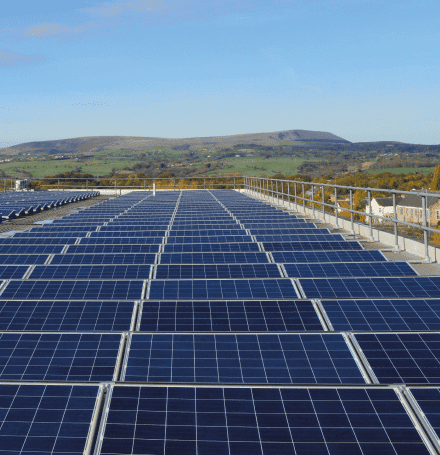
January 8, 2024