
ESG stands for Environmental, Social and Governance. Basically it’s a list of key criteria used by investors to evaluate companies that they might want to invest in. In other words, it assesses how your business performs from an environmental perspective, how it approaches social issues, and how your business is governed from the top down.
Crucially, ESG is used by investors to identify companies that could potentially present a higher financial risk moving forward. Now, there’s technically no standardised way of measuring ESG. Instead, companies like Bloomberg and S&P Global provide ESG audits. Each differs in their criteria ever so slightly but there are a few general similarities it’s worth noting. We’ll go into them in just a moment.
It’s not to be confused with Corporate Social Responsibility (CSR) which subtly but significantly different. Basically, CSR is focused on internal company policies, whereas ESG is more of an objective standard used by outside observers (e.g. investors or potential partners). You can find out a little more detail over on our Corporate Social Responsibility page.

The ESG guidelines are split into three distinct categories:
Environmental – this assesses your company’s energy use, waste, pollution, natural resource conservation, and treatment of animals. It’s also used to evaluate any environmental risks a company might face and how they manage them.
Social – the social criteria looks at your company’s business relationships. Does your business donate to the local community, or encourage employees to perform volunteer work? Does your company maintain working relations with other businesses that hold similar values to it? Do your company’s working conditions hold health and safety in high regard? And so on.
Governance – investors are very keen to know that a company uses accurate and transparent accounting methods. This is mainly to give them assurances that the company isn’t participating in any illegal activities. This criteria is also there to make sure that your business avoids any potential conflicts of interest between its board members, and that you’re not using any political contributions to obtain unduly favourable treatment.
ESG based investments soared in 2020, and they’ve not slowed down since. That’s largely because today’s climate crisis is more pressing than ever – investors, business owners and consumers alike are all increasingly conscious of it, and changing their behaviour accordingly.
This is because sustainability is particularly important to investors, who have to think even further ahead than consumers. In a nutshell – today’s investors want to put their money into companies that they think will make them a profit over a prolonged period of time, which marks a departure from the previously ‘safe’ investments in fossil fuels in decades gone by.
The United Nations is looking to move away from fossil fuel consumption in the years to come, and what they say has massive influence over how people react to the climate crisis. According to a report from the UN Intergovernmental Panel on Climate Change, human influences have played a vital role in contributing to the climate crisis, and some forms of climate disruption are now locked in for centuries. UN Secretary-General Antonio Guterres stated in response that this report must ‘sound a death knell for coal and fossil fuels before they destroy our planet’.
With mounting pressure from UN and the UK government on businesses to move away from fossil fuels, many investors have been deterred from putting their money into companies that don’t adhere to the ESG criteria. That makes them worth prioritising to make sure your business gets the maximum attention from investors, and maximum success in turn!
By following ESG criteria, you secure your company’s future as an investable prospect. On the other hand, companies that run exclusively on fossil fuels at the minute will suffer from this shift in agenda so it’s important to try and make changes as soon as possible.
In years gone by, responsible investments had a reputation for requiring some kind of sacrifice on the investors part from a profit perspective. Greener investments weren’t as common place as they are now, as environmental issues weren’t as highly regarded as they are today, so you were unlikely to make a profit on a green company.
But things have changed. Investors now believe that environmental, social, and governance criteria have a practical purpose. By following ESG criteria they’re able to avoid companies whose practices are deemed as a risk factor which could lead to a drop in share prices in the future.
ESG criteria will play an increasingly vital role in determining whether your company is treated as an attractive prospect by potential investors in the coming years. This is where we come in – here at Low Carbon Energy, our commercial solar panels not only provide an excellent way to reduce the cost of your own business energy bills, they also provide the means to meet your own ESG targets, making you much more likely to be picked up by a potential investor.
Our experts have over 30 years of combined experience, having helped SMEs and large corporations across a wide variety of sectors transform their business’ energy supply.
Each of our installations is bespoke, and we tailor your solution on your specific energy profile, helping us to maximise carbon reductions and save you up to thousands of pounds in energy bills.
Feel free to look at our case studies for just a few examples of businesses which have reaped huge rewards from solar, such as Boeing and Irish Water. Feel free to give us a call today on 01282 421 489, and we’ll get started setting you on a greener path!
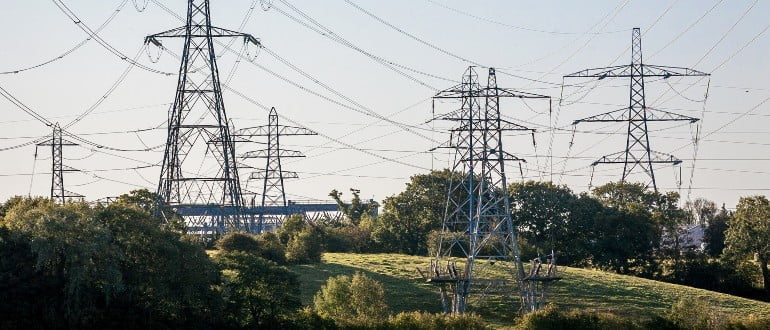
As part of the UK’s Net Zero commitments, the government has already announced its plans to decarbonise the nation’s power system by 2035. This week marked a major development in these plans – for the first time, renewable generators have had the green light to provide stability services to the National Grid ESO, which is the electricity system operator for Great Britain.
Renewables have been gaining steadily more traction in recent years – increasing numbers of businesses are taking advantage of commercial solar panels to cut their carbon footprint, and a poll in Spring 2021 recorded overwhelming public support for the prioritisation of renewable energy. This latest development is a particularly significant step, given its wide-ranging impact on the United Kingdom as a whole.
Starting from the 15th of February onwards, wind, wave and solar generators will now be able to offer specific stability services to the National Grid. Up until now, these sorts of services have only been provided by conventional generators, such as hydrocarbon or nuclear plants. The change is the result of a formal change to the Grid Code, which is essentially the system that sets the specification for everything that connects to the National Grid.
Updates to the Grid Code aren’t always especially newsworthy in themselves – the Grid is routinely updated to ensure that it’s always responding effectively to new economic influences, and continually able to meet demand. However, this particular Grid Code update is a significant event in itself, given that it paves the way for a new market in stability services from renewable sources, and moves us a big step closer to successfully decarbonising our power system and facilitating our achievement of Net Zero.
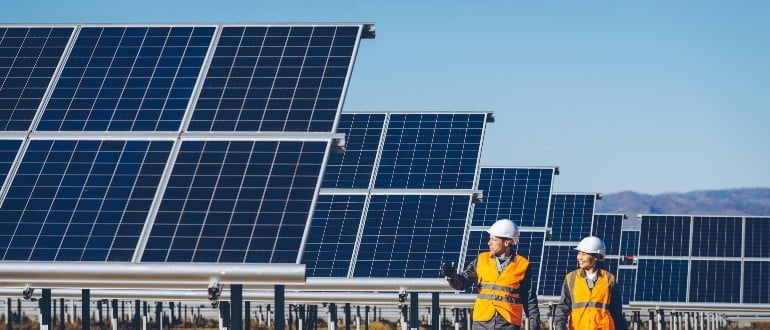
It enables renewable energy sources to play an even bigger role in the UK’s energy mix, helping us slowly but surely break our addiction to fossil fuels, and cutting down on our national carbon footprint. That’s the key goal underpinning our Net Zero ambitions – the phrase refers to successfully striking a balance between the amount of emissions we put into the atmosphere and the amount we remove, levelling out to ‘Net Zero’.
The approval for green generators to stabilise the National Grid has been described as a ‘breakthrough moment’ by Tony Johnson, who led the project for the National Grid’s ESO’s markets team.
“It’s the culmination of up to 10 years of thinking and working with stakeholders to find the common ground between what equipment is capable of doing and what the system needs.” He said. “It also ensures that as we transition away from conventional fossil fuelled generation, we can operate the grid securely and efficiently, which will ultimately save consumers money.”
This isn’t quite the end of this story just yet – the National Grid ESO industry operator group still has to settle on the refinements to its scheme. However, in the meantime, green generators are now free to calibrate their equipment to standards required to bid for stability services, including inertia and frequency support.
For many people, this will be a very welcome piece of news in light of the continuing energy crisis, and the overall cost of living that the UK is currently reckoning with. Businesses and larger organisations, too, are having to find new ways to adapt their day-to-day operations to keep running costs down.
Happily, that’s exactly where we can help here at Low Carbon Energy. Our commercial solar panels not only provide an excellent way to take the edge off your own business energy bills, but also provide the means to meet your own Net Zero and decarbonisation targets.
Our experts have over 30 years of combined experience, having helped SMEs and large corporations across a wide variety of sectors transform their business’ energy supply.
Each of our installations is bespoke, and we tailor your solution on your specific energy profile, helping us to maximise carbon reductions and save you up to thousands of pounds in energy bills. Feel free to look at our case studies for just a few examples of businesses which have reaped huge rewards from solar, such as Boeing and Irish Water. To find out how we can help you, feel free to give us a call today on 01282 421 489!
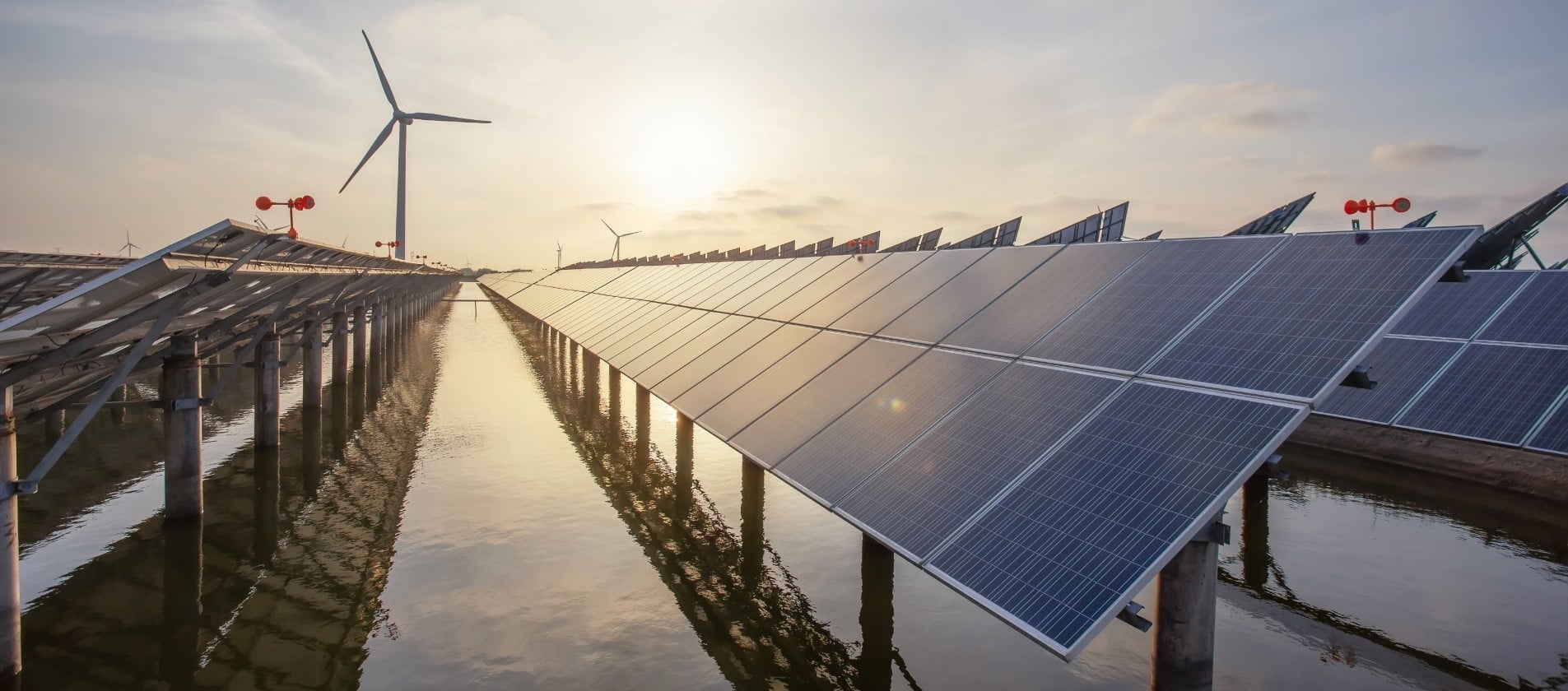
Now, as we’ve briefly touched on above, the current energy crisis is driving a general rise in the cost of living, and the vast majority of that is down to the rise in wholesale gas prices. There’s no single cause of this gas price rise – it’s more to do with a combination of multiple factors.
For starters, the longer winter of 2021 meant that European and Asian countries burned through significantly more of their existing gas reserves in order to heat their homes. The multiple lockdowns that many countries suffered didn’t help either, as that meant demand was higher and production was lower. Plus, the weather was less windy over the last summer. With less wind power available for electricity, that meant that once again the world turned to its existing gas reserves.
The entire situation has shone a harsh, unflinching spotlight on the UK’s reliance on fossil fuels. While we’ve made some good progress on this front before, we’ve evidently still got a long way to go, as our domestic gas prices remain inextricably tied to volatile international markets. Some have also pointed out that the impact of the current crisis may have been lessened if more had been done to ensure everyone’s home is well insulated.
Up until now, the main thing protecting consumers from these price rises was the energy price cap. Ofgem initially resisted moving this cap, to the extent that it even ended up forcing multiple smaller suppliers out of business, as they were forced to buy gas at higher rates than they were allowed to sell them. But now prices have risen to such an extent that even the price cap can’t protect consumers any further, and Ofgem has been forced to raise it.
Now, as millions of people are forced to grapple with soaring costs, the government is being urged to accelerate the nation’s shift to renewables and prioritise implementing a more effective Net Zero strategy, to protect Britain from similar crises in the future.
Right now though, it doesn’t look like everyone in government is fully on board with that plan just yet. In fact, a recent Telegraph report appeared to suggest that government ministers are instead questioning whether pursuing Net Zero up until now was indeed a wise move, given the costs and logistics of implementing so far – and the fact that now there are new soaring costs to content with.
But supporters of the plan have already pointed out that far from shying away from Net Zero, the government should be focusing on it more than ever, as the long term benefits far outweighs the short term costs. Ed Miliband, the shadow climate change and net zero secretary, is one such supporter, and he’s on record as saying that the failure to transition to a zero carbon economy has made us more vulnerable as a country. The dependency on fossil fuels makes us more exposed to unstable global gas prices, leading to higher bills for everyone.
Conversely, renewables don’t incur a ‘marginal cost’. Solar panels, for example, don’t need owners or operators to buy any fuel for it, unlike coal stations and coal, which means that renewable technologies can start producing energy more or less immediately on their completion.
Al that underscores the fact that more renewables under the Net Zero strategy is one of our best routes out of this crisis, as it provides us with valuable energy security in an increasingly insecure world.
The Department for Business, Energy and Industrial Strategy has released a statement saying that “since 2010 we’ve delivered a 500% increase in the amount of renewable energy capacity connected to the grid – more than any other government in British history. We remain committed to go even further and faster to build a homegrown renewables sector and reduce our reliance on volatile fossil fuels, and just last month we launched the biggest renewable energy auction to accelerate deployment.”
However, it’s not difficult to spot a some inconsistencies in the government’s messaging. It’s worth noting that on the same day that the UK’s energy prices increased, Chancellor Rishi Sunak said that he wanted to encourage more investment into oil and gas drilling in the North Sea. That’s unsurprisingly annoyed industry experts and, many of whom have pointed out that producing more gas by drilling more in the North Sea wouldn’t help UK gas prices drop – primarily because any gas harvested would simply be sold on to international markets for the highest bidder.
There’s also the fact that the UK government has been conspicuously dragging its feet on renewable energy for the last few years. The previous Tory government even removed subsidies for onshore wind farms for several years, which put a sizeable dent in the growth of the sector.

As things stand, the Treasury is currently considering a wide range of solutions. Some are less controversial than others; amongst the more worrying ones is the proposal to scrap some green policy levies. To say that’s not going to help would be a bit of an understatement – it’s been described by the E3G thinktank as ‘utterly self-defeating’, and would leave us addicted to fossil fuels for longer.
This isn’t speculative – David Cameron notoriously made a very similar move when he was Prime Minister in 2013. Roughly a decade down the line, it’s estimated that hits has resulted in domestic energy bills that are now £2.5 billion more a year for UK customers than they would have been if the green policies were left intact.
It’s worth reiterating at this stage that it’s not just the marginal cost issue that makes renewables more economical – they’re now cheaper from a standing start, as the cost of solar panels and wind turbines have both plummeted in recent years.
Indeed, according to an expert from trade body RenewableUK, the figures published by Ofgem show that green levies are falling, so blaming renewables and Net Zero for the current crisis would be misinformed at best, arguably irresponsible at worst. Regaining that energy security is key to stabilising our energy economy, and the best way to do that by far is through the use of renewables.
And while we watch the government to see whether it does indeed act on these calls from industries and consumers alike, it’s important to bear in mind that these same benefits apply on a smaller scale too – so in other words, commercial solar panels can be an excellent way for your business to protect itself from skyrocketing costs.
That’s exactly where we can help here at Low Carbon Energy. Our experts have over 30 years of combined experience, having helped SMEs and large corporations across a wide variety of sectors transform their business’ energy supply.
Each of our installations is bespoke, and we tailor your solution on your specific energy profile, helping us to maximise carbon reductions and save you up to thousands of pounds in energy bills. Feel free to look at our case studies for just a few examples of businesses which have reaped huge rewards from solar, such as Boeing and Irish Water. To find out how we can help you, feel free to give us a call today on 01282 421 489!
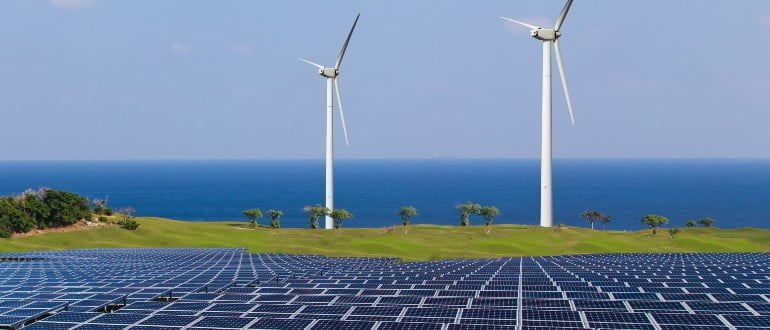
The latest report from the IEA notes that the world has installed a total of about 290GW of new renewable energy generation capacity, mostly in the form of wind turbines and solar panels. It might not look like all that much when written as a triple digit number, so let’s put that figure in perspective.
According to the US Department of Energy, it roughly equates to the output of over 900 million solar panels, and it’s enough to power thirty-one billion, nine hundred million LED light bulbs. (That’s more than four times as many people on the face of the earth, by the way.) It’s a lot of energy, is the point, and what’s more, notably outstrips the figures from last year. If the current trends remain on track, renewable energy generating capacity is likely to outstrip the capacity of fossil fuels and nuclear energy (combined) by 2026.
So what’s been driving the change? Well, a lot of it has been political, as governments around the world take concerted action with more ambitious targets on cutting greenhouse gas emissions. The need for these has been been increasingly stark in recent years, particularly highlighted at the COP26 UN global climate summit in November 2021. On a more granular level, it’s also been influenced to some degree by greater take-up of renewable energy solutions by commercial businesses in a wide range of sectors, from agriculture to manufacturing to retail and wholesale, reflected in the steadily growing support amongst the wider public, too.
Solar alone is providing about half the increase, according to the IEA’s report, which goes on to say that renewables will account for 95% of the increase in global power generation capacity from now until the end of 2026. However, it’s worth noting that this is still only about half of what’s required to meet Net Zero carbon emissions by the middle of the century. Countless customers, investors and potential business partners are keenly aware of this – which should put Corporate Social Responsibility right at the top of your agenda this year. The public and commercial sector are expecting businesses to be ever more rigorous about measuring their impact on the environment, and bringing in more measures to mitigate it – which is exactly where commercial solar panels come in.
In fact, commercial solar panels provide a significant range of short and long-term benefits to your business, doing everything from helping you save money on your energy bills, to giving you more energy security against turbulent market hikes and troughs. Crucially though, when it comes to CSR, they serve as tangible and demonstrable evidence of your commitment to transforming your energy supply, which may end up making all the difference as to whether or not potential customers or partners choose to do business with you.
In short, commercial solar panels can provide the perfect way to kickstart your Net Zero ambitions – and that’s exactly where we can help here at Low Carbon Energy. Our experts have over 30 years of combined experience, having helped SMEs and large corporations across a wide variety of sectors transform their business’ energy supply.
Each of our installations is bespoke, and we tailor your solution on your specific energy profile, helping us to maximise carbon reductions and save you up to thousands of pounds in energy bills. Feel free to look at our case studies for just a few examples of businesses which have reaped huge rewards from solar, such as Boeing and Irish Water. To find out how we can help you, feel free to give us a call today on 01282 421 489!

With record-high energy prices, the cold winter weather and our nationwide Net Zero targets, it makes sense for us to try and be more conservative with our use of gas and electric. What’s more whether it’s in the workplace or at home, you can save energy and ultimately save on your bills at the same time. So, from installing commercial solar panels, to being smart with your heating and simply switching things off, here are five of our best energy saving tips for you to try.
Heating is one of the biggest drains on our energy and can account for a large percentage of your total costs. By turning the thermostats down in your house or offices for instance by just 1ºC, you can reduce the amount of energy you’re using by almost 10%. On top of this, when your buildings or rooms aren’t in use you should turn the dial right down to just a lukewarm temperature to avoid frost or damp.
It’s not just about how you heat your rooms, it’s how well they can trap and hold the warmth. This is where having quality insulation is a must, as whether it’s cavity wall, exterior wall or roof insulation, the thermal performance of a building can improve significantly. As a bonus, your heating then won’t have to work as hard, so you can use less energy and again save on your bills.
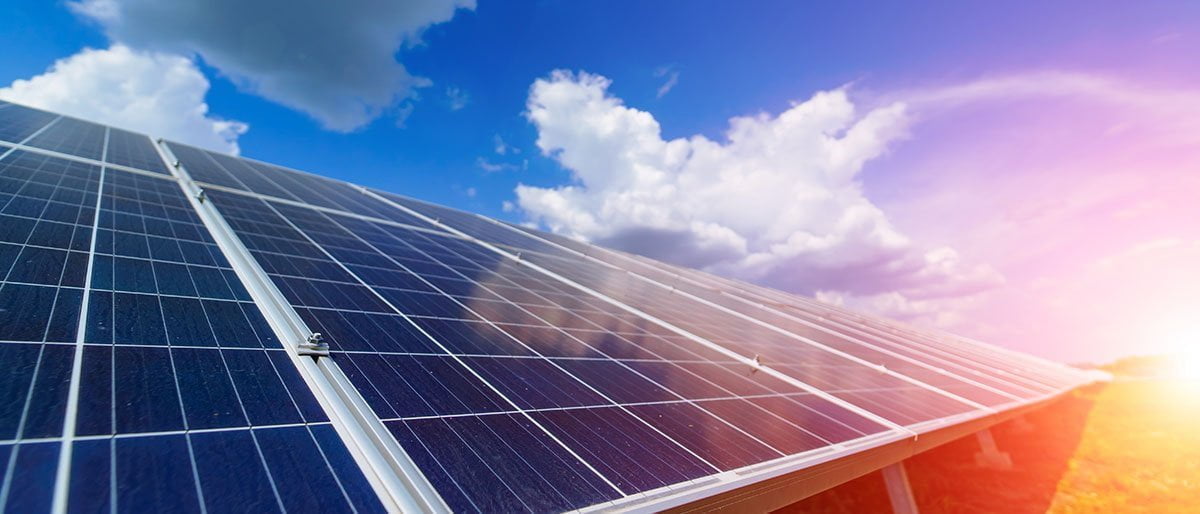
Having solar panels fitted to your home or business can be a great investment as it’ll give you access to cheaper, greener energy. What’s more, they will significantly reduce your carbon footprint, and from a business perspective, they are great for boosting your Corporate Social Responsibility. This is because they demonstrate to your customers your company is responsible and making an effort to help us meet our Net Zero goals.
Leaving the lights on and leaving devices, appliances and machines on standby can add hundreds of pounds to our energy bills, so switching these off when they’re not in use is an effective way to save. As a business you should also encourage your staff to be more vigilant with their tech and get them to turn them off at the end of each working day.
In most properties, every time you run the hot water you’re using energy, so try to be more frugal with it. A few things to consider are not leaving your taps running when washing up, having timers fitted to showers and taps so they automatically switch off and avoiding having baths. The obvious additional benefit to this is you also reduce your water consumption.
By implementing some or all of the above into your daily routines, you should start to notice that your usage drops and that you’re saving on your energy bills. What’s more, having solar panels installed can provide you with the added bonus of energy security, so your home or business can keep running without any disruption from things like winter weather blackouts. This is also something we can help you with here at Low Carbon Energy, as we design and fit solar panels for homes, businesses and more.
As an official Carbon Trust Partner, we also have the knowledge and expertise you can trust to get the right technologies for your specific needs. Take a look online today to see what we have available, but if you want to talk to us directly, give us a call on 01282 421 489.
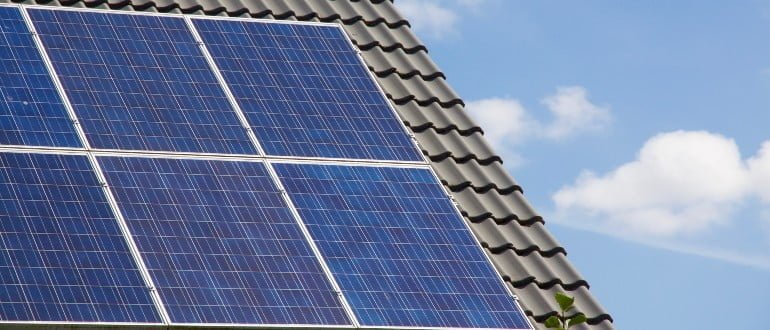
So, it’s the end of another year. And that means, of course, another perfect opportunity to look back over the year’s main moments in the world of solar energy. From the new climate announcements, to Net Zero targets and societal progression with renewables in the face of our continuing energy crisis – we’ve collated the key stories and recapped how those with commercial solar panels or solar panels on their homes also had a particularly positive year. In case you missed them – here are the biggest stories of 2021.
When Chancellor Rishi Sunak presented his Budget back in April, one of the big pledges involved a supposed £15bn being set aside for ‘supporting green objectives’. While the wider details around where exactly this money would go were a little vague, it was believed that this would be earmarked for further development of wind and solar energy farms around the UK.
Should this turn out to be the case, it would mean firms and households with solar panels will essentially be one step ahead in the shift towards the use of these cleaner energy sources.
In addition, Mr Sunak’s Budget also explained how certain ‘tax relief’ opportunities would be made available on some commercial technologies. Again, this wasn’t explicitly about solar panels, but if that does turn out to be the case, it would be another cost-saving benefit for those who have them.
Only a month later another story broke that a new report from Carbon Tracker had claimed that within the next 10 years solar would be the world’s ‘most economic’ generation source. To put this in simple terms, the report is essentially saying that solar has the potential to be the most affordable and practical means of producing green energy.
At the same time, however, the same story did explain that a ‘shift in attitude’ was still needed politically to convince nations around the world to ramp up solar production. But, it’s also clear that more and more people are seeing the benefits of this energy source, not just those who already have and use solar panels.
2021 as a whole has seen a big push on the government’s ‘Net Zero’ objectives, but in terms of energy generation, solar was shown to be something that will be a key part of our efforts to achieve these green goals.
When it comes to the phasing out of fossil fuels and/or inefficient energy technologies, solar and also wind are by far and away the most productive and cost-efficient forms of power generation to take their place. Moreover, this would be something especially relevant for businesses with large-scale premises and areas in which panels could be installed.
This is something many of our existing clients have already benefitted from following their installation of commercial solar panels.
As we headed towards autumn, the beginnings of our current energy crisis were starting to materialise with gas prices jumping as countries began ramping up their energy use following the loosening of lockdowns and Covid-19 restrictions. Many forecasters then accurately predicted the unfortunate circumstances we now find ourselves in, but at the same time highlighted how those with solar panels wouldn’t be so harshly affected by the crisis.
This stemmed – and still does stem – from the fact that the solar energy harnessed by those using the technology isn’t affected by the major wholesale price fluctuations. While at the same time, they also offer better energy security and reduced dependance on affected fossil fuels.
All of the above certainly do a lot to emphasise the importance of solar panels and harnessing solar energy – not just now but in the future as well. So, if you have concerns about the continuing energy crisis, you want to improve your business’s green credentials or you want to save on the increasing cost of electricity, we can help.
Here at Low Carbon Energy, we can design and fit solar panels that are bespoke to your business and your operations – ultimately helping you achieve objectives like those we’ve listed above. We work with a number of sectors and we’re an official Carbon Trust Partner, so you can count on our expertise to get the right solar panels for your company. Call us on 01282 421 489 to talk to our team today, or browse our energy technologies page to learn more.
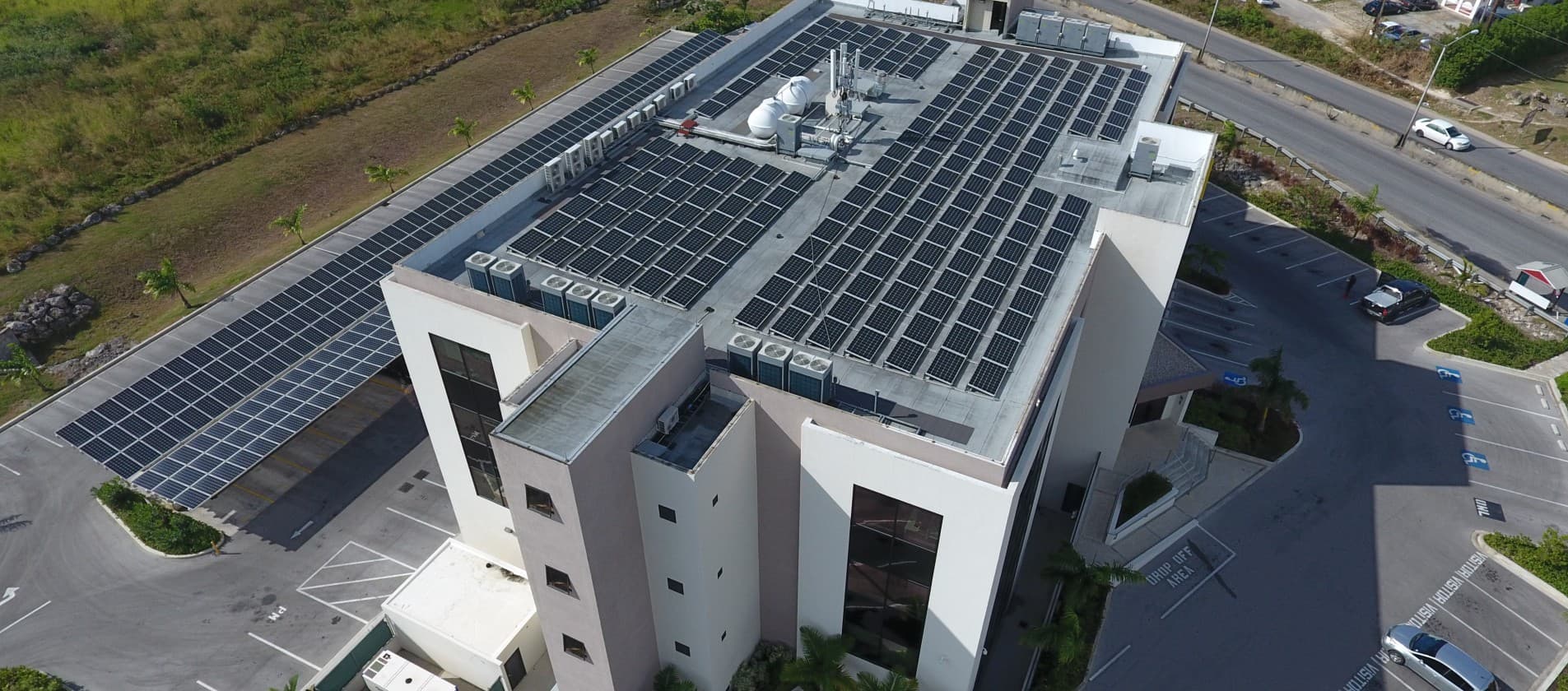
Here it is in a nutshell; by having commercial solar panels fitted, your business could open itself up to a wealth of benefits including a clean, green energy supply, subsequent reduced energy costs and a positive and progressive brand image to showcase to customers. All sounds good so far, right? The only big question left is: how do you know that your business would be able to properly reap all the benefits? Well, that’s where we can help here at Low Carbon Energy. To help you decide, here are five key signs that your business would be a good fit for these innovative harnessers of renewable energy.
As a rule of thumb, just one square foot of space has the potential to produce about 15 watts of energy. So basically, if you have large, free and unused areas – be it the roofing of your business or the surrounding land – these could be the perfect spaces for installing solar panels. It’s one of the main reasons that so many industrial and large-scale businesses stand to benefit hugely from solar panels; because they tend to have copious amounts of available roof space on their facilities.
On top of having available space, it’s also important that these areas get a lot of sunlight. Ideally these should be south-facing in the northern hemisphere, as this orientation will give the optimum and most direct amount of sunlight. You can of course still look to invest in solar panels if the areas you’ve earmarked aren’t south-facing, but you should check they’re not overlooked or in shadow from other structures, buildings or wildlife.
If your business operations are on a larger scale – particularly in areas like tech and manufacturing – the chances are your current energy consumption and energy costs are quite high. Solar panels can be a fantastic means of bringing such expenses down.
Take one of our clients Rascal’s Confectionery, a highly energy intensive manufacturer of sweets and confectionary, who through the installation of bespoke solar panels now avoids annual CO₂ emissions of 70,762.5kg and has running electricity costs of just £0.02/kWh.
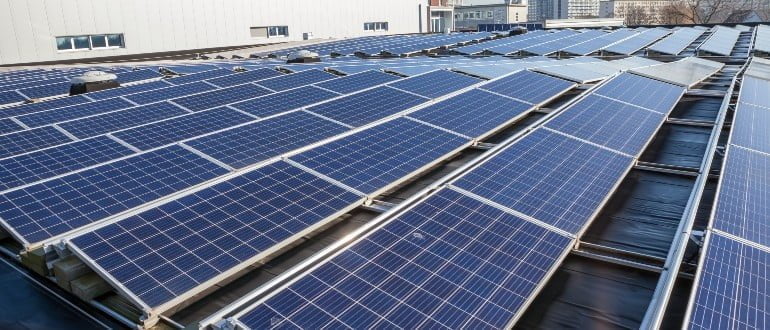
If you’re operating in a sector that heavily relies on electricity and where even the smallest downtime due to power cuts could be catastrophic, solar energy can help provide energy security – as well as added peace of mind your business won’t grind to a halt.
Last but not least, a sure sign that solar panels could be right for your business is if you want to improve your Corporate Social Responsibility. Having solar panels is an incredibly effective means of showing your business is making a concerted effort to help fight climate change and is being mindful of its energy use.
In addition to this improved CSR, your business brand may then appear more favourable to prospective clients – your new solar panels can also be like a physical badge of honour being proudly adorned by your buildings or your business’s land. Plus, you’ll also be able to reap the cost-saving and energy security benefits all at the same time.
If your feel that your business fits in with one or more of the above, you need to ensure you invest in commercial solar panels that also best suit your bespoke requirements. That’s where we can help at Low Carbon Energy we have a great deal of experience in designing and fitting solar panel systems for an array of different businesses, coming in many types and sizes – and we’re a proud Carbon Trust Partner. Browse our online energy technologies pages to find out more about what we can provide and feel free to call us on 01282 421 489 if you’d like to speak to us directly.
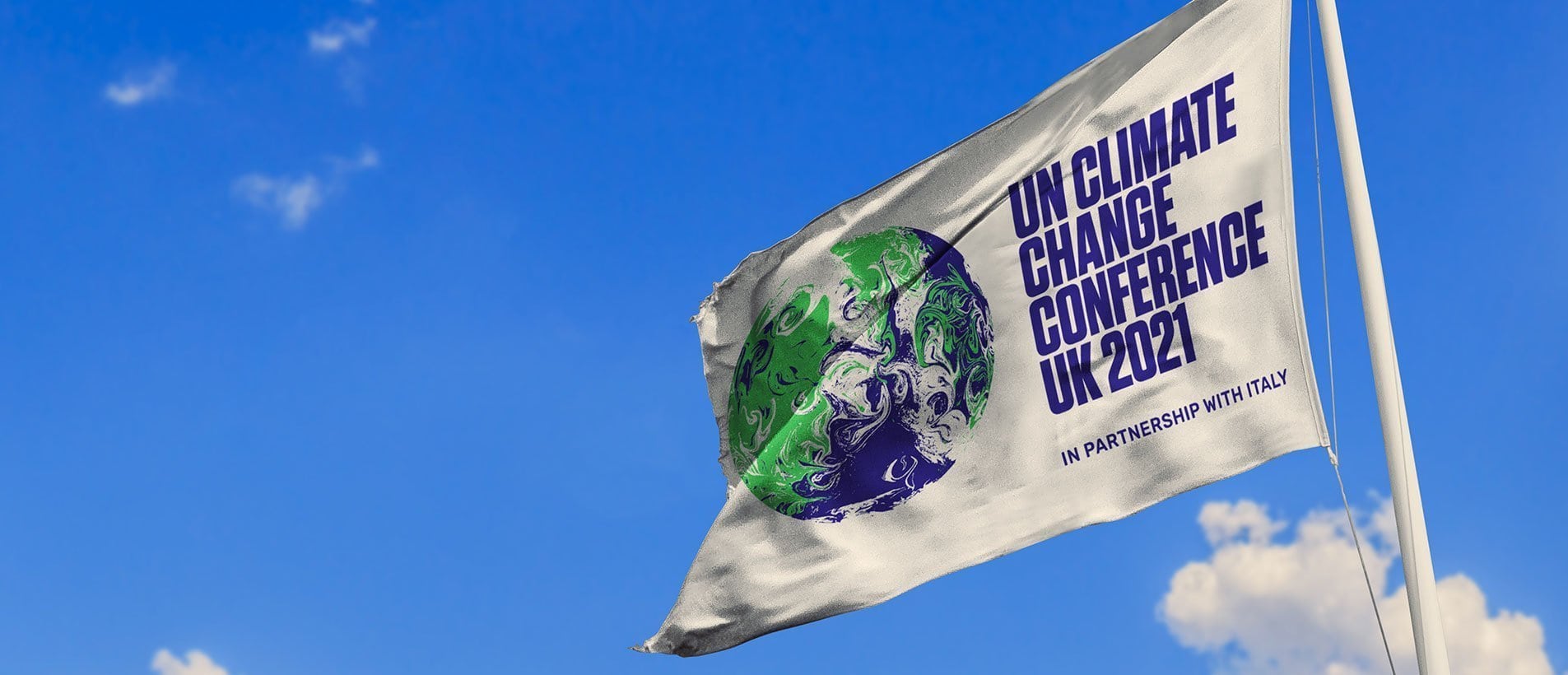
In the opening days of this month, the eyes of the world turned to Glasgow, and the United Nations Climate Change Conference (COP26), where world leaders and climate experts gathered to discuss solutions to the ever more pressing issue of climate change. Now, naturally the conference has produced a steady stream of news to stay on top of, but there’s one particular piece that’s got the attention of business owners, especially those considering commercial solar panels.
According to new rules set out by the Treasury, from 2023 most large UK firms and financial institutions will be forced to show how they intend to hit their climate targets – specifically, how they’ll achieve Net Zero. (In case you need a quick refresher, Net Zero refers to the idea of striking a balance between the number of emissions that are put into the atmosphere, and the number of emissions taken out – so that it levels out to zero.) So what does that mean, and what’s the reaction been like?
COP26 has been notable for producing some more encouraging news recently (at least on the surface of it). More governments have signed a collective agreement to limit their reliance on fossil fuels, and slowly phase out coal from their respective country’s energy mix. Now, more than 450 firms have agreed to limit global warming to 1.5C above pre-industrial levels. Not just any 450 firms either – together, they’re collectively responsible for 40% of global financial assets, equating to about $130 trillion (£95 trillion).
The UK government has been open about its intentions to increase transparency and accountability when it comes to climate targets, and Chancellor Rishi Sunak – hot on the heels of his Budget announcement last month – said that the UK is now leading the world in becoming the “first-ever Net Zero aligned global financial centre.”
It will now be left to firms and shareholders to decide how to adapt their businesses to the transition, and draw up their plans to decarbonise. Once they’ve committed to a Net Zero target, they’ll then need to publish these plans for review by a dedicated panel of experts, who will ensure that these plans aren’t just spin.
Crucially though, as things stand, these commitments won’t actually be mandatory – so there’s nothing to stop firms from simply not setting themselves Net Zero targets in the first place.

Green groups are understandably wary of the woolly pledge. Global Witness, an international Non-Governmental Organisation, says that without proper regulation, the plans are doomed to fail.
Veronica Oakeshott, head of forests and policy and global advocacy at Global Witness, said that “today’s announcement amounts to more greenwashing if it’s not legally binding”, referring to the deceptive practice of deliberately portraying a business, product or service as more environmentally friendly than it really is.
Greenpeace agreed, saying that the plan amounted to little more than a marketing slogan for blue-chip firms, and one that left plenty of wiggle room for them to largely carry on business-as-usual, rather than concentrating on fundamentally rewiring the system.
Mark Campalane, founder and executive chair of financial think-tank Carbon Tracker, said that the ambition was praiseworthy, however it meant little as the details of the plans remained murky. He pointed out that none of the financial assets concerned are currently aligned with Net Zero, and until they are then no group of companies can truthfully say they’re meeting the ‘Paris target’, set at the Paris Climate Accords six years ago.
Your business might not be set to receive as much scrutiny as the world’s biggest companies, but there’s no denying that demonstrating your own commitment (and progress towards) Net Zero can bring some serious benefits to your business. Notably, it’s excellent for giving your business increased Corporate Social Responsibility. This refers to the idea that consumers, investors and business partners are drawn to organisations demonstrating ethical practices and green awareness. Happily, that makes achieving Net Zero a sensible long-term business decision, as well as (of course) being the right thing to do!
Commercial solar panels can provide the perfect way to kickstart your Net Zero ambitions – and that’s exactly where we can help here at Low Carbon Energy. Our experts have over 30 years of combined experience, having helped SMEs and large corporations across a wide variety of sectors transform their business’ energy supply.
Each of our installations is bespoke, and we tailor your solution on your specific energy profile, helping us to maximise carbon reductions and save you up to thousands of pounds in energy bills. Feel free to look at our case studies for just a few examples of businesses which have reaped huge rewards from solar, such as Boeing and Allertex. To find out how we can help you, feel free to give us a call today on 01282 421 489!
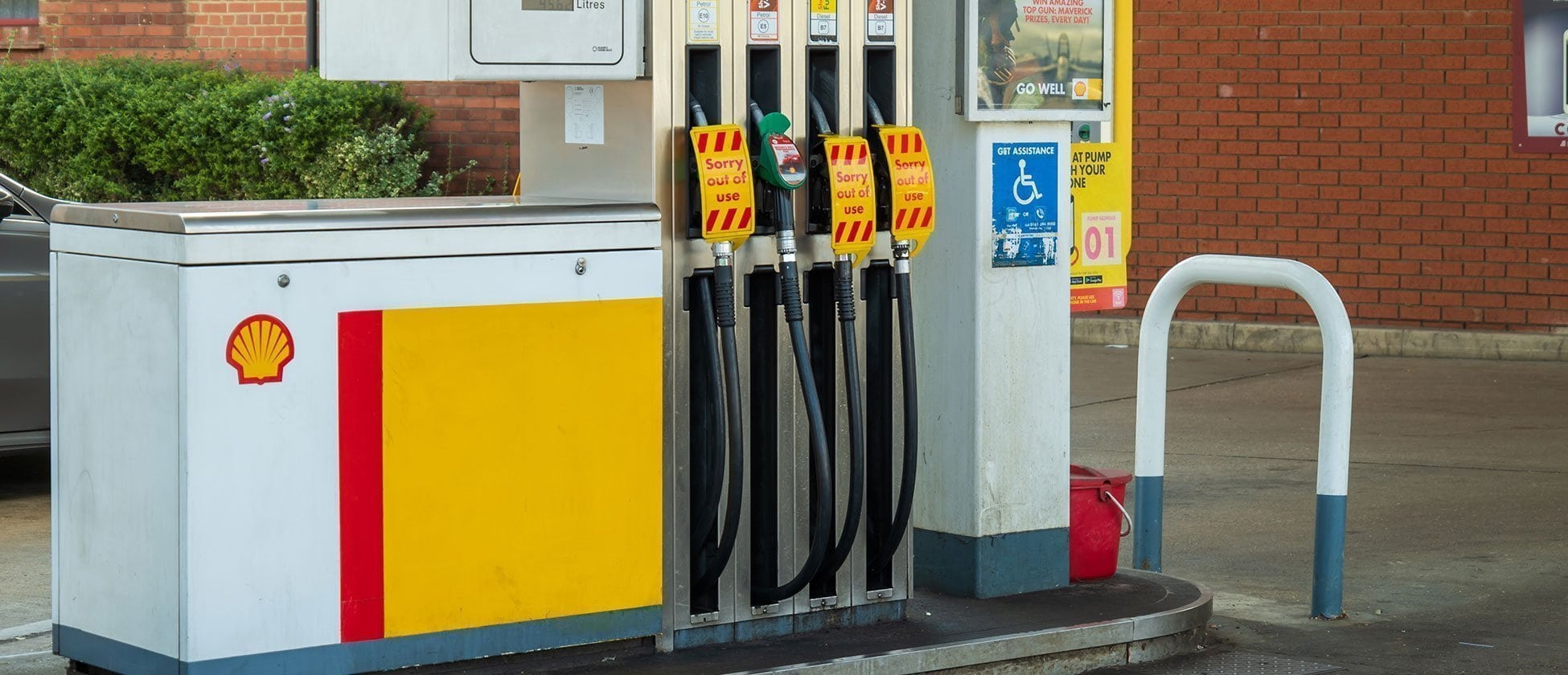
The energy crisis itself probably isn’t news to you – it’s been making headlines for quite some weeks now, and there’s almost nobody in the UK who doesn’t stand to be affected in some way. After the petrol shortages of September, the steadily rising fuel prices and cost of living isn’t welcome news to anyone. But unfortunately it seems that they’re here to stay – for the time being, at least.
While that might be a pretty depressing realisation, the important thing is try not to get too overwhelmed by it (probably easier said than done!). Instead, it’s a good idea to try and focus your efforts on coming up with practical solutions that can lessen the impact as much as possible on your business – and that’s exactly why you might commercial solar panels so useful. First though, let’s quickly examine a few of the key points about the crisis itself, and what factors are influencing its development.
To be honest, it’s relatively tricky to pin it down to a single definitive cause – it’s more down to a series of interlinking factors. For starters, the global demand for gas is rising as the economic activity around the globe is recovering from the pandemic. But for various reasons, supplies are more limited than they have been in past years, and that’s led prices to be pushed higher.
Europe is feeling the squeeze because recently the continent’s gas production has been in steady decline. That means that Europeans are largely reliant on imports from a select few countries like Russia and Norway. Complicating that is the increased demand from regions like Asia and the United States, which finds itself in particular need of gas since suffering devastating winter storms earlier this year.
As things stand, there’s already been a 600% rise in European gas prices so far in 2021, and the UK is being hit particularly hard. That’s because we’re more reliant on gas than our EU neighbours, but we have less capacity to actually store the fuel. Just earlier this month, we saw a staggering 37% spike in wholesale gas prices in just 24 hours. now, the gas shortage is impacting everything from food to common consumer supplies.
The 2021 Budget released this week was meant to mitigate at least some of that. While there’s been a freeze on fuel duty though, there’s been no mention so far of direct assistance with those rising gas and electricity bills.
One significant quote came from Ed Miliband, the Shadow Business Secretary, who pointed out that the nation hasn’t built a sufficiently resilient energy system, and called on the government to “move forward” with nuclear power, renewables like wind and solar, and energy efficiency projects like home insulation.
He’s certainly not wrong there, especially if you’re a business owner. Renewables like solar can help give you exactly what your business needs most during these turbulent times – cheaper bills and energy security.
Solar panels have a huge range of advantages, all of which we’ve explored in more detail on the blog before here at Low Carbon Energy, but perhaps one of their most important ones is their ability to protect you from market volatility. And whatever you think of current events, there’s no question that the market has never been more volatile. The extent of the issue might mean that solar panels may not be able to unilaterally help you bypass the issue, but they can certainly take the sting out of the highest bills by allowing you to generate your own energy on-site, and that alone can make them worthy of investment.
What’s more, they can also provide you with reliable energy security against local, regional or national outages or blackouts. Depending on your sector and the nature of your operations, even a relatively small blackout (and the resultant downtime) can be hugely expensive, and the consequent financial shock isn’t something that every business can afford.
At Low Carbon Energy, we’re here to help you realise all those ever-more vital advantages for your own organisation. Our experts have over 30 years of combined experience, having helped SMEs and large corporations across a wide variety of sectors transform their business’ energy supply.
Each of our installations is bespoke, and we tailor your solution on your specific energy profile, helping us to maximise carbon reductions and save you up to thousands of pounds in energy bills. Feel free to look at our case studies for just a few examples of businesses which have reaped huge rewards from solar, such as Boeing and Allertex. To find out how we can help you, feel free to give us a call today on 01282 421 489!
The government’s Net Zero strategy has finally been released this week, arguably long overdue. The Committee on Climate Change, for example, has been pushing the government for most of the year to finish and release the strategy, pointing out that waiting any longer will make the costs of necessary action even higher. Now, with less than two weeks to go until COP26, the government has outlined a broad, multi-pronged strategy that outlines how the nation will decarbonise in order to reach Net Zero by 2050 at the very latest.
The entire document is 368 pages in total, and outlines how spending will be prioritised to deliver job growth while at the same time reducing the emissions from transport, power, heavy industry and more. (We’ve been doing our fair share in those sectors ourselves here at Low Carbon Energy, largely through the design and installation of commercial solar panels!)
The reaction so far, it’s safe to say, has been mixed. Some say that it provides ‘much needed clarity’ for businesses and industry, whereas others note that it falls far short of the drastic action required to achieve Net Zero. So, let’s take a brief look at what’s in it – and why not everyone is impressed.
As laid out by the Guardian, here’s a quick summary of some of the key policies contained in the strategy:
• Ending the sale of new petrol and diesel cars and vans by 2030
• Powering the UK entirely by clean electricity by 2035
• Investment in hydrogen production
• 10% sustainable aviation fuel by 2030
• Financial support to encourage the switch from boilers to heat pumps
• Triple the woodland creation across England
It’s now been almost six years since the formation of the Paris Agreement. Since then, the importance of climate change action has only grown on the global stage. Back in 2015, it seemed almost absurd that three quarters of the world’s economy would be covered by Net Zero targets, but nonetheless, that’s the state we live in today.
The policies outlined in the strategy are, to some extent, a crystallisation of those changing attitudes. Notably, it also largely follows the official advice of the CCC, and it’s worth remembering that since the 10 Point Plan was unveiled in November last year, the government has introduced more than £26 billion in capital investment for green initiatives.
The policies relating to energy and transport are two of the sectors attracting particular attention, at the moment, especially since so many households and businesses are faced with the realities of the rising cost of living this winter. Such policies include the expansion of electric vehicles (including a greater focus on boosting the network of charging points), and the investment of new technologies like hydrogen, the £120 million investment towards the creation of at least one nuclear power station, and further growth to renewables like offshore wind (in which we’re currently a world-leading power).
There’s also plenty of discussion around the government’s plans to install low carbon heat pumps as part of a £3.9 billion plan to decarbonise heat and buildings, including a £450 million three year boiler upgrade scheme. The idea is for these investments to provide the UK with security and stable prices for years to come, shielding the public from experiencing the likes of the current price rises that so many are struggling with this winter.
However, as ever, there’s a catch – government sources have indicated that taxes might need to rise to support the move. The Treasury released its own Net Zero Review Final Report on Tuesday the 20th of October, which, among other things, highlighted that the government would likely lose the £30 billion a year it currently earned in tax revenues from fossil fuel duty. Notably, the Chancellor of the Exchequer Rishi Sunak made no comment to the press on that review, causing some further concern over the apparent growing rift within the government over green spending.
To summarise again from that Guardian article linked above, the key sticking points for many industry observers are:
• No ambitious plans for insulation
• Sparing commitments on fossil fuels
• Few alternatives presented to car and air travel
• Meat and dairy farming
• Future of fuel duty
Basically, the prevailing view in these quarters is that the plans fall short of what’s required. Labour have pointed out that some key industries haven’t been accounted for – Ed Miliband, the shadow business secretary, has pointed to steel as one example. It’ll cost about £6 million for the steel industry to reach Net Zero within the next 15 years, but the strategy makes no explicit mention of the sector.
Questions have also been raised about the government’s claims that its strategy will support up to 190,000 jobs by 2025, and up to 440,000 jobs by 2030, while leveraging up to £90 billion of private investment by that same year. Crucially, it turns out that this 440,000 figure doesn’t refer to newly created jobs, but also encompasses those that undergo a natural transition. That includes, for example, employees currently working in car plants who will ultimately end up switching to work on electric vehicles. So how many actual new jobs will be created is still a matter of some debate.
The financial aid for heat pumps has also been described as inadequate, chiefly because of insufficient funding. The Conservative thinktank Bright Blue has called it “a plan which is a welcome start, but doesn’t yet meet the scale of the challenge.” A source of similar concern is the plan on how to insulate Britain’s draughty homes, given the high-profile failure of the green homes grant programme earlier this year.
There are also worries about the focus the Strategy seems to be giving on carbon capture and storage, given that this is still an early stage technology, and we may be in danger of over-reliance on it. There’s also the awkward reality that alongside this, the government is continuing to expand the fossil fuel industry by granting new licences for oil and gas exploration, which many see as running in direct contradiction to its green promises.
In the words of Kevin Anderson, a professor of energy and climate change at the University of Manchester: “Remove the reliance on other nations offsetting our emissions and today’s children deploying ‘negative emission technologies’ to suck our CO2 out of the atmosphere, and the UK’s total carbon budget is more in line with 2.5-3C of warming than 1.5-2C.”
The lack of focus on meat and dairy consumption in the UK has also been highlighted by campaigners, including Rebecca Newsom, the head of politics at Greenpeace.
“This document is more like a pick and mix than the substantial meal that we need to reach net zero. Extra cash for tree planting and progress on electric vehicles doesn’t make up for the lack of concrete plans to deliver renewables at scale, extra investment in public transport, or a firm commitment to end new oil and gas licences. There are only half-hearted policies and funding commitments to decarbonise our draughty homes at the speed necessary, and it fundamentally fails to grapple with the need to reduce our meat and dairy consumption to stop global deforestation.”
Whatever your own thoughts on the government’s Net Zero strategy, one thing is for certain – it’s going to remain a prominent subject of debate for quite some time yet, especially given the major changes it heralds to all of our daily lives.
And if you’re already working on your own plan to help your business achieve Net Zero, that’s exactly where we can help here at Low Carbon Energy. Here at Low Carbon Energy, our experts have over 30 years of combined experience, having helped SMEs and large corporations across a wide variety of sectors transform their business’ energy supply.
Each of our installations is bespoke, and we tailor your solution on your specific energy profile, helping us to maximise carbon reductions and save you up to thousands of pounds in energy bills. Feel free to look at our case studies for just a few examples of businesses which have reaped huge rewards from solar, such as Boeing and Allertex. To find out how we can help you, feel free to give us a call today on 01282 421 489!

Right now, the UK is undergoing its most critical energy crisis in 10 years. Since the start of 2021, the cost of gas for suppliers has increased by 250%, with the last 50% rise occurring just since August. That’s raised new questions about the the UK’s energy security as a nation, and it’s prompted countless business owners to re-evaluate their own individual energy security too. If you’re one of them, that’s where commercial solar panels can help, by giving you a reliable source of energy to fall back on in case of outages or market fluctuations. And speaking of market fluctuations, let’s take a closer look at the key factors influencing the latest one.
We’ll spare you from an overly-intricate economic analysis, and keep it to the essentials: the energy markets have now reached record highs, largely due to the global surge in demand for gas following a particularly cold winter over 2020 – 2021. That’s not been helped by the rebound in post-lockdown energy demand across Asia, which has intensified that demand.
The reason this is such a big problem for the UK is because half of our electricity comes from gas-fired power plants. There’s also been a notably higher demand for gas power recently because of a multiple consecutive nuclear outages, as well as a fire that knocked out a major power cable bringing in electricity from across the Channel. A few other possible factors have been highlighted by observers, including the US refineries that were shut down by Category 4 Hurricane Ida, and reduced supplies from Russia.
In a nutshell, all that has coalesced into what’s likely to be some of the most expensive energy bills for UK residents in the past 10 years, which is set to have a catastrophic impact on countless businesses (not to mention families and individual energy customers).
According to Ofgem, default energy tariffs are likely to climb by 12.5% on average, to keep up with the fast-rising energy prices between February to July. That’s probably going to lead to yet another price hike this coming April, putting further strain on customers. Fixed rate energy deals won’t be unaffected either, as one to two-year deals will be priced above default tariffs, in anticipation of those rising prices.
Put simply, they can help provide your business with greater energy security, helping to insulate you from the effects of these global fluctuations. Complete dependence on the National Grid is the norm for most businesses, but that dependence can also create a vulnerability, as it means any instability on a national level often gets passed to individual commercial consumers.
Commercial solar panels, on the other hand, give you a unique opportunity to generate your own power on-site. That can shield your organisation from some of the most common issues associated with the National Grid. When there’s an outage for example, you can simply switch to your backup reserves of power generated from your solar panels, so that you don’t have to deal with the momentous cost or hassle that downtime can cause.
Equally, this energy security means that you’re less affected by market instability, insulating you from exponentially rising energy prices. All this can add up to significant savings, especially in the current crisis. It’s a situation that’s probably not going to fix itself overnight, so if you’d prefer to sidestep those rising bills, there’s never been a better time to ask about commercial solar panels for your premises.
That’s exactly where we can help here at Low Carbon Energy. We have more than 30 years of experience in providing bespoke, effective solar panel solutions for businesses across a wide range of sectors, including manufacturing, aerospace and agriculture. Feel free to take a look through our case studies for just a couple of examples of what we can do – or to find out how we can help you, just give us a call on 01282 421 489!
One way or another, 2050 will be a pivotal year for the UK – the point at which we achieve our Net Zero target, or start facing the consequences for falling short of it. The good news is that right now, we’re making encouraging signs of progress – with commercial solar panels alone more popular than ever before – but we still need to step up our ambitions. That’s been underlined by a recent report from British trade body Solar Energy UK, which has set out a roadmap to treble solar PV capacity over the next eight years.
The report in question is called Lighting the Way, and details the policy and regulatory changes that the panel deems it necessary to, in their words, “unleash” the potential of solar energy in the UK. The report also outlines a number of key recommendations to reach the 40GW of operational capacity that the nation needs to remain on track to become a Net Zero economy by 2050.
As things stand, the UK is set to double its solar capacity by 2030, but we’ll need to do a lot more than that if we’re to successfully transition to a Net Zero economy by 2050. Even with twice as much solar capacity as we have right now (about 14GW), we’d still be 11GW behind the minimum capacity recommended by the Climate Change Committee. Notably, according to the CCC’s latest carbon budget, solar and wind will together need to make up about 75% to 90% of the UK’s electricity mix by 2035.
In December 2020, the government launched a new consultation to explore the financing and deployment of various renewable technologies that might be able to help us reach Net Zero. Up to 120GW of solar capacity has already been mooted as a potential way to quadruple our national green energy output by 2050.
Following the launch of this consultation, under several scenarios that the government is considering, our national solar capacity could ultimately reach 80GW to 120GW. Even the lower of those estimates may only be barely enough to scrape us through; the CCC says that between 75GW to 90GW of solar capacity will be required for us to reach Net Zero by 2050. Another target from the National Infrastructure Commission is even stricter, maintaining that more than 120GW will be required for us to reach Net Zero.
Trebling our solar capacity, then, won’t solve the issue itself, but it could bring us a significant step towards reaching Net Zero. The UK needs to annually increase its capacity by at least 3GW, which is no mean feat, but there are clear and tangible rewards for success.
If we’re successful in unlocking at least 40GW of solar capacity by 2030, we’ll be able to shave 21.2 million tonnes off our carbon emissions every year, a figure equivalent to 4.7% of the UK’s emissions in 2019. What’s more, it would also deliver 13,000 jobs, create £17 billion in additional economic activity, and include a Compound Annual Growth Rate of 11%.
If you’d like, you can read the entire report for yourself, but if you’re pressed for time we’ll sum up some of its key points here for you. Essentially, Solar Energy UK’s report calls on the government to set an official target to deliver 40GW of solar by 2030. It also proposes a range of policy amendments that could help to effectively treble solar capacity.
The authors’ recommendations span the residential, commercial and utility scale markets, and include (but are not limited to):
The report also assesses the impact of improved building standards for homes and commercial properties, including the funding of retrofitted solar on homes and public buildings, and changes to solar park planning definitions.
Lighting The Way sets out four possible scenarios for the future, depending on how the government reacts:
Now, let’s explore them in a little more detail.
This scenario is based on current government policies, and projection of those due to be implemented, and the results they’re likely to bring. The authors are clear that as far as they’re concerned, Business as Usual won’t be sufficient for us to reach Net Zero. While this scenario would see our current solar capacity double in size, it would still leave us 11GW short of what we need to hit our climate change commitments.
This remains fundamentally based on the BAU scenario, but the main difference is that it assumes maximum success of all currently-implemented policies, as well as those already being planned. This is likely, but not yet guaranteed. We can’t be certain yet because where these sorts of policies are concerned, the exact implementation dates can often end up being moved (sometimes more than once), which makes more accurate forecasting quite difficult.
This scenario is based heavily on Low Ambition, but crucially it assumes that the existing policies are extended to the end of the current UK parliament. For example, it assumes that the capital allowances (first announced in the March 2021 Budget) are re-scheduled to run until 2024, rather than 2023 as they currently stand.
Solar Energy UK’s most optimistic scenario is based on the Moderate Ambition scenario, but operates from the assumption that the existing policies are extended to the end of the decade in order to maximise solar deployment, irrespective of which government is in power. The exact year of implementation is as early as the authors at Solar Energy UK consider it’s feasible for the policy itself to have an impact.
As yet, it’s still a little early to tell how much we’ll be able to successfully scale ourselves up from Business as Usual; it all very much depends on governmental and societal action within the next few decisive years.
Happily, there are already plenty of encouraging signs that this target might not be as insurmountable as it might have once appeared. In fact, the UK is something of a success story according to the report, and has continued to enjoy phenomenal re-growth domestic solar recently, despite several high-profile disruptions – firstly the closure to subsidy access in 2019, and then, of course, the seismic economic impact caused by the global coronavirus pandemic from 2020 onwards.
According to Solar Energy UK, about 175M of solar generation capacity was installed across Britain between January and March 2021. That’s almost three times as much as last year – just 60MW in Q1 2020. The UK’s total installed capacity is now 14GW, of which 1GW is completely subsidy-free.
But the authors of the report have cautioned against the temptation to coast on this success – it may be looking fairly rosy at the moment, but it will still take a determined and co-ordinated effort to push forward to Net Zero, especially given the findings from the IPPC report published last month.
Our national situation shares similarities with the picture on the wider global stage – we’re still decades away from solving climate change, but a clear upward trend is emerging. This year, global energy investment is expected to rebound to pre-pandemic levels, and the International Energy Agency (IEA) has predicted that we’re likely to see a 10% year-on-year increase in global energy investments from this year onwards. 70% of 2021’s global energy investment is expected to be funnelled towards renewables – particularly solar and onshore wind, with their average installation costs down by 10% and 5% respectively. In fact, by 2030, solar is set to become the world’s most economic generation source.
All this has a number of tangible and long-term effects for your business; to begin with, Corporate Social Responsibility is only going to become more important to consumers as time goes on, as the public will expect businesses to demonstrate an appropriate awareness of their own impact on the environment, and commit to mitigating this impact.
Solar panels are an excellent way to demonstrate your Corporate Social Responsibility to customers, investors and potential business partners, helping you stay competitive and giving you a tangible edge over your less sustainably-minded competitors. What’s more, there are a whole host of advantages associated with adopting solar energy for your own premises, including increased energy security, and significant cuts to your energy bills.
Here at Low Carbon Energy, we have over 30 years of combined experience in helping SMEs, large corporations and public organisations across a wide variety of sectors transform their energy supply with commercial solar.
Each one of our installations is bespoke, and we tailor your solution on your specific energy profile, helping us to maximise carbon reductions and save you up to thousands of pounds in energy bills. Feel free to take a quick look at our case studies, including our recent contract for Boohoo PLC, or give us a call today on 01282 421 489!

Earlier this month, the United Nations’ Intergovernmental Panel on Climate Change released a stark warning to the world in a landmark report on climate change. Now, you don’t have to be a scientist to know that the outlook has been pretty worrying for some time now, and the general public have started demanding greater climate awareness and commitment from governments, local authorities and businesses (with many of the latter choosing commercial solar panels as a vital measure in their ever-evolving green strategy).
As a result, the IPCC’s report was widely expected to pull no punches. On that it certainly delivered, as it contains some very scary things. However, the authors have taken care not to be unnecessarily alarmist or fatalistic. Worrying events are on the horizon – and indeed, happening right now – but we can recover.
The full IPCC report is here, but if you’re short on time, we’ve summed up the key points for you.
In the exact words of the IPCC, “it is unequivocal that human influence has warmed the atmosphere, ocean and land.”
They’re surprisingly strong words from a panel which, up until now, has often taken care to moderate its language in terms of the possible causes of climate change. Now though, armed with the latest data, the IPCC clearly feels confident enough to amend its previous statement, which was that it was “extremely likely” that industrial activity was to blame for rising global temperatures.
The IPCC’s harsher words could possibly be seen as a direct rebuke to politicians, world leaders and anyone else who questions the size of the role that humans have had to play in global temperatures. The message is clear: this is our fault, and we have a responsibility to do something about it.
For many, this will be one of the most unsettling aspects of the report. Even if we take the most drastic action to curb emissions now, we still probably won’t be able to prevent global warming of 1.5°C above pre-industrial temperatures. By the end of the century, we could well be looking at global temperature rises of 2°C. The panel has also warned of a number of tipping points, like the loss of the Arctic or dieback of forests.
However, these are obviously far from ideal developments, we might still be able to spare ourselves from the worst of it. The report outlines five possible futures that we could be heading towards, two of them relatively optimistic, one of them more pessimistic, in which global co-operation collapses and nationalism takes hold, and a frankly strange one in which humanity doubles down on fossil fuel use but spreads the benefits more evenly. In this scenario, that leads to a global population that’s regularly besieged by dangerous weather events, but is happier and more equal.
That last one seems particularly far-fetched. What’s far more likely is the middle-of-the-road solution we’re currently heading towards, in which there’s uneven global economic growth, and the population peaks at the end of the century at about 9.5 million, with much of that proportion still vulnerable to climate impacts.
The IPCC forecasts that the current layer of summertime sea ice on top of the Arctic Ocean could vanish at least once by 2050 – and that’s the most optimistic case scenario. The average lows for the Arctic summer have been decreasing since the 1970s, and they’re currently at their lowest limit in a thousand years.
The melting of the polar ice caps is especially problematic given the sort of feedback loop it creates. Solid ice reflect’s the sun’s rays, but when they melt they give way to darker water, which absorbs solar radiation and further accelerates global warming.

In fact, says the IPCC, they’re likely to keep rising for hundreds or thousands of years. Even if we as a species managed to stop global warming at 1.5°C, the average sea level would still rise by between 6 to 10 feet. That could have a serious impact on the world’s coastal communities, many of which are already dealing with the challenges of more regular flooding.
This is another area where the IPCC (and others) were sometimes reluctant to explicitly link to the broader phenomenon of climate change. However, various scientific advances in recent years have enabled them to establish a clearer link between specific weather events and broader climate change.
Accordingly, the IPCC says that there is now very little chance of slowing or stopping this particular trend. Heatwaves that once happened around twice every century are now happening once every decade. Alongside this, tropical cyclones and other phenomena are intensifying, and many parts of the world are seeing increasingly higher levels of rain or snow, too. Severe droughts are happening 1.7 times as often as they used to, and fire seasons are becoming fiercer and lengthier.
This is perhaps the single most critical message of the IPCC report. Specifically, it says that if the world is to meet its commitment to the Paris Agreement of limiting global warming to 1.5°C, countries will need to stick to what’s called a ‘carbon budget’ – basically, the upper limit of the amount of carbon emissions we can collectively release before that 1.5°C goal becomes unattainable. Right now, we’re projected to use that budget up within the decade, giving us 2030 as a hard deadline before the Paris Agreement will have essentially failed.
With all that stark information, observers have said that it can be easy to succumb to feelings of hopelessness – but it’s important not to! The report wasn’t written up specifically to crush our hopes, but rather to galvanise the world into taking action. Far from hopelessness, the world needs determination and resolve – and more of it than ever.
So if you’re looking to move ahead with your own sustainability plans as a business, that’s exactly where we can help here at Low Carbon Energy. We have decades of experience in providing bespoke, effective solar panel solutions for businesses across a wide range of sectors, including those in which lowering emissions is a particular challenge – such as manufacturing, aerospace and agriculture. Feel free to take a look through our case studies for just a couple of examples of what we can do – or to find out how we can help you, just give us a call on 01282 421 489!
By now, you’re probably already at least passingly familiar with the term Net Zero. The concept was developed in recognition of the fact that right now, it’s basically impossible to remove our global emissions to zero, even with the help of low carbon technologies like commercial solar panels. A much more achievable target, though, involves reaching a stage when we’re successfully removing as many emissions as we’re putting into the Earth’s atmosphere. That’s Net Zero.
And with global temperatures rising, the world’s governments are becoming increasingly aware of the need to take urgent action. In June 2019, the UK became the first major country to make a legally binding commitment to achieving Net Zero by 2050. Even with the bulk of thirty years to go, it’s still an ambitious target, and one that needs a concerted national effort to achieve. So, what needs to happen in each UK sector for us to achieve it?
One of our most crucial short-term objectives for the energy sector is, of course, the phasing out of coal. The notoriously dirty fuel has already been in decline for quite some time, and in 2019, the emergence of the Covid-19 pandemic caused that decline to accelerate. Another major priority is gas, which is currently widely used in domestic buildings across the UK.
Despite their decline, replacing coal and natural gas entirely is still no easy task, and the government still has some work to do on its plans for the large-scale rollout of renewable technologies in their place. (It’s especially worth noting that offshore wind and solar PV are now some of the lowest-cost forms of power generation in the UK.) Carbon capture and storage should be another major item on the government’s green agenda. They’re creating some unease as things stand, because of the expense involved, but they’re highly effective measures against rising emissions levels.
The most pressing priority for cars and vans can be summed up in a single word: electrification. As of the time of writing, there are just over a quarter of a million (260,000) electric vehicles in the UK, and that number is rising all the time. They’re expected to start completely superseding existing petrol and diesel vehicles within the next decade, as the government has already pledged to ban the sale of all new petrol and diesel cars by 2030.
But while businesses can already see a huge range of benefits from electrifying their commercial fleets, it seems like the general public at large will still need some persuading though, as currently less than 5% of households use all-electric or hybrid cars. In the meantime, there needs to be a greater focus on alternative low-carbon ways of travel, like walking, cycling, and public transport.
Speaking of public transport, experts at the Climate Change Committee have also stressed the need for a national overhaul there too. The panel has specifically highlighted the need for a new rail electrification programme, which would reduce emissions from the diesel engines that are currently widely in use.
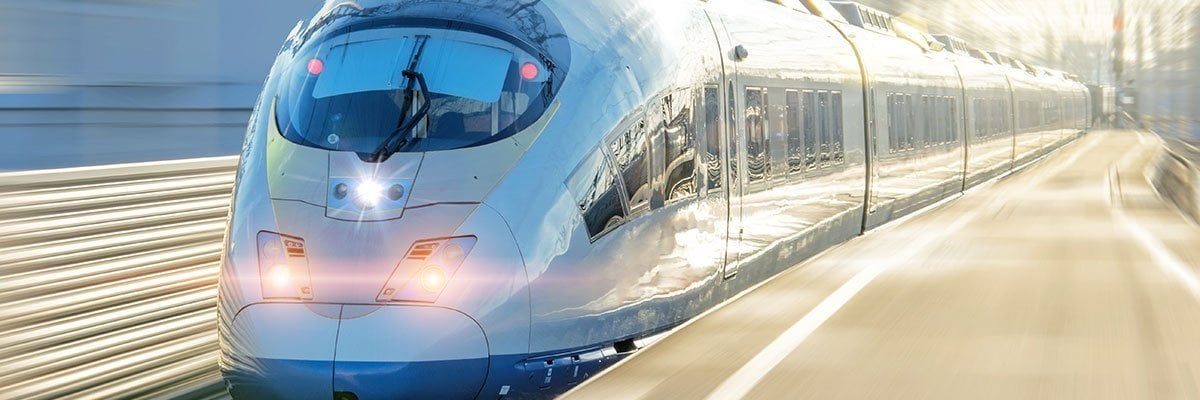
Aviation is a particular sticking point, as it’s widely acknowledged that it will be extremely difficult – if not impossible – for the sector to achieve Net Zero by 2050 as things stand. Up until now, it’s been attempting to go with a carbon offsetting strategy through the planting of trees, but that’s recently been deemed to be insufficient, and there have been calls for the sector to take more proactive steps towards more expensive carbon capture and storage technologies.
40% of the UK’s carbon footprint falls under it’s ‘built environment’, so this is another area in which significant strides need to be made for it to become more climate-friendly. Currently, the majority of domestic (and many commercial) buildings throughout the UK have been built to now-obsolete standards, so they’re more expensive, difficult and carbon-intensive to effectively heat and power. For that reason alone, repurposing and refurbishing buildings to make them more carbon-friendly is one of the biggest priorities for the sector.
New builds also need to be carefully planned with sustainability in mind, specifically with a focus on making them more cost-effective and efficient to heat and power. More attention will be paid to ventilation and lighting, minimising the reliance on boilers and artificial lighting so that owners can save energy and cut down on their carbon footprint.
And it’s not just the buildings themselves that are being overhauled – the construction processes themselves are being put under fresh scrutiny. The usage of concrete in particular is a critical concern. Though its practical uses are undeniable, its manufacture generates a worrying level of carbon emissions. In fact, if it were a country, it would be the world’s third largest emitter. Various initiatives are experimenting with additives and other innovations that could reduce its polluting nature, but really an ideal vision for the future would involve not using it at all.
Just like aviation, the nature of many processes in heavy industry means that it’s notably difficult to bring down emissions levels in this field. While slow progress is being made to develop carbon-friendly alternatives to firmly established heavy industry processes, many business owners are looking to minimise their emissions as much as they can in the meantime, through a range of co-ordinated measures.
We’re sure you’ve guessed one of them – commercial solar PV for warehouses and similar large-scale premises is a great way for business owners to put otherwise-underutilised space to good use, cutting down on their energy costs and carbon footprint. A number of other low-carbon solutions are also being explored, including carbon capture and storage, the development of hydrogen technologies, and electrification.
The government is also attempting to provide incentives for businesses to minimise their carbon emissions through the use of a UK Emissions Trading Scheme (UK ETS). This replaced the European Union’s ETS, which Britain left in 2021 upon its exit from the EU. The national scheme is modelled closely on its EU counterpart, although there are one or two important differences.
When it comes to agriculture, one of the most pressing priorities is to enable farmers to make better use of their land. Better management of livestock and soil are areas of particular focus; mismanaged soil can be a significant source of carbon emissions, but if it’s managed well, then it can actually act as a ‘carbon sink’, absorbing more carbon from the atmosphere than it releases.

The Climate Change Committee would like to see about a fifth of agricultural land being used to grow trees or energy crops, or just restored into peatland. But this isn’t a task for famers alone – the panel have stressed that the best way for the nation to support this is through a country-wide switch to healthier diets, and minimising food wastage.
Trees are perhaps the most famous for their carbon sinking abilities, so it’s probably no surprise that the CCC has made note of their importance in the mission to reach Net Zero. According to the panel, 20,000 trees need to be planted a year, but so far the government is falling well short of those targets, with less than half of this number being planted over the course of the past five years.
Ministers are already making an effort to galvanise this with a post-Brexit agricultural bill. If passed by parliament, this would reward farmers who were able to demonstrably prove that they were making a positive impact on the environment.
This is perhaps the most vague item on the list, but no less important. Phasing out carbon-intensive technologies and industries isn’t just a matter of logistics – it has a very real human cost, too. For a particularly notorious example of this, you need look no further than the closure of numerous coal mines by Margaret Thatcher back in the 1980s, which devastated entire communities. Modern commentators have stressed the importance of avoiding a repeat of that dark bit of history, as we move towards a brighter future. This is what is meant by a ‘just transition’ – the UK’s responsibility to support all citizens whose livelihoods are dependent on these polluting industries, and ensure that they are not left behind in the same way as we transition to a new form of economy.
On the surface of it, our journey to Net Zero occupies a strange position in terms of how humans perceive time. On a global, species-wide level, thirty years will be gone in a heartbeat. Countless technologies, economies, policies and cultural attitudes can evolve in that sort of timescale. But for each of us individually, three decades is a significant proportion of our lives – so as a nation, while we now know where we’re going, it might be a little while before we can accurately gauge how well we’re doing on getting there.
But – and we hope you’ll excuse us for extending the metaphor – if you’re looking to take the next steps on your own organisation’s journey with commercial solar panels, that’s exactly where we can help here at Low Carbon Energy. With 30 years of combined expertise to our name, you can count on us to help you use solar panels to achieve your Net Zero targets. Feel free to take a look through our case studies for just a couple of examples of what we can do – or to find out how we can help you, just give us a call on 01282 421 489!
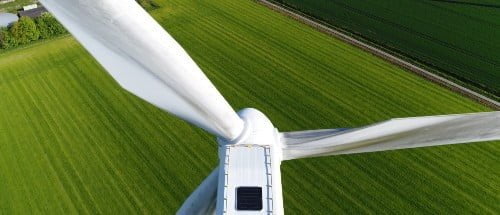
On July 19th, 2021, the government finally lifted the majority of the lockdown restrictions we’ve all been living with for so long. The long-anticipated announcement covered a raft of measures; amongst the most significant were the downgrading of face coverings from a legal requirement to a ‘strong recommendation’, and the re-opening of nightclubs and other adult entertainment venues. It’s difficult not to draw certain parallels with this time last year, which also saw millions of people breathe the first sigh of relief as the most severe restrictions were lifted.
That first lockdown would ultimately turn out to be one of the strictest in Europe, and it enacted a devastating toll on the country at large. However, there were some small but significant upsides. The combination of unexpectedly beautiful weather, together so many people unable to work in their normal offices, gave millions of us more time to appreciate the natural world around us – as well as how our actions and lifestyles might be impacting it.
The lockdown led to a record decrease in emissions in 2020, down by 13% compared to the previous year. There were widespread reports of people enjoying noticeably cleaner air, which also had a big impact on the efficiency of domestic, industrial and commercial solar panels. There’s a simple reason for that – less air pollution meant that more sunlight was able to come into contact with the panels, increasing the amount of energy they generated. That hints of even more promising potential in the years to come, as the UK pursues its goal of achieving Net Zero.
So, one year on from the end of that first lockdown, and with the Covid-19 pandemic still such a big part of our daily lives, how are things looking on UK progress towards Net Zero?
At first glance, the situation looks quite encouraging. According to a Carbon Brief report released back in March 2021, the UK’s greenhouse emissions in 2020 were 49% below 1990s levels. With that, the UK is now halfway towards its target of achieving Net Zero emissions by 2050, in which the amount of emissions being put into the atmosphere will be balanced out by the amount of them being simultaneously removed.
And just a month later, in April of this year, the government announced enshrined a new target in law – by 2035, it aims to to slash emissions by 78% compared to 1990s levels. It’s been hailed as the world’s most ambitious climate targets, and a vital staging post in the steady march towards achieving Net Zero. (Along the way, ministers expect to hit a 68% reduction by the year 2030.)
So initially, the situation looks relatively positive. However, the UK is far from out of the woods, not least because the pandemic still poses a serious obstacle to further progress. A report by Institute for Government from July 7th, 2021, warns that Britain is currently “off course” as things stand, because the government’s plans to tackle climate change are somewhat contradicted by its strategy for the pandemic recovery.
Essentially, the report argues that as a nation, we cannot afford to wait until the 2030s before we begin the bulk of our progress on achieving the Net Zero target. We need more tangible action within the next decade, alongside the pandemic recovery. Notably, the IfG points out that the Treasury has failed to prioritise any green measures in any fiscal statement since March 2020.
The IfG acknowledges the difficulty in aligning these two goals. We’re already seeing evidence of this on a global scale – while global emissions fell by 6% worldwide in 2020, the figures are now higher than ever as many countries have gone into overdrive while repairing the damage to their economies.
But with the UK due to host the 2021 United Nations Climate Change Conference in Glasgow later this year, it’s fair to say that pressure will be ramping up on the government to deliver action, and not just promises.
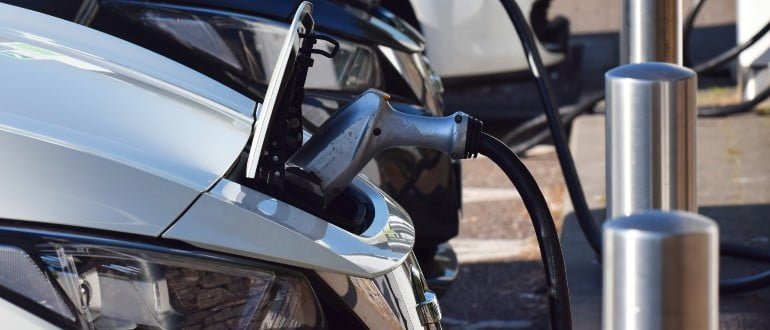
The upcoming COP26 conference will give the world’s governments a high-profile platform to unveil their climate change strategies, but as a nation, we already have a good idea of the most important points that the UK governments to address in order to have a strong Net Zero strategy:
As to whether all this will be enough, only time will tell. So, that’s where things stand towards our national Net Zero target – the next question is, where does your business stand on yours?
As we’ve covered extensively before on the blog here at Low Carbon Energy, one of the single most reliable ways that businesses and organisations can achieve their own Net Zero targets is by transforming their business energy supply. And that’s exactly where our experts can help!
With more than 30 years of combined expertise, we know exactly how to help your business achieve its Net Zero ambitions with commercial solar panels. We’ve already completed plenty of large scale projects for high-profile clients, including Boohoo and Boeing. You can check these and more in our case studies – or, to find out more about how we can help you, feel free to give us a call today on 01282 421 489!
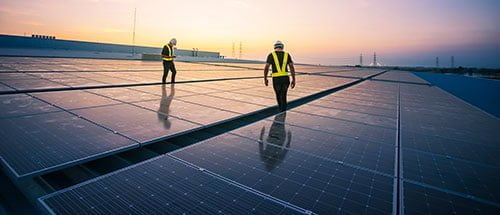
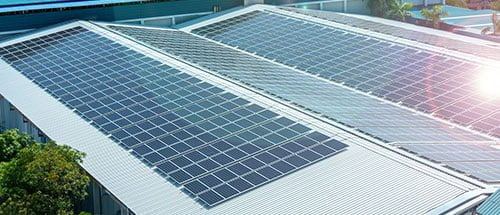
The future for solar, if you’ll forgive the cliche, is looking brighter than ever. The ever-decreasing cost of commercial solar panels continues to be a big draw for businesses, and last year, solar was named the cheapest form of energy in history by no less than the International Energy Agency. That growth has continued unimpeded, and now a new report from the Carbon Tracker has predicted that in less than a decade’s time, solar will be the world’s ‘most economic’ generation source – in other words, the most widely justified in terms of profitability. What’s more, the report (‘The Sky’s the Limit,’ by Carbon Tracker) indicates that we could be even closer to this reality than we might first appear.
Perhaps one of the most significant findings of the report is its revelation that as a species, we already technically have the means to meet our global energy needs 100 times over. Now that’s obviously quite an ambitious claim, so let’s unpack it a bit.
On average, the cost of solar has dropped by 18% every year since 2010 – one of the reasons it’s become such a viable source of energy for organisations across a broad array of sectors, ranging from agriculture to retail and wholesale, hospitality to industrial manufacturing. That’s led us to a situation where 60% of global solar generation is already economic. (The report also highlights that 15% of wind resource is economic, although that’s expected to grow to more than 50% by 2030.)
If these two generations technologies continue on their current trajectory, the report’s authors believe they could easily power the world between them by 2050, displacing fossil fuels almost entirely. And by quite some margin, too.
Hypothetically, with the solar technology we have currently available, and a relatively small amount of land, we’d be able to capture at least 6700 PWh (Petawatt hours) every year from solar and wind. Now, as recently as 2019, the entire world’s global energy consumption was 65 Petawatt hours a year – which means that existing technology already gives us the ability to generate 100 times the amount of energy required to meet annual global energy demand.
The land we’d need for that kind of solar power generation is estimated in the report to be around 450,000 km2. That’s about 0.3% of all global land area, which totals about 149 million km2. And yes, that’s less than amount of land currently being occupied by fossil fuel infrastructure across the globe.
So, while we can’t make that kind of transition overnight (if only it were that easy), it’s encouraging to think that an almost entirely solar-powered world may be a lot closer than most of us probably realise.

As you’d expect, solar’s capacity is expanding in line with its price drops. In fact, it’s growing faster than any previous energy technology of comparable size, with an average annual increase of 39% over the past decade – essentially, nearly doubling in capacity every two years. The combination of these two factors makes it a particularly viable option for developing countries whose energy infrastructures are still evolving, allowing them to bring more power to more people – even those out in more remote areas of the country.
To be honest, at this stage the obstacles to the further development of solar are largely political. On the face of it, it’s easy to see why some countries might be slow to embrace the benefits of solar technology, however frustrating that might be. After all, countries like Saudi Arabia made their fortune on fossil fuels, and they’ll be reluctant to relinquish their influence over the market. Fossil fuel lobbyists also have considerable influence on government policy in a number of other major superpowers, such as Europe and the United States.
But government policy is inextricably tied to global market factors, and when you consider the meteoric rise of renewables in just the past couple of years, it’s clear to see (if you’ll pardon the pun) which way the wind is blowing. Why would countries pay to import fossil fuels when they can cheaply and efficiently generate enough energy to power their own economies, with facilities within their own borders? You only need to look as far as the steady decline of the UK’s coal industry to see what the future holds for fossil fuels as a whole.
When it comes right down to it, politics and financial markets and energy prices are all influenced by a common factor: a shift in attitudes. And with more and more people looking to adapt their personal lives and their businesses to the new normal, it looks like millions of people worldwide are already making up their minds. The real question is how long it will take governments to catch up!
All that means there’s never been a better time to start enjoying the benefits of commercial solar panels for your business – and that’s exactly where we can help here at Low Carbon Energy. With 30 years of combined expertise to our name, you can count on us to help you use solar panels to achieve your Net Zero targets. Feel free to take a look through our case studies for just a couple of examples of what we can do – or to find out how we can help you, just give us a call on 01282 421 489!

Over the past year or so, there’s been a lot of talk about the ‘new normal’. Along with lockdown, social distancing, and self-quarantine, it’s become one of those now-ubiquitous terms to have entered the national lexicon since the onset of Covid-19. But while the other terms are closely associated with managing the crisis itself, the new normal has more optimistic connotations, focused on how we can adapt to life after the immediate danger has passed.
Today is a particularly significant day for the UK, as the latest round of lockdown restrictions is lifted, and the nation celebrates a step closer to the way things were before. But of course, not everyone wants everything to go back to exactly the way it was before. As devastating as Covid-19’s economic impact has been, it’s provided a valuable opportunity for positive change; a chance to pause, reassess, and ultimately shift away from resource-intensive and energy-intensive ways of operation, instead embracing greener and leaner alternatives.
We’re now at a pivotal moment in the nation’s economic recovery from Covid-19. As more businesses welcome their employees back into offices up and down the UK, executives and CEOs will no doubt be considering how these workspaces need to change, accommodating new attitudes, new technologies, and new ways of working, as part of their wider effort to adapt to a post-Covid world.
Now, commercial solar panels provide just one way of transforming traditional offices into more efficient, low-carbon premises. But what else can we expect to see?
If we’re talking about the ways in which offices are going to change, it makes sense to start with one of the biggest, and that’s the issue of home working. The increasingly digital nature of our society means that working from home was already on the rise before the pandemic, but Covid-19 undeniably turbocharged that shift – not least because of the fact that for countless companies, home working was the only way they were able to continue operating their businesses. And once these companies have had the opportunities to enjoy all the benefits that home working can bring, it makes sense that not all of them are planning to revert back to the way they were working before.
The stats back this up. The KPMG Outlook Pulse Survey for 2021 polled 500 chief executives and found that a fifth of them are now predominantly looking to hire remote workers, while a third of them are considering a hybrid model of working. This generally involves routine solo tasks being completed by individuals from home, with the office being used more for collaboration and group work.
For executives and decision-makers, this shift is being driven in large part by a need to reduce costs. The UK economy contracted by 9.9% during 2020 – the sharpest year-on-year contraction for about 300 years. To cope with the initial impact, and the continuing fallout, more and more businesses are looking for ways to run leaner and more efficiently.
Home working offers one useful avenue for this. With fewer employees in the office at a time, businesses can afford to downsize into smaller and less energy-intensive office spaces, and / or consolidate their multiple sites into a single location. Smaller and fewer offices generally mean lower energy bills and lower carbon emissions, allowing businesses to make savings on their overheads without a corresponding loss in productivity.
Unsurprisingly, it’s a change being broadly supported by a the wider workforce too, with more employees wanting to continue remote working, at least to some degree. It’s not hard to see why – the increased flexibility simplifies a whole range of life’s everyday challenges, such as childcare and transport.
A more flexible workforce also allows its employer to make savings on emissions too. The latest statistics from the government’s Department for Business, Energy and Industrial Strategy noted that business sector emissions dropped by as much as 8% in 2020. It’s not a zero-sum game though, as official statistics also recorded a 2% increase in domestic emissions in the same timeframe. It’s also probably going to be notoriously difficult for businesses to effectively measure the emissions produced from remote workers, so there are fears from companies like Bulb and EcoAct that UK businesses could be at risk of under-reporting their annual emissions by as much as 470,000 tonnes. If companies are truly committed to tackling their emissions, they’ll have to find ways of effectively measuring this output, such as with specialist accounting tools.
OK, so up until now we’ve mainly been focusing on the changes to business models, and how companies will work. So now let’s look at how the spaces themselves are likely to change. We’ve already touched on a bit of it above – future offices are likely to place far more emphasis on collaborative spaces and meeting rooms where employees can meet and share ideas.
‘Hot desking’, in which a single workstation is used by multiple people throughout the day, is already on the way out, especially since it was specifically highlighted by government guidance as a potential risk factor for spreading coronavirus. Even once Covid-19 is more fully under control in future, hot desking is unlikely to make a comeback, as it’s often used for solo or routine tasks that people will probably prefer to do from home instead.
Availability of Net Zero carbon offices will ‘increase significantly’ in the next five to ten years, according to experts like Lora Brill, the head of ESG for commercial property manager Orchard Street. Naturally, commercial solar is probably going to be a prominent feature of such properties, especially since continual monitoring and analysis of new systems and technologies will be more important than ever to ensure effective optimisation of energy usage.
So, what else can we expect from high-tech green offices of the future? Well, we can see glimpses of it in buildings that exist already. PricewaterhouseCoopers, one of the world’s Big Four accounting firms, is investing £75m into its UK premises, aiming to create more open and collaborative spaces with fewer traditional individual desks. Its new Watford office, for example, has a designated garden space, social space and library area.
These sorts of green areas are likely to become commonplace, largely because they bestow tangible benefits on the workforce and surrounding environment alike. As far as employees are concerned, living plants and greenery can help to promote a sense of calm and tranquility that can be very useful for helping people to feel happier and more at ease – and happy workers are more productive workers. (These green spaces also double as places for them to relax on their breaks, too.)
Some more ambitious businesses are taking this one step further though, using their on-site natural life to make the buildings themselves more self-sufficient. Take One Embankment Place in London for example, also owned by PricewaterhouseCoopers. In recent years it was recognised as the most sustainable building in the world, and recycled vegetable waste oil was used to power the entire building.
Global banking giant Goldman Sachs has developed an eco-friendly office building in London notable for its green roof garden, which uses advanced rainwater harvesting and filtration systems to reduce water consumption.
We realise we’re at risk of making this sound like an advertorial for massive London corporations at this stage, so we’ll spare you the exhaustive detail on what’s gone into the development of these buildings! We also recognise that they’re both obviously quite extreme examples, and not every business will have the resources or the ability to enact such dramatic transformations with such sophisticated technologies on their own premises. But it does help to provide an insight into exactly what can be achieved, and what the future might hold for the commercial sector once these technologies become even more widespread and affordable.
It’s worth us noting, of course, that plenty of low-carbon technologies are pretty affordable already, and costs are going down all the time. Just this year, solar energy was named as the cheapest form of energy in history, according to the IEA. That means if you’re looking to improve the sustainability of your own offices, transforming your energy supply is a great way to start.
And that’s exactly where we can help here at Low Carbon Energy. With more than 30 years of combined expertise, we know exactly how to help your business achieve its Net Zero ambitions with commercial solar panels. We’ve already completed plenty of large scale projects for high-profile clients, including Haven Power and Boeing. You can check these and more in our case studies – or, to find out more about how we can help you, feel free to give us a call today on 01282 421 489!
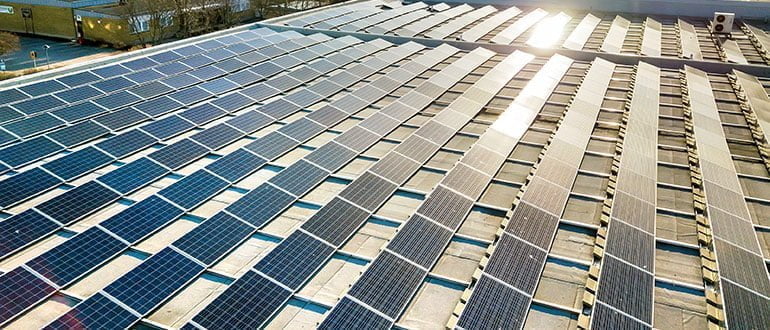
Alongside the benefits of our commercial solar panels, Net Zero is something we talk about a lot here at Low Carbon Energy, and for a few years now the government has faced ever more urgent calls to make it a more pressing national priority. In 2019, the UK became the world’s first major economy to pass legally binding commitments to achieving Net Zero, and in this year’s Budget, it’s has officially been made part of the government’s overall economic policy objective.
What’s more, This year’s Budget also launched a new National Infrastructure Bank, imbued with £22 billion of financial capacity, and tackling climate change as one of two core objectives.
On the surface, all that seems like it should be good news for climate-conscious businesses and individuals. But this year’s Budget nonetheless left many observers distinctly underwhelmed. The Chancellor’s speech and the famous Budget red book actually dedicated less space to climate change and the Net Zero target than in 2020. The word climate was used only nine times, and the phrase Net Zero was used only 7 times, down from 17 last year.
Conspicuously, the 2021 Budget doesn’t appear to have a substantial amount in it to specifically support the solar and storage industry for now, though it has earmarked small sums of funding to pilot some promising technologies. However, that’s not to say there was nothing noteworthy in it. Here, we’ve summed up some of the most significant Budget announcements for business owners.
The words ‘capital allowances’ were what caught the attention of many observers this year, as Chancellor Rishi Sunak’s speech announced the possibility of temporary tax reliefs on qualifying capital investments from April 2021. This would introduce increased reliefs for expenditure on plant and machinery, and qualifying expenditures would run between the 1st of April 2021, and up to and including 31st March 2023. Crucially though, nobody is quite sure what specific technologies would qualify for these tax reliefs yet, and multiple publications have asked the government for more clarity on this.
Commercial solar, and indeed solar panels in general, haven’t been highlighted specifically in the Build Back Better framework, beyond being listed amongst the range of renewable technologies which are steadily becoming cheaper.
The Chancellor did, however, make mention of expanding the UK’s Emissions Trading Scheme. To give you a quick refresher, the UK ETS was first announced in the government’s Energy White Paper in December, and it’s been in effect since the 1st of January 2021, when the UK ceased participation in the European Union’s equivalent scheme. The UK ETS works in much the same way though, by placing a firm cap on the maximum amount of permissible emissions, and reducing that cap over time to ensure that the nation as a whole moves steadily closer to achieving Net Zero.
The government divides this cap into permits, which are allowances to emit a fixed amount of emissions. These permits are then made available to UK businesses, who are free to buy, sell and trade them amongst themselves. It all works towards ensuring that as a nation, UK companies share common goals, and are thus further incentivised towards achieving it with measures like commercial solar panels.
Speaking of low-carbon technologies, the government is set on encouraging new innovation too, and to that end it’s aside £68 million in funding for a competition to deliver energy storage prototypes. Watch this space!
There are just one or two last general points for us to add, the most notable of which is one that we’ve already touched upon above – namely, the UK’s Net Zero goal will officially be added to the remit of the Bank of England. This has a number of potential implications, including forcing the Bank to take climate change risks into account as part of its ongoing response to the coronavirus crisis. It faced heavy amounts of criticism for this reason in 2020, when it bought up corporate debt without considering the associated climate risks.
Finally, the Chancellor announced that at least £15 billion in government debt will be earmarked for supporting green objectives, although detail on that is rather sparse on that at the moment. We’ve been promised the government will tell us more later in the year.
All in all, it’s not hard to see why lots of climate-conscious businesses and organisations are somewhat disappointed by this year’s speech from the Chancellor, whose priorities seem to have shifted somewhat since the last Budget announcement.
But don’t let that dampen your spirits for solar too much – you don’t have to look too hard to find tangible demonstrations of the sorts of rewards it can bring commercial businesses. Just this month the UK went for its longest-ever period powered solely by sustainable energy, and we’ve already gone into detail elsewhere about the government’s 10 point plan, and the many benefits of commercial solar for your business!
So if you’re thinking about making the switch, that’s exactly where we can help here at Low Carbon Energy. We have over 30 years of combined experience, having helped SMEs and large corporations over a wide variety of sectors to transform their business’ energy supply. Feel free to take a look at some of our case studies for just a few examples of our previous projects, or give us a call today on 01282 421 489 to find out what we can do for you!