
It’s long been said that renewables like commercial solar panels are the future of the UK’s energy industry – and as of 2021, the future is now. Over Easter, Britain was powered by record-breaking levels of renewable energy. It’s largely thanks to a combination of sunny and windy weather, coupled with a widespread lower demand for power. This record hasn’t been broken in isolation though – it’s part of a long-term trend of renewables becoming ever more critical to the national energy mix, steadily superseding fossil fuels like coal. So why is this record so significant, and what does it mean for you?
According to the National Grid Electricity System Operator, low carbon energy sources reportedly made up 80% of the UK’s power mix on Bank Holiday Monday over Easter 2021. Only 10% of the remaining power came from gas plants, and exactly 0% came from coal generation. In fact, the ESO went on to say that carbon pollution levels for each unit of electricity dropped to just 39 grams of carbon dioxide, which is the lowest ever recorded for the grid.
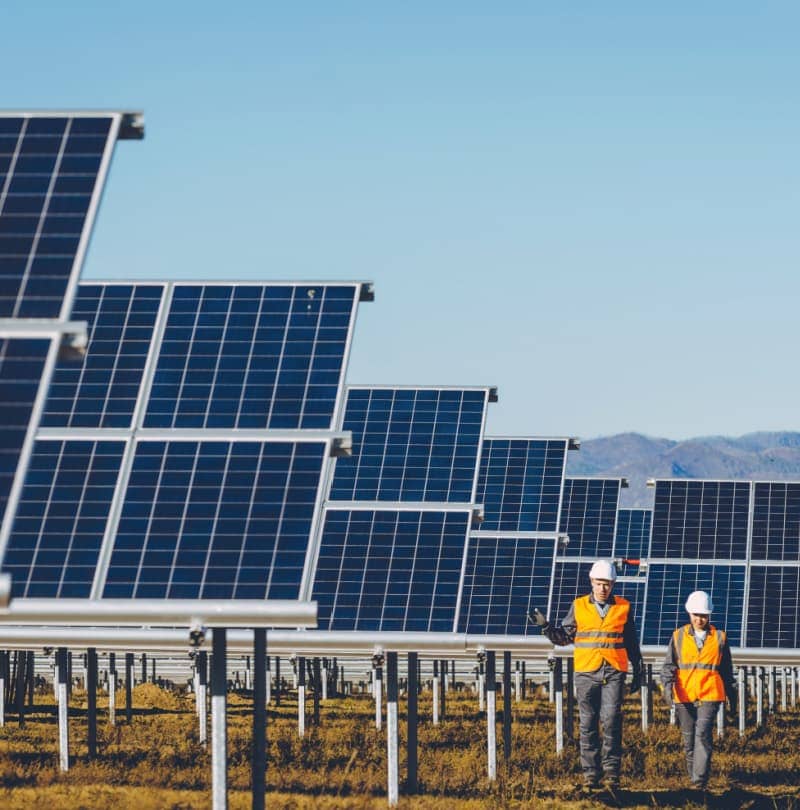
Now, wind power was one of the main players here, at 39% of the energy mix, but solar power played a significant part too, making up 21% of the UK’s overall energy mix. Both technologies continue to prove themselves as forces to be reckoned with, especially since fossil fuel levels have been dropping all year.
It’s the latest in a series of broken records over the last few years:
Not long ago, 2019 was named as the UK’s best ever year for renewable energy
In 2020, we went a full two months without burning coal to generate power
And in the summer of the same year, we remarked on how UK’s increased reliance on renewables throughout Covid-19 could end up being instrumental in defeating coal entirely
Essentially, if renewables like commercial solar continue on their current trajectory, they may entirely replace fossil fuels by 2030. Alongside this growth is a growing environmental awareness amongst customers and investors alike, who are increasingly expecting businesses to make tangible demonstrations of their commitment to Corporate Social Responsibility. The successive lockdowns of the last year have given us a lot to reflect on as a society, much of it focused on how we produce and consume resources – not least of which is energy. Now, buoyed by changing consumer priorities, steadily lifting restrictions, and the unstoppable growth of renewables, countless UK businesses are working out how they can ‘build back better’.
If that’s something you’re focused on, you’re in exactly the right place. Here at Low Carbon Energy, we have over 30 years of combined experience in helping SMEs, large corporations and public organisations across a wide variety of sectors transform their energy supply with commercial solar.
Each one of our installations is bespoke, and we tailor your solution on your specific energy profile, helping us to maximise carbon reductions and save you up to thousands of pounds in energy bills. You can take a quick look at our case studies, or feel free to give us a call today on 01282 421 489!
For the vast majority of the UK, 2020 was perhaps one of the most challenging years in recent memory. The twin issues of Covid-19 and Brexit continue to pose significant challenges to businesses, and for many, they understandably remain two of the most pressing items on the agenda. But even while these might be the most pertinent on a day-to-day basis, climate change remains a very real and pressing issue, with its dangers just as tangible and urgent as ever.
After all, while it might seem easy to forget amongst the backdrop of Covid-19 and Brexit, 2020 was a year of particularly extreme weather, with unprecedented floods in February followed by a scorching heatwave in July and August. As a result, climate change is no longer a distant, abstract issue for growing numbers of the population, and there’s increasing public recognition of what needs to be done to combat it – including the dramatic transformation of our transport systems and business energy supplies (which is exactly where we can help with commercial solar panels).
The government first unveiled its 10 point plan a few months ago, in November 2020, but now that we’re into the first few weeks of 2021, a time when many of us will be taking stock of our operations and what lies in store for the year ahead, it seems an appropriate time to look at the government’s plan for dealing with perhaps the most seismic issue on the long-term agenda.
The government’s 10 point plan forms a key part of the government’s strategy to tackle the climate change crisis, especially given that it’s now legally obligated to cut carbon emissions to Net Zero by 2050. It comprises a £12 billion stimulus plan designed to mobilise three times as much private sector investment in pursuit of the UK’s 2050 Net Zero target.
The government’s ten key points are as follows:
The plan is heavily geared towards renewable sectors, pouring fresh investment into hydrogen, nuclear, carbon capture, and electric vehicles. The government hopes that it will create 250,000 jobs in the coming years, and the Prime Minister Boris Johnson has optimistically described it as the ‘Green Industrial Revolution’.
Even though the 10 point plan is primarily focused on the renewable sector, its goal of finding new and effective ways to decarbonise our economy means that it will affect countless businesses across the UK in all kinds of sectors, albeit to varying degrees. Whatever the nature of your own sector, here are some of the most critical ways in which it might affect your own operations.
Transport
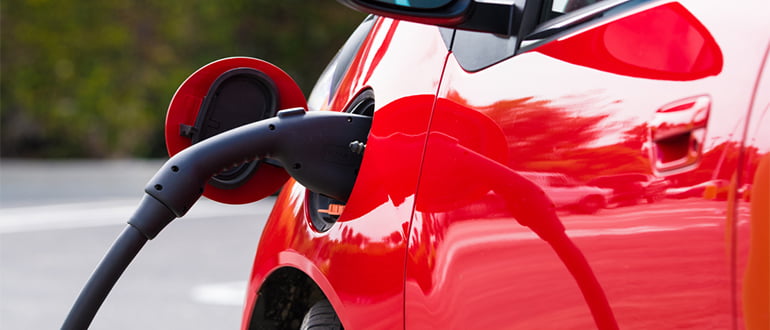
The switch to electric vehicles has been on the government’s agenda for quite some time now. The technology is there, but one of the biggest obstacles to widespread adoption from the off has been the relatively sparse infrastructure across the UK. Essentially, while electric vehicles excel in urban environments, as well as making ‘last-mile’ deliveries and other short range journeys, the length of the battery life and the relative shortage of charging points makes long range journeys more difficult.
Building this infrastructure, then, is one of the biggest aims for the government’s 10 point plan. It introduces new investment of £1.3 billion to fast-track the rollout of charge points in homes and on motorways. Plus, over the next four years nearly £500 million will be spent on the development and mass-scale production of electric vehicle batteries.
The problems posed by infrastructure and battery life won’t be solved overnight. However, if the government’s investment succeeds in making serious strides to resolve them, that could make the switch to electric fleets a lot more viable for countless businesses across the UK (including yours) – ultimately transforming the way you transport your staff and assets on British roads.
Investment in green finance
The government is creating a £1 billion Net Zero Innovation Portfolio, intended to “accelerate the commercialisation of innovative low-carbon technologies”. In other words, the idea is to encourage sizeable private investment into the research, development and rollout of world-changing low carbon technologies. What’s more, the plan is to make it as easy and cost-efficient as possible for businesses to adopt these technologies.
This is great news for businesses who might be eager to transform their operations, but worried about the costs involved. Almost every UK company is still feeling the economic squeeze of Covid-19, and that’s likely to make business owners especially wary this year, as there will be an increasing apprehension of making any changes that could impact the profits (and possibly the long-term viability) of their businesses.
The government’s investment into this green innovation fund aims to ultimately eliminate this dilemma, saving business owners from having to make the difficult choice between fulfilling between their social responsibility and preserving their bottom line. Plus, this comes hot on the heels of the International Energy Association’s announcement that solar has now become the cheapest source of electricity in history, having outstripped the costs of coal and gas in many countries. Soon, it may not be long before renewable energy becomes the obvious choice for powering your business.
By now, you probably know all about Net Zero, which essentially refers to offsetting emissions so that you’re removing just as many emissions from the atmosphere as you’re putting into it. Getting emissions to zero in the first instance is seen as a particularly difficult and for many, unrealistic target, whereas Net Zero is regarded as a far more achievable goal. The government has a legal obligation to cut greenhouse gases to Net Zero by 2050, and that’s the one of the core aims of its 10 point plan.
But as the world is increasingly finding, if we’re to successfully reach that target, it can’t be done solely from the top down – in other words, individuals and businesses are going to need to take concerted, proactive action towards achieving that goal as well.
And with many of these initiatives intended to have a big impact on the general public as well – from changing what cars they drive to the way they heat their homes – public awareness and knowledge of the climate crisis is set to reach an all time high. That means Corporate Social Responsibility will become more important than ever before, as the public expect businesses to demonstrate an appropriate awareness of their own impact on the environment, and commit to mitigating this impact.
Sectors like manufacturing, aviation and maritime will be subject to particular scrutiny, as these are industries in which emissions are especially difficult to control. However, the government hopes that the investment into some of these industries under its 10 point plan will relieve at least some of the most intense pressure.
It’s also worth remembering that a commitment to Net Zero doesn’t necessarily have to be seen as a chore – manufacturing businesses in particular have already seen that it can have an actively beneficial effect on their bottom line. According to an article in The Manufacturer, 40% of manufacturers who put sustainability at the heart of their businesses have enjoyed increased profit margins, and 30% have enjoyed increased competitiveness as a result.
Even if you’re not in the manufacturing sector, there are plenty of ways that you can kickstart your mission to achieve Net Zero emissions, such as: improving the energy efficiency of your buildings, switching to LED lighting and control, replacing outdated equipment (especially energy intensive systems like fans and pump systems).
And of course, another effective way to decarbonise your business is to revolutionise your energy supply – and that’s exactly where we can help here at Low Carbon Energy. We have over 30 years of combined experience, having helped SMEs and large corporations over a wide variety of sectors to transform their business’ energy supply. Feel free to take a look at some of our case studies for just a few examples of our previous projects, or give us a call today on 01282 421 489 to find out what we can do for you!

2020 has been a pretty big year for climate action, all set, of course, against the backdrop of the Covid-19 crisis. We’re sure we don’t need to tell you about some of the biggest environmental stories, especially since you may well have had personal experience of them yourself – such as the fresher air outdoors signifying a national drop in emissions, or the steadily rising uptake of commercial solar panels on UK homes and businesses.
But it’s been a year of crazy headlines, and in the run up to the US presidential election back in September, it was easy to miss one of the biggest stories from the United Nations Assembly, in which the Chinese president Xi Jinping announced that China would cut its emissions to net zero by 2060. It was a significant development not just for China, but the rest of the world too, as it stands to have a marked impact on our approach to decarbonisation as a planet.
The thing is that while commercial solar panels bring a whole range of tangible benefits to individual businesses and households, environmental measures on a national scale are typically seen as expensive and time consuming, especially as they affect virtually every element of a country’s economy. But here’s why China’s announcement might just change all that.
Just a few months ago, if you were to ask a group of experts which country they thought would be the next to make bold commitments to limiting emissions, chances are that relatively few of them would have said it would be China. And yet, here we are. China is the most polluting nation in the world, responsible for over a quarter of global greenhouse emissions. But in September of this year, its president Xi Jinping pledged to cut that back to almost zero within the next four decades. It was a move that very few were expecting, even from within his own country. The head of Greenpeace in China described it as a “happy, happy surprise”.
Now although it’s certainly good news on the surface, there’s no ignoring the likelihood that the announcement was at least partially politically motivated. Certainly the timing is notable. As the Chinese president made his climate promise, he called for global co-operation, and put the spotlight on China’s recent environmental progress. At the time, the US was still embroiled in the last few weeks of a bitter election campaign, during which President Donald Trump was levelling frequent accusations at China on various issues, so the Chinese call for unity stood in clear contrast to those sentiments. It also followed hot on the heels of a bilateral trade summit between Beijing and Brussels, so political observers think that it may well have been at least partially calculated to undermine President Trump.
As far as the world’s climate is concerned though, the political motivations are only relevant insofar as they affect the sincerity behind Xi’s pledge. And if China does make serious steps to follow up on its promise, it could mark the next stage in an intensifying global race to green power.
Decarbonisation has been a major item on the agenda for European leaders for quite some years now, and indeed leaders view it as the defining issue of our times. In the last few months, the European Union committed billions of euros towards a green stimulus package, and refined its own 2030 climate targets. It’s long been pushing for its member states to commit to increasingly stringent targets themselves, with a combination of incentives and punitive measures – the ‘carrot and stick approach’, in other words.
But for various different reasons, some countries still have a way to go to meet these targets. Some are struggling to implement the necessary logistics and infrastructure, whereas others arguably don’t have the political will to achieve these goals. This is part of the reason why the Paris Climate Agreement was such a significant milestone; it was the first time that so many nations came to a firm, formal agreement about the challenges that the climate crisis posed, and what would have to be done to tackle it.
Even with so many still committed to that accord though, there’s still lingering unease across European nations. Most of it stems in one form or another from this: the fear of taking on the immense cost and challenge of decarbonising their own economy, and then having nobody else follow suit, allowing other countries to enjoy the fruits of decarbonisation without putting in the necessary work themselves. In fact, that’s essentially the reason that President Trump gave for pulling the United States out of the agreement, which was quite a remarkable story in itself.
Now though, China’s announcement could give other nations fresh drive, as it opens up the possibility of the European Union and China forming a ‘carbon cutting coalition’ working to reduce more than a third of the world’s emissions. One particularly noteworthy aspect of Xi’s announcement was that it was unconditional – in other words, China plans to forge on with its commitment whether or not other countries follow suit.
What’s more, regardless of politics, there’s also the market factors to consider. The cost of renewables continues to tumble, with wind, hydro, and of course solar panels already the cheapest energy options in many parts of the world. Indeed, the decreasing costs and carbon savings they offer are both commonly cited by our customers as major factors in their decisions to use commercial solar panels for their own businesses.
If China and the European Union pool their considerable efforts into promoting wind, solar energy and battery investments in the next few years, the growth of renewables is only going to accelerate further. Plus, now incoming US president Joe Biden has pledged to rejoin the Paris Accord, and has promised his voters a $2 trillion green recovery plan. So all told, those are three of the world’s largest economies all focused on a single goal, accounting for more or less half the world’s emissions. Put like that, many observers view it as only a matter of time before the rest of the world’s countries decide to fully pitch in too.
There may soon come a time when climate activists will be preaching to the increasingly converted. Market growth means that investors won’t have to be urged to make the most ethical, environmentally responsible investments. Instead, the greenest options will be some of the most profitable right from the off, so investors won’t have to make the difficult choice between going with their consciences or their financial best instincts.
Of course, all this overlooks one crucial detail: China’s promise of progress is one thing. Achieving it is quite another.
The UK is amongst the many European Nations enjoying the surge in growth of renewables. Wind and solar are now the cheapest forms of new power generation here in Britain, and there’s over 10 gigawatts of large-scale solar being planned on British soil within just the next few years.
What’s more, the Prime Minister has recently proclaimed himself an “evangelist” for green causes, and recently unveiled his 10 point plan to create jobs and cut carbon emissions – encompassing new commitments to wind and solar power, carbon capture, hydrogen and nuclear power.
Now, many of his policies are impressive as they stand, but critics are already questioning exactly how much substance there is behind them, and crucially, how committed the Treasury is to achieving them. The £4bn allotted to realising the proposals, for example, pales in comparison to the amount that the controversial rail project HS2 is expected to cost – £100 billion, which is 25 times the amount put aside for the green plan.
And of course, you knew we had to mention it: Covid-19. Although we’ve talked before about the opportunity that the pandemic has brought us in terms of resetting the way we consume as a society, Rishi Sunak has unequivocally said that his first priority is creating jobs and getting the economy back on its feet. Hopefully the Treasury is able to get those two aims to align, but if not, then there are very legitimate questions about how much priority they’ll put on achieving the goals set out by the Prime Minister’s plan.
So while Boris Johnson may well be personally eager, there’s no hiding from the fact that the government will need to seriously step up its level of investment if it’s to continue leading the world in terms of sustainability and decarbonisation.
That said, there’s clear enthusiasm from the public, not least of all businesses right here in Lancashire – certainly if we’re to be any judge! We’ve completed plenty of large scale projects for high-profile clients recently here at Low Carbon Energy, including Haven Power and Boeing. You can check these and more in our case studies – or, to find out more about how we can help you, feel free to give us a call today on 01282 421 489!

We’re pleased to announce that we’ve recently been appointed as a Chamber Low Carbon consultant, providing expert advice to Lancashire SMEs on how to use the latest renewable technologies to make themselves more efficient, more sustainable, and make significant savings on their energy bills.
Chamber Low Carbon is a coalition of the East Lancashire Chamber of Commerce and Industry, the North and Western Chamber of Commerce, Businesswise Solutions Ltd and BOOST. The organisation’s primary aims are to support Lancashire businesses in saving money while reducing their carbon footprint, and have appointed several expert consultants to help them achieve goal.
We’re hugely proud to have been appointed as one of those consultants here at Low Carbon Energy – as one of the UK’s leading providers of solar PV and renewable energy solutions, we’ve delivered bespoke solutions for clients across thirteen different sectors.
“With got 30 years of combined experience behind us, we always begin each of our projects with a detailed assessment of each client’s specific requirements, and the demands of their site,” explains Benedict Ennis, commercial solar consultant at Low Carbon Energy. “That means we’re able to deliver a tailored solution suited to their industry and their unique energy profile, helping us deliver the very best return on investment.”
“Our team has a thorough understanding of not just the technology underpinning solar panel systems, but also the regulatory and legal processes that govern them, so we can take care of everything from preventative maintenance to detailed data analysis, helping to optimise long-term performance for maximum savings.”
Now, we’re looking forward to bringing all this expertise to bear in Chamber Low Carbon’s initiative, helping a whole new raft of Lancashire businesses enjoy the considerable benefits of implementing the latest renewable energy technologies.
Lancashire businesses across a huge range of industries can benefit from a range of key advantages when it comes to renewable energy technologies such as commercial solar panels. These advantages include:
Energy security has become an increasingly pressing concern for many businesses in light of this year’s events, in which plenty of business owners have expressed fears about big issues like Covid-19 and Brexit having knock-on effects on market energy prices. It’s one of the major reasons why renewables are experiencing such a big take-up, both in Lancashire and beyond – the power sources are abundant, universal, and unaffected by closures of ports or airports, so businesses can count on solar panels to provide a consistent source of energy, and some much-needed peace of mind.
Corporate Social Responsibility is another particularly important point – as well as the practical and financial benefits that renewable technologies provide, they also provide a valuable means for Lancashire businesses to get involved in the growing ‘green recovery’, which is taking place on both a nationwide and global scale. When global pollution levels dropped dramatically over the summer of this year due to Covid-19 lockdowns, the world was given a glimpse of what a low carbon future could look like, and growing numbers of businesses and individuals are now making a proactive effort to keep it that way.
As a result, the public is starting to expect some level of environmental awareness and sustainable commitments from businesses as a bare minimum. Lancashire businesses which can provide tangible demonstrations of this Corporate Social Responsibility will look more attractive to customers, investors, and potential employees – in short, putting them head and shoulders above the rest.
Chamber Low Carbon – and of course our own team here at Low Carbon Energy – are hugely passionate about helping businesses reap these rewards. If you’d like to see a few examples of what we’ve achieved for previous clients, feel free to look at our case studies, such as those of Boeing or Computacenter. Or to find out how we can help you, feel free to give us a call today on 01282 421 489!
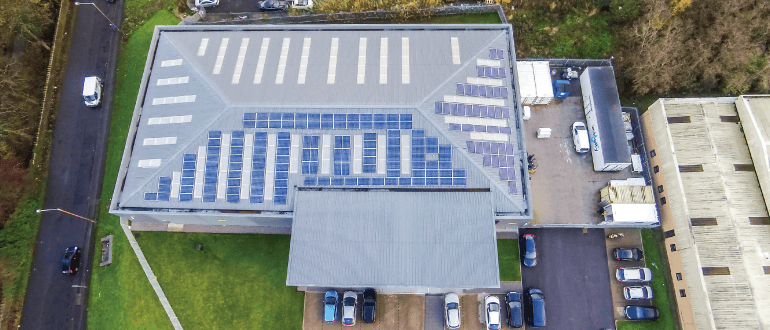
Business resilience has always been a key concern for businesses, but the events of this year means that it’s never been a higher priority. The Covid-19 pandemic has wrought seismic changes which have presented the ultimate test of resilience for countless businesses, and sadly not all of them have survived. For those who have been in a position to withstand the initial economic blow, the whole experience has served to re-emphasise the importance of business resilience. It’s a concept with many strands, but energy is one of the most crucial ones, and that’s where commercial solar panels can help. Allow us to explain exactly how.
While historically most businesses have relied on the National Grid to meet their energy needs, commercial solar panels offer an alternative by providing the ability to generate a clean, uninterrupted power supply right there on-site. The technology underpinning solar panels has made huge strides in recent years, and the steadily accruing level of investment in the sector means that they’re becoming cheaper year on year, making them increasingly viable even to smaller businesses.
One of the biggest advantages of generating your own energy on-site is, of course, the protection it affords from steadily rising energy prices and peak period prices, as you can gradually lower your reliance on the National Grid. If you’re savvy about combining commercial solar panels with a decent amount of battery storage, you may even be able to become entirely energy-independent, saving you thousands of pounds a year.
What’s more, they also provide immense value to your business by providing some degree of immunity from market volatility, the likes of which we’ve all seen plenty of in 2020. Though the recent development of several vaccines suggest some semblance of a return to normality on the horizon, Covid-19 continues to pose a whole raft of challenges to businesses across the globe. Commercial solar panels can provide some welcome peace of mind when it comes to your energy bills, allowing you to concentrate on the more pressing issues on your agenda.
The emergence of the pandemic has highlighted a great many unpleasant truths about our global economy and society, and one of the biggest by far has been the fragility of a fossil fuel economy. By mid-April, the global price of oil had plummeted to such a degree that producers had resorted to paying traders $40 a barrel to take it off their hands.
It would be somewhat disingenuous to pretend that the renewables market was entirely unaffected by this, but there are stark differences in terms of scale. Covid-19 has slowed the growth of renewables for the first time in 20 years, but the world is set to have added 167GW to its global capacity by the end of this year. For perspective, that’s more than the total power capacity of North America and Europe combined. In North America, in fact, 2020 marks the first time that renewables have ever overtaken coal. While Covid-19 has certainly left its mark on the sector, renewables have made record contributions to national grids across the globe, and so have indisputably proven their worth under truly unprecedented circumstances.
Now, countries around the world are focusing their efforts on a green recovery, seizing upon the global interruption in carbon emissions and using it as an opportunity to fundamentally restructure the way they operate – building towards a cleaner, greener, and more prosperous future. In fact, many investors and customers are now starting to expect it as a given from businesses and governments alike. Commercial solar panels serve as a powerful demonstration of your Corporate Social Responsibility, which means that they provide business resilience not just against fluctuating energy prices and markets, but also help you to ensure that you’re properly adapting to changing consumer expectations.
In the wake of this year’s events, renewable energy assets are currently set to experience a spike in demand from investors. The motivation for this is twofold: first of all a desire to make sustainable investments, and second of all to increase resilience against the pandemic-induced downturn. The greatest investments are slated for wind and solar power plants, as these have demonstrated the most potential, with steadily declining costs over a number of years.
Solar deserves particular attention – on the 23rd of November, the NextEnergy solar fund published its results for the six month period in 2020 running from March to September. The findings demonstrated that the solar sector has performed reliably well, despite a broadly unstable market environment.
The CEO of NextEnergy, Michael Bonte-Friedheim, said: “Solar is now economically viable in the UK without any form of government support.” He expects the UK to ‘significantly grow” its new solar generation capacity over the next few years, a trend that we certainly see reflected in our own experience here at Low Carbon Energy.
The favourable market conditions and projected growth for commercial solar panels means there’s no better time for your business to invest, especially given the sizeable business resilience value they provide. The events of the ongoing pandemic have proven that business resilience is no longer a simple advantage, a ‘nice-to-have’ – but an essential priority if you’re going to remain competitive in today’s climate.
Here at Low Carbon Energy, we’re here to help. We have over 30 years of combined experience behind us in helping you save on business costs, and profit from having cleaner energy. Feel free to take a quick look at our case studies to see the results we’ve helped achieve for our customers, or to find out how we can help you, feel free to give us a call today on 01282 421 489!
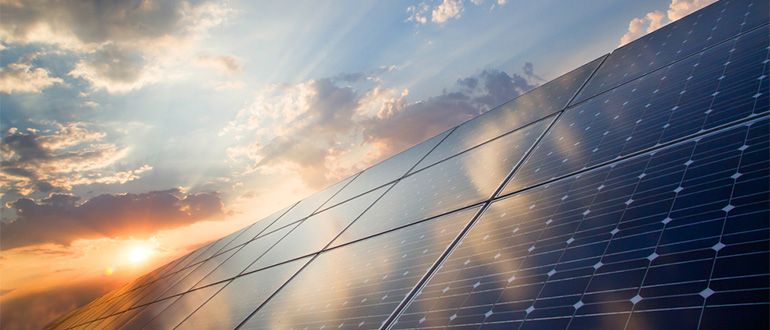
As you may have already guessed, this is one of the most first questions that our experts are often asked about commercial solar panels. And understandably so! The output and efficiency of a solar panel are some of the most useful indicators of how much value it’s able to provide a business or organisation, so it’s natural to want it to be as efficient as possible. Now, it’s difficult to give an general answer for how much energy they generate, since the answer varies for each solar PV installation, and depends on a huge number of variables. We’ve listed some of the most pivotal ones below, so that you can get a rough idea of what to expect.
Whereas older solar panels were capable of covering 6% of the energy from the sun, the efficiency of modern solar panels ranges between 15% and 25%. Figures like 15% might not sound like all that much when taken in isolation, but don’t forget that when it’s applied to the annual energy bill of a business, it can equate to savings of hundreds or even thousands of pounds.
What’s more, the technology is evolving all the time, and the rapid evolution of the renewables industry means that solar panels are only getting more efficient with every passing year. There are already solar panels in development that have achieved a 42% efficiency rate in laboratory conditions, providing just a glimpse of what’s to come in future!
The performance of solar panels is generally guaranteed for at least 20 years, and they lose a minuscule amount of efficiency each year, normally about 0.5%. This means that after 20 to 25 years, the panels will still be working to around 85% of their original capacity – more than enough to give you a sizeable Return on Investment.
That depends. As we touched on above, every solar panel installation is different, and outputs can vary drastically between each one. The overall efficiency of your own solar panels is influenced by a number of factors – we’ve listed the main ones below.
The size of your system and the number of panels
The size of your system will be based on your own individual energy profile, and your average usage throughout the year. Obviously the more energy you use, the more solar panels you’ll need to help you offset the costs.
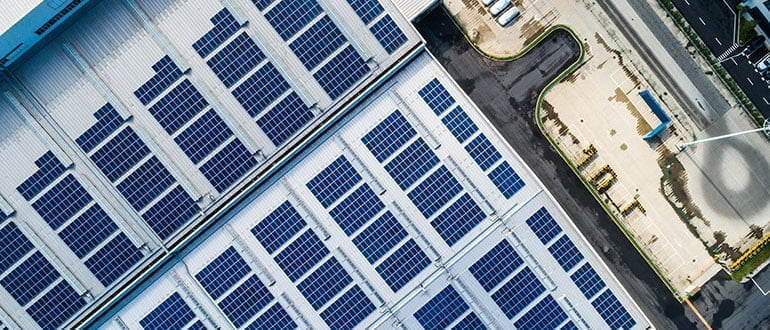
Here at Low Carbon, most of our clients are larger commercial businesses or organisations, which tend to be a lot more energy-intensive and thus require larger installations. A manufacturing business or a large office building may require a 100kWh solar PV system, which would require something in the region of 300 solar panels. This is helped by the fact that larger commercial businesses are more likely to have more available roof space to dedicate to an installation.
The position of the panels themselves
You don’t need to be an expert to realise that the direction and angle of your roof matters, too. Ideally, your business solar panels should be at a 35 degree angle on a south-facing roof in order to get maximum sunlight to convert into usable energy. But you’ll be glad to hear that your installation doesn’t have to meet these requirements to the letter in order to get you great results. Even if your installation is on an East or West facing roof, or angled between 10 to 60 degrees, it can still get plenty of sunlight – more than enough to make it a worthwhile investment.
To be honest, the main consideration when positioning your solar panels will be the amount of shade that might get cast over them. Roofs that are permanently overshadowed by other buildings don’t always make the best candidates for a solar panel installation, so one of the first steps for any potential installation is to assess how much shade regularly falls over the proposed site over the course of a normal day.
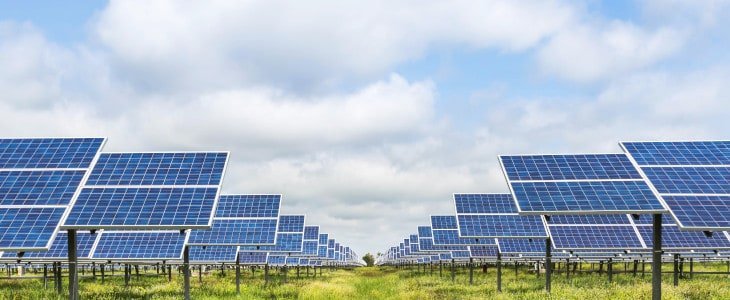
The number of peak daylight hours
Naturally, this is heavily dependent on the time of year, and to some extent the weather as well. Summer is when solar panels tend to be at their most effective, because the days are longer and the skies tend to be brighter. It also depends on exactly where you’re based in the world. As you might expect, commercial solar PV is popular in brighter, warmer countries where sunshine is plentiful, but it can still yield great results in countries with cooler climates too. (Germany, for example, is known for its relatively temperate climate, but remains one of the world leaders in solar technology.)
The rating of your panels
With any given solar panel, if you combine the efficiency of the cells with the size of the panel, it produces a figure for the power rating, which is measured in watts. The higher the rating, the more power that the solar panel is capable of producing. A common solar panel might be rated for 350 watts, whereas the more sophisticated models can be rated as highly as 520watts.
The million dollar question. We’ve already touched on part of the answer above – on a day-to-day basis, solar panels are most efficient during peak sun hours, and noticeably more so in the summer than in the winter, since they’re more likely to have unfettered access to greater periods of sunlight.
Summer days generally have between four and six peak hours of sunlight, broadly between 9am to 3pm. Winter days have a much narrower window of peak sunlight, generally between one and three hours around noon of each day.
However, it’s worth us reiterating that solar panels are still quite capable of producing a surprising amount of energy, even on cloudy days. This is because the bare minimum they require is daylight, rather than specifically sunlight – although the latter is always a bonus! Plus, don’t forget that it’s actually the local cost of electricity that has one of the most profound (and underestimated) effects on the scale of your savings, rather than the amount of regular cloud cover.
Technically, yes. Solar panels tend to get less productive when the mercury rises above 25°C (they’re much like humans in that regard). This tends to be accounted for in the manufacturer’s data sheet, which includes a temperature coefficient figure to indicate how much power would be lost for every degree the temperature rises above 25°C. A system that faces consistently high temperatures in excessively hot climates can often see reduced outputs.
Happily, here in the UK, panels very rarely face these kinds of issues. Our moderate climate means that temperatures tend to stay relatively steady throughout the entire year, so the output of your solar panel installation is very unlikely to be affected by extreme temperatures for sustained periods.
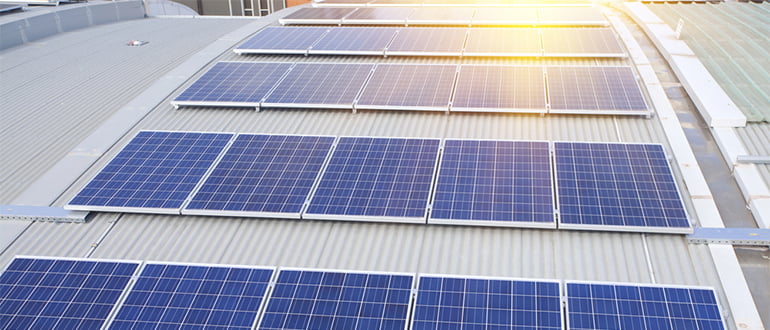
To be honest, the efficiency of a given solar PV system is largely determined in the way it’s set up and installed, which is just one of many reasons why it’s important to use experienced specialists like our experts here at Low Carbon Energy. We’ll assess your individual energy profile and usage when assessing your premises for the installation, helping us to determine the optimum setup that will yield the best results for you.
Once the solar PV installation is complete, your only concern will be maintenance. Happily, they don’t require a hugely intensive maintenance schedule – just the occasional once-over to ensure they remain clear of dust, dirt and debris. If it’s been snowing heavily recently, it’s also worth checking your panels, as layers of snow can sometimes prevent them from getting as much sunlight as they would normally.
For those moments when your solar panels do need maintenance, we wouldn’t recommend trying to tackle the job yourself. Solar panels can easy to damage if you don’t know exactly what you’re doing, so it’s far better to entrust the job to some professionals.
Plus, if you’ve got any questions about the efficiency or output of your own solar panel installation, our experts here at Low Carbon Energy are here to help. We have over 30 years of combined experience behind us in helping you save on business costs, and profit from having cleaner energy. To find out how we can help you, feel free to give us a call today on 01282 421 489!
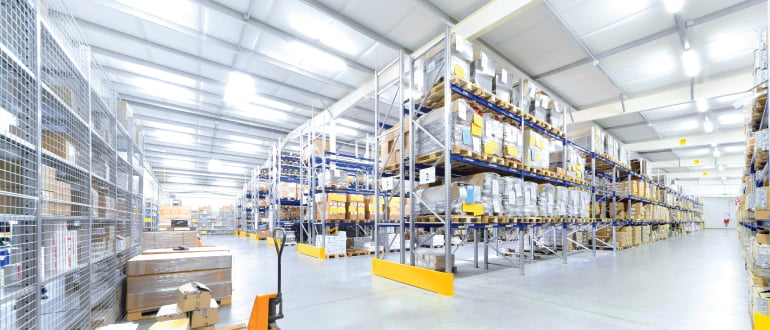
It’s been an exceptionally turbulent year not just for the UK, but the entire global population. The one-two punch of the onset of Covid-19 and the subsequent national lockdown meant that almost every sector took a substantial hit, not to mention the damage to the British economy as a whole.
Some industries (such as retail) took the brunt of the lockdown even harder than others, whereas others were able to cope a little better. The manufacturing sector holds the peculiar distinction of spanning across both camps, with some businesses having been forced to close their doors to the public, whereas others were able to survive with only a relatively small impact on their business.
Now as we move into the later months of the year, the sector as a whole faces a two-pronged challenge to not only survive, but thrive in the new normal. And what’s more, many are turning to commercial solar to help them do so. But before we get into that, let’s explore a bit about the challenges themselves.
This is the most obvious – and for many, the most pressing – issue that UK manufacturing businesses are currently facing. As we touched on above, there’s an interesting duality to the impact of Covid-19 on the sector. Demand for commodities such as vehicles and wholesale products fell dramatically, while things like household products and home gym equipment experienced huge spikes in sales. Covid-19 was just as much of a boon to some manufacturing businesses as it was a detriment to others – it really depended on what you manufactured.
Many manufacturers were even able to adapt their operations in direct response to the onset of the virus, shifting their efforts to produce PPE, protective plastic screens, and similar physical defences or measures against Covid-19. But obviously, not all manufacturers were capable of this sort of shift, and many of them faced the daily realities of increased freight and supplier costs, and extended delays on the arrival of key materials or components.
However, according to a recent survey by edie, the manufacturing industry as a whole appears to have coped well in terms of its ongoing sustainability plans, proving that it remains an ever-higher priority in the eyes of many in the sector. Of all the respondents to edie’s survey, less than one in five delayed or postponed any impending sustainability announcements.
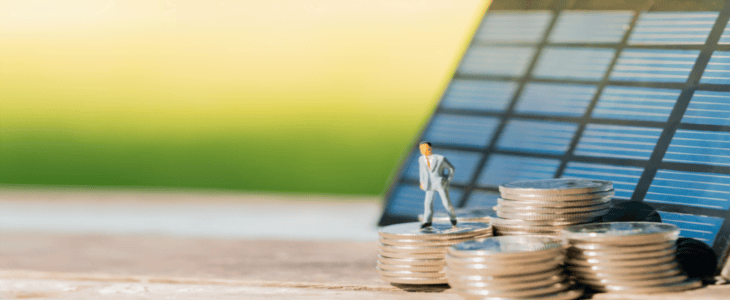
Edie’s survey actually yielded quite a number of interesting conclusions. 85% respondents in the manufacturing sector either agreed or ‘strongly agreed’ that the green recovery presented an invaluable opportunity to fast-track climate action. Here at Low Carbon Energy, we actually wrote a pretty extensive post on that topic ourselves at the time.
Now, reducing emissions down to basically zero is always going to be a difficult task for any industry, but for many in the industrial sector it’s nigh-on impossible with the current technology we have available. Therefore, most businesses have set themselves the challenge of reaching Net Zero instead, which is the most realistic target we have right now.
However, there’s still a significant challenge involved in how to actually get there. Many manufacturing processes are inherently energy intensive, which is one of the biggest difficulties faced by the industry. Cement, steel and plastics manufacturers in particularly are exceptionally difficult to decarbonise, partially because many of these processes release CO2 as an intrinsic part of the manufacturing procedure.
Those are just a few examples, though – almost every individual manufacturing business will have its own distinctive set of challenges to overcome.
But while it might be difficult to reach Net Zero, it’s far from impossible, and there are plenty of other ways that organisations can cut down on their emissions. The impact of Covid-19 means that implementing cost reductions and operational efficiency has never been more important, and manufacturing businesses can tackle both problems head-on by building energy sustainability directly into their economic recovery plans, and proactively looking for ways to become more efficient and agile.
For example, if any vehicles in a business fleet are reaching the end of their operational lifespan, or they have been phased out due to reduced demand since the lockdown period, businesses can switch them out for electric variants, saving themselves on long-term fuel costs.
A smarter management of energy consumption is also an effective way to address the need for greater climate action and cost-saving measures, and this is where commercial solar comes in. As of 2020, the UK is the 3rd largest solar energy producer in Europe, and manufacturing businesses all over the country are starting to reduce their reliance on the national grid, instead using solar to generate a secure, low-cost supply of energy on their own premises.
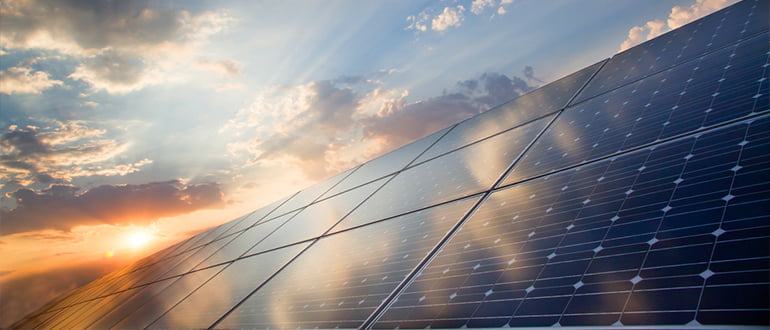
Apart from the direct cost savings, there are a substantial range of secondary benefits associated with this, too. Recent research has proven that climate action is a major draw for customers and investors, and businesses with solar panels stand to benefit from a tangible boost in their CSR.
If you’re considering solar panels for your own manufacturing business, you can find out more about the advantages of solar right here on our site. Alternatively, you can take a quick look through our case studies to see how we’ve already helped businesses just like yours to reap the rewards. To find out how we can help you, feel free to give us a call today on 01282 421 489!
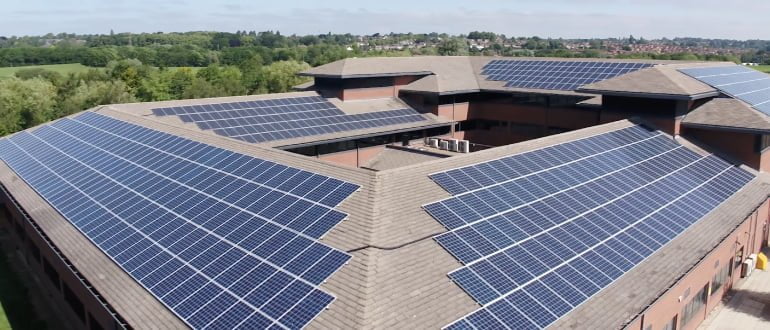
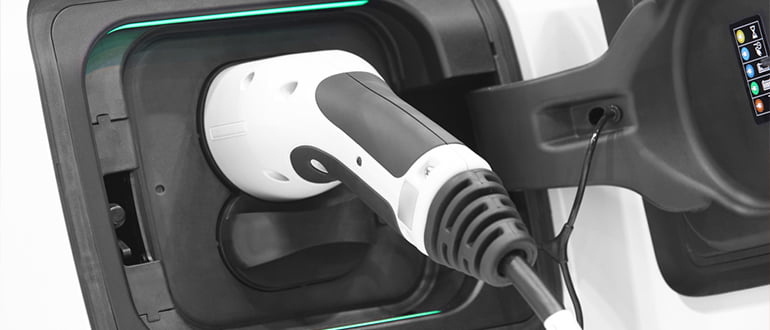
It might sound simple, but as well as actually installing the infrastructure, a key concern moving forward will be to increase its ‘visibility’ – in other words, to ensure that other drivers know it’s there.
Petrol forecourts will be a natural choice for the installation of many charging points. Not only will these allow EV drivers to recharge their cars, but they’ll also be on display to drivers of petrol and diesel cars, giving them more confidence that the infrastructure is there to support them if they decide to make the switch to electric. This can ultimately help encourage more sales of electric vehicles, driving more investment into the industry and allowing the infrastructure to expand further. (It’s all linked!)
While city dwellers make up the majority of EV drivers so far, the UK charging infrastructure ultimately needs to cater to all drivers, no matter where they are in the country. Charging an EV at home or at work is obviously the ideal scenario for many drivers, but they’ll also need to be prominent fixtures in public places and facilities like supermarkets, shopping centres, gyms and industrial parks.
Public infrastructure is especially important for supporting rural drivers, long distance drivers, or others who for whatever reason might not have the ability to charge their cars at home or at work. It also underlines the importance of ultra-fast charging facilities in certain areas, as it will allow as many drivers to make use of the charging facilities as possible within a given timeframe.
We should note, though, that it’s not just the physical hurdles that the infrastructure needs to overcome…

Right now, the UK doesn’t have an overall installation plan (which is slightly worrying in itself!). And lots of the UK’s legislation needs to be adjusted so that there are no unnecessary barriers to the expansion of the charging infrastructure.
In fact, a panel of experts has recently pointed out that governments around the world will have to make similar changes to their own laws too. Regulations will need to be simplified, and installation licensing processes will have to be streamlined, all to make sure that charging stations can be installed quickly and efficiently where they need to be.
These sorts of changes may well be necessary to ensure that private investors in infrastructure projects maintain a high level of return on their investments too. Without support and enthusiasm from the private sector, the rollout of further infrastructure is likely to be slowed dramatically.
The big problem with all this, of course, is the relatively low uptake of electric cars amongst the general population, for many of whom electric cars are still too expensive or inconvenient.
For investors and ministers, it’s hard to predict the behaviour patterns of a nation based on the relatively small number of EV drivers at the moment, and this leads to a bit of a chicken and an egg problem. There needs to be strong sales of EVs to drive sufficient investment in infrastructure, but many drivers will be reluctant to invest in electric cars unless they see that the infrastructure is there to support them.
At the moment sales are rising steadily, so we are at least moving in the right direction. The question is, of course, are we moving there quickly enough?
For now, that remains to be seen. We remain hopeful here at Low Carbon Energy! EV charging is one of our core services, alongside providing businesses with excellent cost savings on their energy bills through commercial solar panels. Here at Low Carbon, our experts have over 30 years of combined experience behind us in helping you save on business costs, and profit from having cleaner energy. To find out how we can help you transform your business, feel free to give us a call today on 01282 421 489!
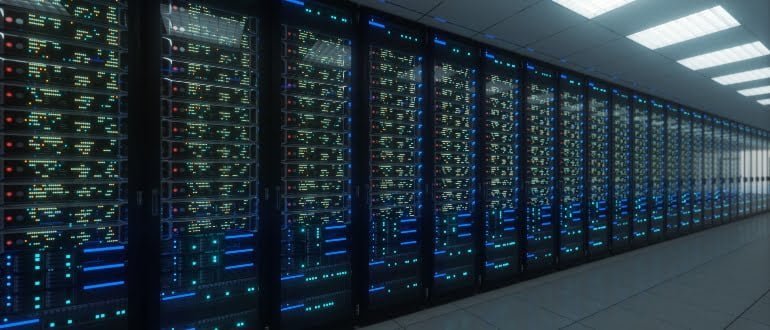
Right now, the world is in the middle of a renewable energy boom. Late last year, renewables surpassed fossil fuels for the first time, and wind, hydro and solar PV are now on-track to permanently outstrip supplies from gas, oil and coal-fired stations in the near future.
Solar is becoming especially widely adopted by the colocation industry, as data centres benefit from the cost and energy savings it provides. The demand is high – more than 250 data centres in the UK alone use more than 345MW of power, which is enough energy to power a city of 600,000 people.
But solar is going some way to helping meet this demand. 76.5% of the electricity purchased by the UK’s commercial data centres is 100% renewable, and 10% more is purchased according to consumer requirement. With a conscientious public and business community opting increasingly for renewable energy, that ultimately takes the total up further. And of course, it doesn’t hurt that 2019 was the UK’s best ever year for renewable energy!
We’ve still got some way to go, but the progress so far sets a good precedent for the world stage. Shifting data centres to more renewable forms of energy is still a key priority for most governments, industry bodies and businesses all over the world. The EU commission regards a target of complete carbon neutrality by 2030 to be not only an achievable target, but an essential one – if we’re to meet our global environmental goals.
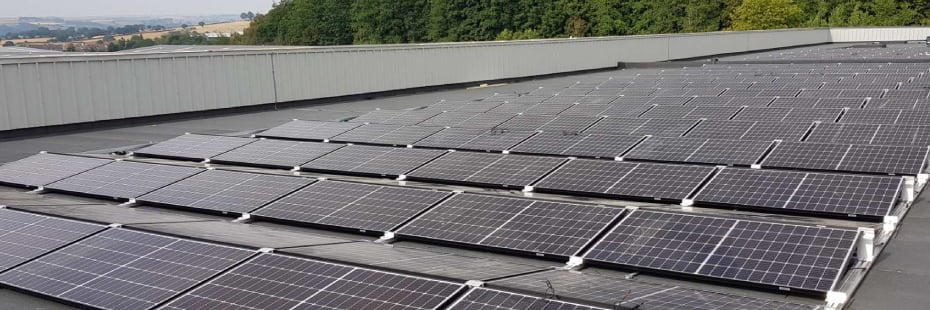
As well as the environmental side, solar PV’s ability to generate on-site energy can provide some welcome savings for data centres, which are under increasing financial pressure due to the rising prices of energy. While the energy produced from solar panels won’t yet be enough to sufficiently power an entire data centre, it can certainly help to reduce expenditure on energy usage. What’s more, it can help to tackle the issue of energy wastage – a significant proportion of the energy used by data centres is electrical, and that accounts for about 40% of the total energy consumption.
What’s more, since many data centres are spread across large premises, this can affords them an asset not every other side has – namely, plenty of roof space to accommodate larger solar panel installations.
Here at Low Carbon Energy, we have decades of experience behind us in designing and installing bespoke solar panel installations, including for businesses in the colocation industry – so our experts know exactly how to help your business make the most of commercial solar panels. To find out how we can help you, feel free to give us a call today on 01282 421 489, or email us on info@activ8energies.co.uk, and we’ll be happy to help in any way we can!
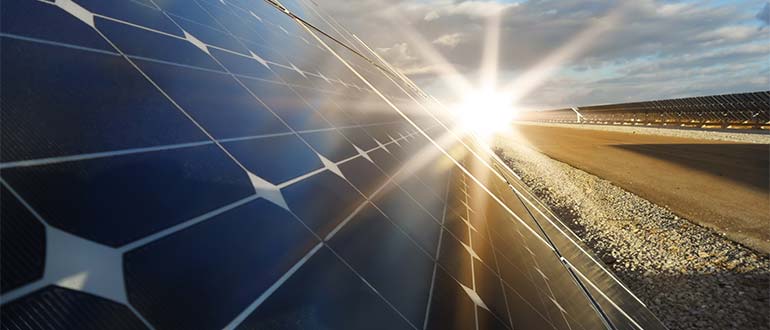
Right now, the low-carbon economy in Ireland is enjoying a period of what some are calling unprecedented optimism. It’s on course to meet its 2020 target of 40% electricity from renewable sources, and it’s recently been making firm commitments to low carbon initiatives via a number of frameworks and legislation, including the ‘Programme for Government – Our Shared Future’, the Climate Action Plan 2019. And of course, there’s the European Green Deal, through which it’s pledged to achieve carbon neutrality by 2050.
Carbon neutrality is amongst Ireland’s ultimate long term aims, and as part of achieving them it’s currently focusing its attention on achieving similarly tough goals much closer on the horizon. By 2030, clean energy is expected to become the largest source of global energy production, and by that date Ireland plans for renewable energy to make up at least 70% of its overall energy mix. It’s an ambitious target – factoring in an expected growth of demand, it’ll probably require that the current levels are doubled.
While wind currently accounts for a large proportion of Ireland’s renewable energy sector, solar is an area of increasing focus too, as Ireland looks to diversify its renewable energy generation portfolio. The development of a National Energy Efficiency Action Plan is currently underway, as well as the development of a Solar Energy Strategy.
The Department of Communications, Climate Action and Environment has also launched a competitive auction process to further incentivise the use of solar panels – the Renewable Electricity Support Scheme (RSS). This is a series of annual auctions which give entrants the chance to win a two-way contract-for-difference-based Power Purchase Agreement.

Experts agree that Ireland has come quite a long way in a very short space of time. Even as little as a year ago, lots of key aspects of the country’s energy policy were still uncertain. The clarity and focus has been primarily attributed to strong leadership from the Irish government, but there’s also a notable enthusiasm from Irish homeowners and businesses too.
Photovoltaic (PV) solar panels were once a relatively rare sight on Irish rooftops, but they’re becoming exponentially more common as people embrace the energy savings that this technology provides, as well as the and increased control and security over energy production and consumption. Gradually, large parts of Ireland’s population are shifting from consumers to ‘prosumers’ – in other words, producing energy as well as consuming it.
Of course, these are still relatively early stages, and leaders in Ireland acknowledge that there’s a long way to go until the country achieves the sustainable goals set by the government and the EU. In the words of one senior official, making systemic changes to a nation’s energy system is “a game that must be won in the first half”. But spurred on by the recent worldwide emissions drops from national lockdowns, if Ireland can maintain the momentum it’s been building up with its solar energy sector, experts contend that its future of solar energy still looks bright.
We have our own office in Ireland here at Low Carbon Energy, and we’re currently engaged in a number of projects on its shores. What’s more, we’ve completed a wide range of projects right here in the UK, too – you can take a look through some of our case studies to find out a bit more about them! With 30 years of combined experience behind us, our experts know exactly how to help your business make the most of commercial solar panels. To find out how we can help you, feel free to give us a call today on 01282 421 489.
As restrictions continue to ease in many parts of the UK, and in other countries across the world, there are calls on governments and organisations not to undo one of the few positive side-effects of this devastating pandemic – namely, the relief it has provided for the environment. As we’ve discussed before here at Low Carbon Energy, right now we have a unique opportunity almost unmatched in modern history – an opportunity to reshape our society in terms of the way we consume energy, building a fairer, cleaner and more resilient economy.
This opportunity is especially clear in the UK, which is better positioned than many other countries to transform its energy sector. We have one of the cleanest and most innovative energy systems in the world, with thriving investment in renewable technologies like commercial solar panels, all of which provide a strong platform for us to make the transition to a ‘Net Zero’ economy. Net Zero may be a term you’ve heard before – but if not, allow us to give you a quick rundown of what it means, and why we should all be aiming for it.
Net Zero essentially refers to striking a balance between the emissions a given entity produces, and the emissions that it removes from the atmosphere. If the emissions produced is equal to the emissions removed, then that entity can be truthfully said to have achieved Net Zero, or gone ‘carbon neutral’ – these two terms mean the same thing.
If you want your business to achieve Net Zero, you have to be investing in techniques and technologies to remove as many greenhouse emissions from the atmosphere as you put into it. In practical terms, this essentially involves cutting greenhouse emissions (particularly carbon dioxide) to as close to zero as possible.
To use a popular analogy, imagine a bath that you don’t want to fill up – except it has both taps on. To prevent it from filling up completely, you can choose to turn down the taps (i.e. focus on reducing your emissions), or take another approach, in which you leave the taps as they are, but drain an equal amount of water down the plughole. (In other words, offsetting your emissions.)
At the end of March, when businesses shut down and cars stopped moving, we had a glimpse of what a low carbon world would be like. We’ve already recently talked about some of the statistics, and how businesses are now planning on orienting themselves towards their vision for a low-emissions world.
But while reducing emissions is a great goal to set, it’s also quite vague. For it to be achievable, it needs to be specific, and that’s where Net Zero comes in. It gives businesses a specific target to aim for, a benchmark to reach so that they know their sustainability efforts are working. Of course, the ideal case scenario would involve simply eliminating emissions entirely. However, this can prove to be a difficult challenge, especially for ‘hard-to-treat’ industries such as manufacturing, in which it might be too complex or simply not possible with current technology.
Offsetting the amount of emissions is often far more achievable, since it allows for residual emissions but still limits their potential for harm. For these reasons, Net Zero – or ‘going carbon neutral – is seen by many as the more realistic goal.
Net Zero has been specifically mentioned by many recent major studies and scientific reports, highlighted as a reliable way for governments, local authorities and businesses to ensure they’re making good progress towards reducing emissions.
What’s more, lockdowns across the world have shown that the effect of reducing emissions can be exponential. Lower emissions mean clearer skies, increasing the efficiency of certain low-carbon technologies such as solar panels and thus giving us the means to lower emissions even further.
This isn’t theoretical – Germany recently found that lower levels of air pollution from closed factories and lower traffic meant that more sunlight was able to reach the ground, improving the effectiveness of solar panel technologies. India came to similar conclusions – they enacted their lockdown very suddenly at the end of March, and the effect was even clearer to see due to such a dramatic change across such a large population.
All this presents a particularly strong opportunity for the UK economy. As of 2020, we are the third largest solar energy producer in Europe, and the seventh largest worldwide. Only last year in November 2019, the UK enjoyed its first coal-free fortnight since the Industrial Revolution, powering itself entirely on renewable energy instead.
It goes some way to show why more businesses than ever are using solar PV to achieve their target of Net Zero, taking control of their energy and saving thousands on electricity bills in the process. What’s more, as a proven technology solar panels are getting cheaper all the time.
Here at Low Carbon Energy, our experts have over 30 years of combined experience, having helped SMEs and large corporations across a wide variety of sectors transform their business’ energy supply. Each of our installations is bespoke, and we tailor your solution on your specific energy profile, helping us to maximise carbon reductions and save you up to thousands of pounds in energy bills. Feel free to look at our case studies for just a few examples of businesses which have reaped huge rewards from solar, such as Boeing and Computacenter. To find out how we can help you, feel free to give us a call today on 01282 421 489!
As far as day to day life is concerned, we almost certainly don’t need to tell you about the impacts of the coronavirus crisis. Only the remotest corners of the planet have remained untouched by Covid-19, and billions of people remain in lockdown across continents like Asia, Africa, the Americas and Europe. It’s not just day to day life which has been transformed dramatically though – there have also been significant transformations in the energy world.
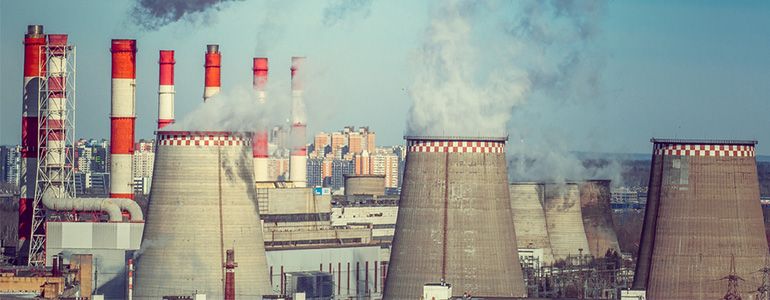
We’ve already covered the drop in emissions and the rise in renewable energy in a recent post here on the blog, but one particularly interesting side effect of the whole crisis is that it may well end up putting a final nail in the coffin of the ailing coal industry here in the UK – and indeed the world.
Essentially, the Covid-19 crisis has highlighted how we’re relying on coal less than ever, and increasingly turning to renewables instead. As we noted on a recent LinkedIn post, our nation has now passed a new, hugely significant milestone – we’ve gone two full months without burning coal. Our previous record was 18 days, 6 hours and 10 minutes, so this new record completely blows it out of the water. What’s more, it’s by far the longest period we’ve gone without coal since the Industrial Revolution first began over 200 years ago.
This is thanks in part to the gradual increase in investment and public faith in renewables over the past ten years or so, and it’s the latest development in a long term trend of renewables steadily eclipsing the use of fossil fuels – not just here in the UK, but around the world too.
From an economic point of view, coal is highly vulnerable. It’s one of the dirtiest fossil fuels by quite some way, and has been in steady decline for a long time now, and the Covid-19 crisis has sent it to new lows. As you’d expect, its price is a huge factor in this. While prices for renewables are falling year on year, coal can’t achieve the same because of what economists call ‘marginal cost’.
The simplest way of explaining this is as follows: to generate power using a coal plant, you need to buy coal. Meanwhile, generating power using solar panels requires no such additional cost, making them much more cost-effective and efficient, and going some way to explaining why renewables are still steadily outstripping this increasingly dated fuel. It’s therefore not surprising that the UK’s national supply chain is now demanding low carbon energy generation, further ‘fuelling’ investment in the sector.
The start of our national lockdown was marked by what experts called an ‘unprecedented’ fall in energy demand, including for electricity. In the wake of our drastically reduced energy usage, it’s therefore probably no surprise that the first source of power to get hit was coal – four of the last remaining coal fire plants were shut down not long after lockdown began. Key developments like these have already made investors even less likely to invest in it (and their confidence is very unlikely to recover), sending it further on its downward spiral. This national development is part of a wider global trend, too – last year (2019) was notable for being the largest fall in coal-powered electricity production on record.
A statement like this was once a matter of opinion. Not any more. Today, commercial solar panels and similar renewable energy options are becoming increasingly more practical, offering low maintenance costs and even the chance to profit using schemes like the Smart Export Guarantee.
Energy security is another factor that’s especially important for businesses, using commercial solar panels to protect their output and productivity without being affected by local or national outages. This will only become more important in the months and years to come, as businesses take steps to protect themselves and recoup the costs they’ve lost from this pandemic.
There’s also the matter of Corporate Social Responsibility – the idea that businesses and organisations are increasingly responsible for their social and environmental impact. There’s substantial evidence that this is becoming more important to consumers than ever before, especially in the light of the Covid-19 pandemic. We recently discussed the notable YouGov poll in which 51% of respondents said they noticed cleaner air outdoors. It’s clear that many of them intend to do their part individually in maintaining that, and will expect the same from the companies and organisations they patronise, too.
Here at Low Carbon Energy, we have 30 years of combined experience and expertise in solar panels, and know exactly how to help your business make the most of them. Feel free to look at our case studies for just a few examples of businesses which have reaped huge rewards from solar, such as Stells and Crow Wood. To find out how we can help you, feel free to give us a call today on 01282 421 489!
The UK is installing solar panels faster than any other European country. With domestic installations rising in popularity amongst homeowners, more and more people are turning to commercial solar panels to power their businesses and institutions too. We can certainly attest to the latter here at Low Carbon Energy – we’re busier than ever installing solar PV for businesses in the North West across a whole range of industries.
So, why does Britain have such a sunny disposition towards commercial solar panels? Well, plenty of reasons really – some universal and some specific to the UK. We’ve listed them below, but first let’s start off with one of the first questions you may be thinking…
Yes. They convert light to energy, not heat. This is why they’re quite so useful to customers across the UK, despite our worldwide reputation for mild and overcast weather. So even on rainy days, you can still be confident your solar panels will be gathering energy. In fact, our moderate climate may even work in our favour, as our lower temperatures can make the panels more efficient, and we get about 60% of the solar radiation found in the equator.
Partially for this reason, here in the UK the amount of solar energy we collect and use is comparable to some areas of France or Spain. In some areas in the South of the country, we get roughly the same levels of sunlight as Germany, which is one of the world’s biggest markets for photovoltaics. Already, we’re reached a point where more electricity has been produced with renewables than with nuclear power plants.
2010 – The UK government launches the Feed In Tariff scheme, designed to encourage solar PV uptake by allowing customers to profit directly from their panels by selling any excess energy generated back to the government. (By 2020, this scheme was replaced by the Smart Export Guarantee.)
2013 – By 2013, the UK has already become the world’s 10th largest producer of solar power. (Fast forward seven years to today, and we’re number six on that list – after China, Japan, Germany, the US and Italy.)
2016 – Britain passes a landmark in solar power installations with quarter of a million (250,000) homes in the UK having some form of solar thermal panels installed.
2018 – Solar power in the UK almost doubles as more businesses seize the opportunity. New installations in homes, workplaces and dedicated solar farms now total around 709,000 installations.
2020 – The UK was on track to have 10 million solar panels installed in properties throughout the country by 2020, which means about a third of households would be utilising solar energy. As with almost everything else, the Covid-19 pandemic has slowed further progress for now, but the UK’s enthusiasm for solar hasn’t dampened.
The UK’s solar PV uptake is expanding rapidly well beyond the domestic market, too. London currently rivals Madrid in terms of the energy generated by solar, and it’s becoming more and more popular with businesses up here in the North West of England too. Just here at Low Carbon Energy, we’re providing planning, supply and installation services to businesses and organisations across a whole range of sectors – including agriculture, industrial businesses, data centres, hospitals, aerospace… the list goes on! (This is helped by the fact that the British government is still actively encouraging uptake of solar energy using the Smart Export Guarantee, which we’ll go into a little bit more detail on below.)
Our enthusiasm for solar energy in this country is mirrored in lots of other countries across Europe and the world at large, and the International Energy Agency says that solar (both photovoltaic and solar) could surpass fossil fuels and other renewable sources like wind and hydro by 2050 – making it the world’s largest energy source. If the UK continues on its current track, we’re likely to remain one of the top nations leading this charge in the solar revolution.
In addition to the key advantages of solar panels, they also have a range of specific benefits that make them attractive to UK homeowners and businesses alike. These encompass sheer practicalities and cost savings, wider economic factors, and changing attitudes towards climate change and similar environmental concerns.
Some of the main reasons why solar panels are so popular in the UK include:
Solar panels offer significant cost savings on electricity bills
Solar panels help save you money. This is obviously one of the most universal appeals of UK solar PV installations, for businesses, other organisations and individual homeowners alike. The bulk of their cost is carried up-front in their supply and installation, and besides that they require very little other investment. Instead, they produce free energy for the rest of their serviceable lifespans, helping to offset the costs from energy bills and thereby helping owners save significant amounts of money.
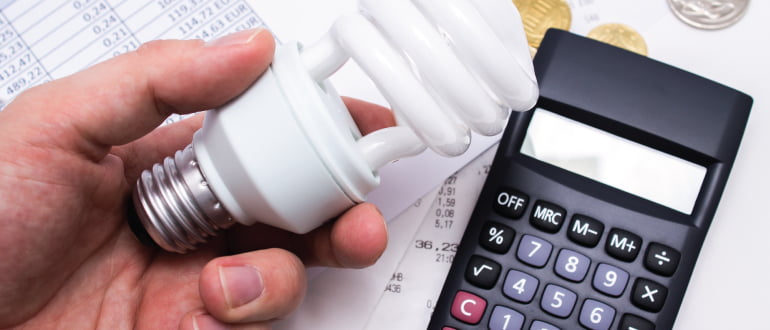
Over time, the panels themselves are becoming steadily cheaper and more efficient, and the cost of solar is going down too (which we’ll come onto in just a moment.)
The Smart Export Guarantee lets owners profit from excess electricity generated
In a nutshell, the Smart Export Guarantee is a UK government initiative designed to incentivise solar PV installations. It allows owners to make money from any excess electricity they don’t use, chiefly by providing them the option to sell it directly back to their energy supplier. The SEG came into effect in 2020 and replaced the Feed In Tariff, which served basically the same role.
The big difference between the SEG and FIT is that the Feed In Tariff involved customers selling electricity directly back to the National Grid, at rates set by the government authority Ofgem. In contrast, the SEG allows customers to sell the excess energy back to their energy supplier, creating healthy market competition designed to encourages suppliers to offer the best prices.
Solar PV allows owners to increase their energy independence and security
Having a consistent source of on-site electricity generation means that solar PV owners become less dependent on the National Grid. Not only does this allow them to benefit from the sorts of cost savings we’ve detailed above, but it also provides an effective measure against power outages by giving owners an emergency backup source of energy. This is especially vital for businesses – every moment of downtime can have hugely detrimental costs, and having the ability to guard against that can preserve productivity and save enormous amounts of money.
It’s an environmentally-friendly, sustainable source of power
Again, this is a widely touted advantage of solar energy. Unlike fossil fuel energy, solar panels are clean and don’t emit any sort of harmful gas or pollutant. This is an especially popular advantage for UK businesses, as it allows them to reduce their impact on the environment, helping them to meet their own green targets as they strive to become a more socially-conscious and responsible organisation.
Public attitudes in the UK are changing
The ability of solar panels to provide clean, green energy is becoming all the more important to organisations in a country where the public is becoming increasingly more conscious about the impact their buying decisions have on the environment and the world at large.
We’ve previously covered how UK citizens have a vision for the new normal – 51% of respondents to a YouGov survey noticed cleaner air outdoors, and recent satellite images have shown a marked reduction in emissions. Many members of the general public are already planning to make changes to their lives in future to help them maintain this new normal, and they’re likely to expect the same from businesses where they shop, too.
Therefore, demonstrating Corporate Social Responsibility is more important for businesses than ever, as modern businesses who can demonstrate tangible green credentials can get the edge over their competitors.
The price of UK solar PV is steadily dropping
The UK’s solar market is already highly competitive, and the technology is still becoming cheaper, more efficient and more accessible than ever. When the Feed In Tariff scheme was launched back in 2010, a 4kW solar PV installation cost about £20,000. The median cost for an installation of the same scale was around £6668 by 2017, which equates to about a 67% drop in the cost of the installation – without compromising on the returns that solar panels bring for customers.
What’s more, the lifetime costs of solar PV are projected to drop by around half over the next few decades, according to renewable energy company Statkraft. Gas and other fossil fuels aren’t seeing nearly this level of flexibility in price, so by 2030 it’s estimated that solar panels will be one of the cheapest energy sources on the market. By 2050, it’s likely to make up around 70% of the UK’s power generation, making it a more attractive option than ever.
The industry creates jobs, and reduces UK reliance on imports
The UK’s solar power industry spans a number of disciplines and specialisms, including installation, maintenance, distribution and manufacturing. This opens up the opportunity to create tens of thousands of jobs in the energy industry for UK residents, helping to make domestic energy supply and prices more secure. As an extra bonus, it also reduces the UK’s need to import electricity from abroad. With the right support by the government and growing confidence amongst the public, the solar energy could bring around 50,000 jobs to the UK by 2050.
Solar PV installations are very easy to maintain
Once commercial solar panels (or domestic ones) have been installed, they require very little maintenance. They only require occasional cleaning of the panels and replacement of parts like the cables and inverters, and most of these parts generally last between 25 to 30 years before they need to be replaced. This makes solar panels a great long term solution for businesses, helping to save money while minimising costs.
Solar energy is available to customers ‘off the grid’
Solar PV installations are particularly useful to individuals, businesses and organisations which might be some distance out from normal infrastructure, such as relatively remote counties – or even islands off the British coast – where they might have limited access to the National Grid. Solar panels can produce electricity in any location that gets a decent amount of sunlight, making it a flexible and highly accessible method of generation.
So with all that in mind, it’s no wonder the future’s looking bright for the UK solar energy industry. And if you’d like to take advantage of some of these benefits for yourself, we’re here to help. Here at Low Carbon, our experts have over 30 years of combined experience behind us in helping you save on business costs, and profit from having cleaner energy. To find out how we can help you, feel free to give us a call today on 01282 421 489!
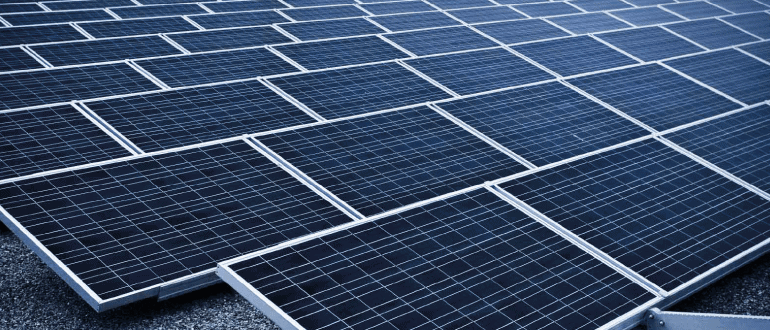
In a nutshell
The main thing about ground mounted solar panels is that obviously, they tend to take up a fair bit of space on the ground. If you’ve got that space to hand (not everyone does!) they can be a fantastic asset for your business. The angle matters when it comes to solar panels, and the useful thing about ground mounted solar panels is that they allow for more control over the exact angle and orientation of the panels in order to maximise their output.
Ground mounted solar panel installations tend to be the most cost-effective option on a smaller scale, or in cases where access to the roof might be costly, or obstructed. It’s also worth noting that they can operate at a slightly lower temperature than roof mounted solar panels, which means they may be more efficient in certain circumstances.
However, even if you’ve got the available space to spare, ground-mounted commercial solar panel installations sometimes require planning permission – which can be problematic or inconvenient to acquire. At ground level they’re also more likely to have their access to the open sky impeded by surrounding buildings or other obstacles, which can limit their productivity. (It’s one of the many reasons that ground mounted installations are most common sights on farms or other areas with wide-open spaces.)
The pros of ground mounted solar panels

The cons of ground mounted solar panels
In a nutshell
Roof mounted solar panels are unquestionably a more popular and convenient option, mainly because they’re not competing for space on the ground level. What’s more, solar panels that are mounted on a roof tend to find it easier to have unimpeded access to the sky throughout the day. This can have a big impact on their productivity and efficiency, enabling you to make even more savings.
They’re also a favourite of large commercial businesses chiefly because the larger your roof size, the more space you can dedicate to solar panels. Once again, that maximises their productivity and therefore your savings.
Notably, roof mounted solar panels rely largely on the structural strength of your roof to maintain their position. This means that their racking doesn’t need to be as complex, and can take off some of the cost of the installation compared to ground mounted solar panels. Their height from the ground does complicate some aspects of maintenance and repair, but they need relatively minimal maintenance anyway, so it tends not to be too much of a concern for most businesses.
The pros of roof mounted solar panels
The cons of roof mounted solar panels
Harder to access for maintenance and repair
Productivity can be affected by roof pitch, shape and angle
In summary, while ground mounted solar installations have their fair share of benefits to offer, the numerous advantages of roof mounted installations tend to make them the most widely preferred option for most businesses and organisations. Feel free to take a quick look through our own case studies for examples of the sorts of businesses we’ve previously helped with our expertise in solar panels.
Alternatively, if you’ve still got any questions or need any advice, we’re only too happy to help here at Low Carbon Energy. With 30 years of experience behind us and counting, we’re the perfect people to help you save on business costs, and profit from having cleaner energy. Give us a call on 01282 421 489 today!

Our priorities as consumers are changing, and some have been accelerated by Covid-19. The national lockdown means that we’re re-examining our consumption; of power, of food, and other essentials. We’re re-evaluating what’s important, including how we live and the impact we make on the planet. While recycling initiatives and emissions aren’t always headline stories right now, there’s evidence that the UK’s population is thinking more about the undeniable link between public health and long-term sustainability – namely, what sort of future events await us if we don’t start planning ahead now.
What’s more, at a time when community and working together have never been so important, customers are increasingly expecting businesses to demonstrate their commitment to ethical and sustainable business practices, and this trend is unlikely to fade once the coronavirus recedes. So, how are consumers’ expectations changing in the wake of the crisis, and how can businesses react?
According to a recent YouGov poll, only 9% of Britons want life to go back to ‘normal’ once lockdown is over. More than 54% of the respondents are trying to make some changes in their own lives – many of them around reducing waste – and hope that the country will similarly learn from the crisis on a larger scale. What’s more, 51% of the respondents noticed cleaner air outdoors, while 27% have noticed more wildlife.
The science backs them up. Satellite images have shown dramatic reductions in concentrations of pollutant nitrogen dioxide across the world, including China, northern Italy, and the UK. This plunge in emissions has given us a glimpse of what the world could be, and now that we’ve seen that, it could be all the driving force that many customers need in order to make a change. Given similar motivation, the UK population has made changes to their lives before – just look at the decline in the use of plastic bags for example.

And it’s important to remember that even before the current crisis, there was growing evidence of customers factoring in environmental concerns into their purchasing decisions. It all points towards a growing trend of consumers becoming increasingly more discerning and ethical in the way they shop, and the services they use.
With increasingly stark changes in customer expectations, the most successful businesses will undoubtedly be the ones that find ways to adapt to these changes, which will give them the edge over their competitors. Corporate Social Responsibility has never been more important. So, what are the best ways you can ensure that your business is adapting?
Be approachable
Throughout the crisis, consumers have been watching businesses closely, looking at the ways they treat their employees and their customers when the chips are down. That means the short-term impressions that your business makes – now and just after the crisis – will probably make a long term difference to your reputation. Therefore, it’s a good idea to double-check that you’re being proactive in listening to employees and customers’ concerns. Employees are not only your greatest resource, but they’re also one of the greatest advocates for your business, so ensuring that they feel looked after and heard is going to pay dividends for you in the long run.
Similarly, it’s a good idea to take another look at your processes and your suppliers, especially if they’re overseas, and examining what ethical practices they have in place to ensure proper treatment of their staff and the environment. Don’t forget – any shortcomings in their ethics or practices could well end up reflecting on you!
Be sustainable
We’ve already touched upon how environmental factors are increasingly affecting the way that people shop. Even from before the crisis, a survey by Kantar (a UK-based data, insights and consulting company) found that 77% of respondents said their buying decisions were influenced by environmental factors. After the seismic global changes brought about by Covid-19, the threat posed by climate change might not seem like such an abstract fear for so many people in future, so it’s likely to become an increasingly widespread concern for your existing and potential customers. It goes to show the growing importance that sustainability has not just for your business and the planet, but also in continuing to appeal to customers.
Be energy-secure
One of the biggest priorities for countless UK businesses after this will be to look at how they can set up practices and failsafes to help protect themselves against this in future. If you’re considering this yourself, your energy is a great place to start. The vast majority of businesses are dependent on the National Grid for their energy, but there are several benefits to focusing your efforts on energy independence from the Grid. First of all, it means that in the event of a widespread power cut, you have a ready supply of energy to draw upon to protect yourself from any disruptions to your operations.
What’s more though, generating your own energy through commercial solar panels and similar technologies can give you additional financial stability as you’re able to sell excess energy back to the Grid through the Smart Export Guarantee. It’s definitely worth noting its resilience to the current pandemic. In the first few months of 2020, China watched its entire energy capacity drop compared to the previous year, with only one exception – that of solar.
Renewables are protected above all by their ‘zero marginal cost’. In other words, unlike other forms of energy, solar panels don’t require you to buy fuel to make them work. Their power source is abundant, universal, and unaffected by closures of ports or airports, so you can count on solar panels to keep your business running even in the hardest of times.
Feel free to look at our case studies for just a few examples of businesses which have reaped huge rewards from solar, such as Boeing and Allertex. Here at Low Carbon, our experts have over 30 years of combined experience behind us in helping you save on business costs, and profit from having cleaner energy. To find out how we can help you, feel free to give us a call today on 01282 421 489!
Brownout is basically the term used to describe what happens when the voltage drops below the usual mains supply level. It’s similar to but not quite the same as a blackout, which is a complete (and normally sudden) loss of power. The term brownout is sometimes used interchangeably with the term sag, but the big difference there is that a sag is normally a very short term drop in voltage, whereas a brownout can last anything from a few minutes to hours or even days.
Most often a brownout is due to increased strain on the national electricity grid. This could be to a temporary spike in power demand, or extreme weather conditions like rain, snow or storms – all of which have the potential to affect the nation’s power supply to varying degrees. They can also occasionally be caused by internal factors, such as faulty wiring or too many appliances being installed on a single circuit.
Sometimes, brownouts are intentionally instigated by the National Grid, who deliberately reduce the voltage to ration electricity supplies and thereby prevent a complete blackout.
Because brownouts aren’t quite as sudden as blackouts, most modern computers and other machines will often survive them just fine. However, that’s not to say they can’t have serious consequences for your business.
Brownouts have the potential to negatively impact your business in a range of ways. Here are some of the most critical, and universal.
Loss of productivity and impact on operations
The increasingly widespread reliance on technology for many businesses means that even a momentary power cut can severely hamper employees in the performance of their duties. It can limit communication to on-site teams, or prevent important documents and similar resources from being transferred. It might result in time-sensitive projects being delayed, which can lead associated costs to spiral.
In fact, downtime is arguably one of the most significant issues businesses have to face in power cuts – just look at Google. The corporation briefly lost power in 2013, and the resulting downtime cost them an estimated £100,000 a minute until power was restored.
Loss of data, records or archives
The loss of data can pose an equally devastating issue for businesses, especially for those who must adhere to strict codes of compliance. While many businesses have improved their data storage facilities and processes in recent years due to events such as the GDPR and the WannaCry incident of 2017 (which saw widespread data destruction across large numbers of businesses, and even the NHS), it remains a scenario that can exact a heavy toll. In many cases, this data may be extremely costly – or even impossible – to replace.
Damage to devices and equipment
As we’ve touched upon above, a blackout is perhaps the most damaging type of outage, as devices are improperly and abruptly shut off. However, while brownouts may not be as damaging in quite the same way, they can still be very damaging for IT loads, sometimes more so than a blackout. This is because during a brownout, devices will still be operating on a baseline level of power, but the reduction can cause some of them to malfunction – which can end up having further consequences further down the line.
We’ve explored the issue of energy security before on the blog, but here it is in a nutshell: commercial solar panels and similar types of installations enable you to generate your own reserves of energy on site. This has a number of exciting benefits for you, but one of the most useful byproducts is that it reduces your reliance on the National Grid, giving you more energy independence. It also means you’ve got a power supply to fall back on should problems occur, which in turn amounts to increased energy security so that your business can keep operating.
And of course, by generating your own solar on site, you can make big savings on your energy bills too. We’ve outlined a full list of the advantages of solar in a previous post, so feel free to take a quick recap! Plus, here at Low Carbon, our experts have over 30 years of combined experience behind us in helping you save on business costs, and profit from having cleaner energy. To find out how we can help you, feel free to give us a call today on 01282 421 489!
It’s only April, and already 2020 has been a year of unprecedented change. There are very few places left on Earth which haven’t been touched by the Covid-19 crisis, and life here in the UK has changed unrecognisably. It’s possible, even likely, that things may never be quite the same again. Millions of us were caught off guard at the abrupt speed with which an overseas news story suddenly became a daily reality, and for many people it throws into perspective some other issues looming in our future. Climate change is obviously one of the biggest of these, and one with the potential to cause similar long-term damage and loss of human life.
It’s a difficult time for everyone right now, but if anything good is to come of the situation, it’s that it may turn out to be an event that galvanises positive changes to the way we work and live. The UK lockdown has already caused a big drop in air pollution, and with any luck it’s an example the sort of positive change that could become permanent once we all emerge out the other side of this crisis. Here are a few other encouraging pieces of industry news at the moment, which hint towards a brighter horizon.
Official figures indicate that there are now over a million installations of solar photovoltaic panels in the UK, across a number of sectors. They can be found on people’s homes, and in community-owned projects, or in the form of commercial solar panels on business premises. At the moment, the UK is still outstripped in this area by countries like China and Germany, but there’s evidence of growing support of renewables from an increasingly environmentally-conscious public.
Historically, one of the few obstacles to the rise of renewables like solar is – obviously – price. That’s becoming less of a problem with every passing year, though. Solar and wind is now the same price, or cheaper, than new fossil fuel capacity, making it an increasingly attractive option to businesses and homeowners across the nation.
Coal has been the dominant energy source in the world for decades, but for quite a few years now, many countries across the world have made concerted efforts to reduce their independence on it. That includes us here in the UK – coal supplied 30% of power here in 2014, and by 2019 that had dropped to just 2%. Only four coal-fired power stations have been left operational, and the current plan is to close these by 2025 (or maybe even earlier).
Renewable energy sources like solar and wind are rising to take its place. In fact, renewables are set to grow 7.1% each year for the next two decades, which will put them in a position to replace coal by 2030. They’re experiencing the fastest growth in the electricity sector, which will provide almost 30% of power demand by 2023.
Solar power is the most abundant energy source on Earth, and though we’ve evolved the technology to capture it, there’s still so much room for this technology to advance. Every ounce of oil, every lump of coal, and every cubic foot of natural gas could be left in the ground if we could capture and store 100% of one hour’s worth of solar energy each year. That’s the scale of the opportunity before us, and one that humanity is making steady progress towards achieving.
Once we come out of the other side of this global crisis, we’ll see what kind of world emerges. Hopefully it’s one that we can all make better, brighter and safer for ourselves, and for future generations – starting with sustainability. Until then, stay safe, and stay inside.
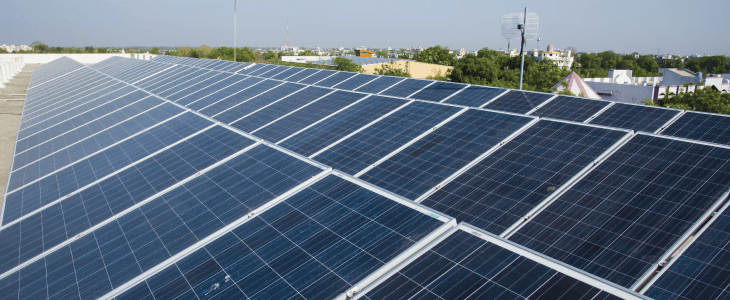
There’s no shortage of sectors that can reap huge rewards from the use of commercial solar panels to offset costs, and the industrial sector is no exception. We serve a broad range of industries here at Low Carbon Energy, and we’ve got decades of experience behind us in helping businesses save money, become more efficient, and reduce their carbon footprint in the process. But while some of the advantages that solar panels offer are applicable to a wide range of sectors, they can benefit the industrial sector in some quite specific ways. Here are just a few of the major ones!
This is one of the foremost advantages of commercial solar panels for any kind of business, and many business owners choose solar panels on the strength of this alone. However, the cost savings they offer can be particularly helpful to industrial and manufacturing businesses, given their especially high power requirements, and the ability of industrial solar panels to offer free, renewable electricity enables your industrial businesses to reduce your reliance on the National Grid. Even if you only save a moderate fraction of your power usage, this can often equate to saving hundreds or even thousands of pounds a year.
Often, buying new business assets involves having to take calculated risks, as owners have to trust their judgement on whether the new assets will be able to bring value to the business. Happily, compared to most of these sorts of purchases, commercial solar panels are a very low risk investment, and one that’s guaranteed to bring a measurable return on investment. And although they’re great at bringing money into the business, they also helpfully don’t take that much out of it, with no running costs and minimal maintenance required.
While larger industrial sites tend to require more power to run than those of smaller businesses, the flipside is that it gives you more roof space to work with, too – allowing you to fit more solar panels than a smaller business might be able to support. Once again, the potential for bigger costs means potential for bigger savings, and you may even choose to maximise your energy saving potential across the entire site by installing smaller installations on other buildings on your premises, too.
If you manage to generate excess energy for your requirements, you can even sell the excess supply back to the National Grid via your energy provider. This is facilitated by the Smart Export Guarantee, which the government recently brought in to replace the now-redundant Feed In Tariff. In case you’re not fully up to speed on it, we’ve gone into full details about how the scheme works in our previous post about the Smart Export Guarantee.
The relatively high power requirements and emissions output of the manufacturing sector can often put it under greater scrutiny compared to other industries – from pressure groups, the government, or even just potential customers and investors.
With climate change more of a concern now than ever, it makes good business sense to display a firm commitment to your Corporate Social Responsibility, or CSR. Industrial solar panels are a great demonstration of that commitment, providing a significant offset to carbon emissions, and giving your even more widespread appeal amongst an increasingly discerning public.
Due to the higher power requirements and outputs involved, achieving complete self sufficiency is harder for larger industrial businesses than it is for smaller SMEs in other sectors – but it’s still a smart and viable goal. What’s more, making it a priority can help guard your business against growing energy prices, which are expected to rise sharply over the course of the next decade.
Rather than taking the brunt of those hikes through reliance on the National Grid, industrial solar panels allow you to effectively forward-buy your electricity at a set price, helping you to financially forecast more accurately, and maybe even identifying other areas for growth within the business.
If you’ve got any further questions about commercial solar panels and how they could benefit your business, our experts are only too happy to help. We’ve got over 30 years of combined experience behind us in helping your business to save on costs, and profit from cleaner, greener energy. To find out how we can help you, feel free to give us a call today on 01282 421 489!
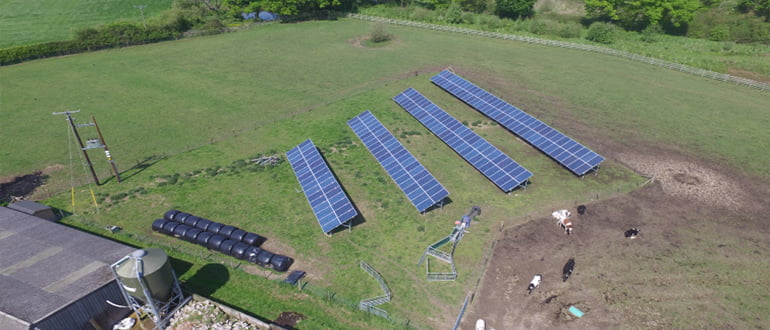
Farming and agriculture comprises one of our key sectors here at Low Carbon Energy, and our solar panel solutions have a long history of helping clients in this industry to achieve maximum energy efficiency and return on investment. The numerous advantages of solar panels are applicable to a wide range of sectors, but they can be especially beneficial to farmers. Below, we’ve listed just a few of the biggest reasons why!
Modern farming is incredibly energy intensive, especially given the scale involved, and the volume of what farmers have to produce. That means that for almost all farmers, energy comprises one of the single biggest costs of running their farm. There are a huge range of agricultural technologies and appliances that need a constant, reliable supply of energy, including refrigeration warehouses, grain stores, dairy units and chicken houses. These are energy intensive enough to start with, but in recent years farmers have been hit by energy price rises that have taken severe tolls on their business.
Solar panels provide a simple, elegant solution to many of these issues. Primarily, they do this by helping farmers to generate their energy on-site, which reduces their reliance on the National Grid. This can help save significant amounts on their energy bills and reduce business overheads. What’s more, it also futureproofs the farm against current and future price rises. (This was a big priority for Ash Tree Farm in Cheshire, one of our many satisfied customers here at Low Carbon.) As an extra bonus, as well as protecting the business financially, it also protects farms against power outages, which can have highly stressful (not to mention expensive) repercussions in terms of caring for livestock.
The UK’s agricultural industry is under more pressure than ever to curb its collective emissions, so this is another benefit that’s especially relevant to farmers. In Scotland for example, agriculture is the second highest cause of greenhouse gases (second only to the transport sector) and it’s responsible for almost 25% of the country’s total emissions. While reducing the emissions of any industry isn’t an overnight task, solar panels can certainly help farmers make significant steps towards it. The clean energy generated by solar panels can help farmers enormously in meeting their energy requirements while successfully cutting down on their carbon footprint. The owners at Huntingdon Farm, based in Cheshire, approached our experts at Low Carbon Energy to help them do exactly that – and we were pleased to be able to do so!
Agriculture demands a highly efficient use of land, and most farmers can’t afford to let any go to waste. Happily, modern solar panel solutions save customers from having to sacrifice the valuable land that would normally be used for grazing – today, solar panels are designed with dual land use in mind, which means they can be safely grazed by cattle or sheep. Silent and static, they’re unlikely to intimidate animals in the same way that new machines could.
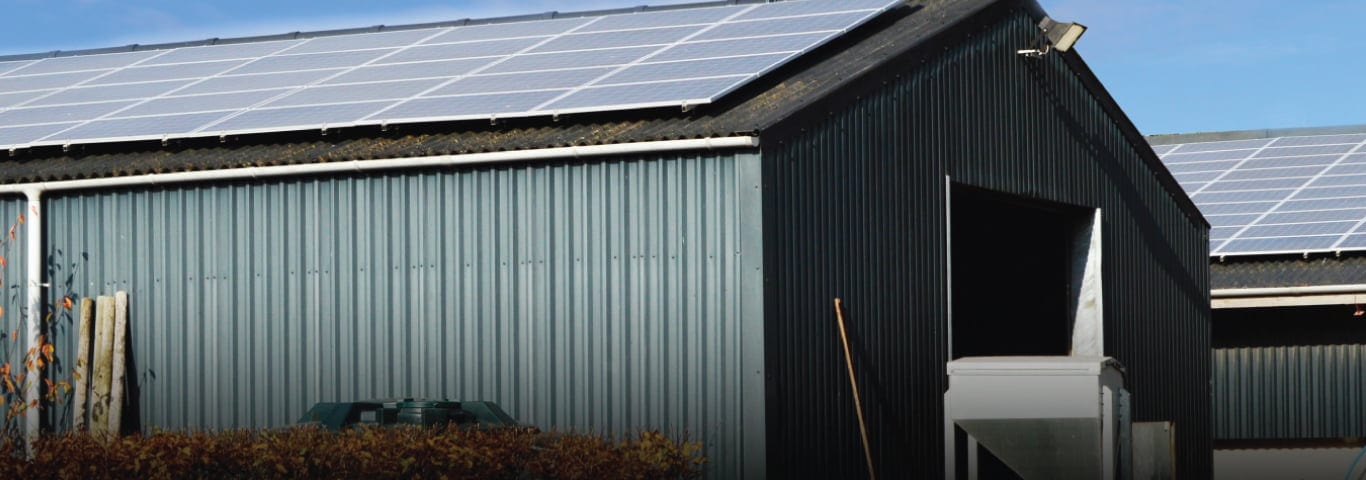
What’s more, the sprawling nature of large agricultural buildings like barns and warehouses can make them a perfect environment for solar panels, so some farmers may find they don’t have to dedicate any already occupied land to them at all. Lots of these buildings typically have a 10-15° roof pitch, which helps them to generate significant amounts of sunlight even if they’re not technically south-facing.
These are just a few general examples of solar panel benefits for farms – depending on your own circumstances, you may be able to enjoy a few specific ones of your own! And of course, all the other general advantages still apply. Here at Low Carbon, our experts have over 30 years of combined experience behind us in helping you save on business costs, and profit from having cleaner energy. To find out how we can help you, feel free to give us a call today on 01282 421 489!