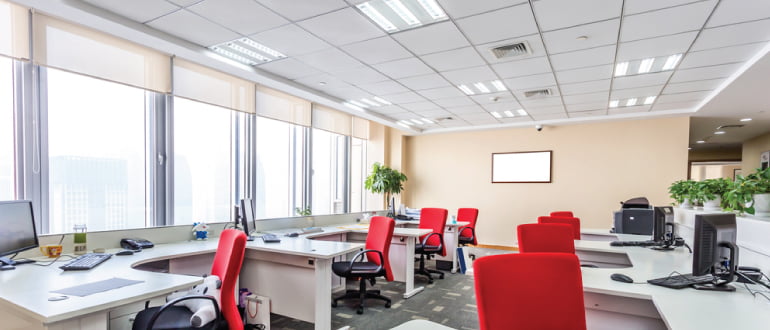
Commercial solar panels are amongst our several key sectors here at Low Carbon Energy, and we’ve got decades of experience in designing systems to maximise energy efficiency and return on investment for our customers. As you might expect, solar panels can have specific benefits for offices and commercial businesses – we’ll explore some of the main ones below!
Perhaps unsurprisingly, this is one of the single biggest draws of solar panels for businesses. In offices, lighting and computers tend to be amongst the biggest users of electricity – while this energy use isn’t insignificant, it’s generally less intensive than specialist equipment or machinery you’d find at manufacturing facilities. This is good news if you’re an office-based business owner, as the relatively light energy usage means that you stand to make significant cost savings from solar panels. What’s more, most businesses are naturally active during the day, when solar panels typically produce the most energy, which puts you in an ideal position to offset your daily running costs.
Office-based businesses can be influenced by a whole range of outside market factors, and rising energy prices can have a particularly pronounced effect on overheads. As you’d expect, larger businesses, or those with premises spread across a wide area, are often notably affected. In addition to these regular price fluctuations, businesses occasionally have to contend with seismic economic events like Brexit. These sorts of occurrences often result in lots of market uncertainty, which can ultimately be costly for your business. Thankfully, this is where solar panels can help. Essentially, generating your own energy on-site decreases your reliance on the National Grid, effectively helping to insulate your business against price fluctuations and market uncertainty.
The UK’s collective carbon footprint is increasingly becoming a matter of national urgency, and businesses are under more pressure than ever to streamline their operations so they’re as energy efficient as possible. By providing a reliable way to generate clean, renewable energy, solar panels are fantastic for helping you to meet your carbon footprint targets. What’s more, they’re a tangible demonstration of your Corporate Social Responsibility, so they’re perfect if you frequently have clients or investors visiting your site.

While we’re discussing carbon footprints and energy efficiency, it’s worth highlighting the Energy Savings Opportunity Scheme, or ESOS. In a nutshell, ESOS is designed to lead to greater energy efficiency, cost savings and carbon reduction in the business sector. It sets minimum standards for energy efficiency that are mandatory for businesses which meet the following criteria:
Right now, ESOS is in its third phase, and if your business qualifies for the scheme, solar panels provide an excellent way for your business to meet the required standards. To answer a question no doubt forming in your mind – yes, ESOS was kickstarted by an EU directive, but it’s now technically underpinned by UK law. That means it’s not affected by Brexit for the time being, especially since we’re currently in the transition period.
These are just a few of the key benefits solar panels can provide to offices – for more detail, don’t hesitate to take a look at our commercial solar panels page, which also answers a number of common questions from our customers. We’ve got over 30 years of combined experience here at Low Carbon Energy, so you can count on us to design a system that’s specifically tailored for your premises. Feel free to give us a call today on 01282 421 489, and find out what we can do for you!
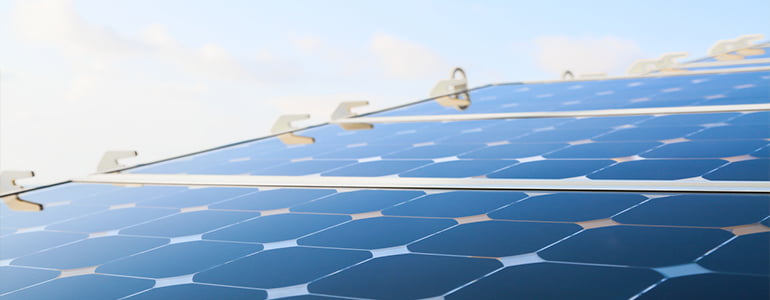
Renewable energy has always been a valuable opportunity for UK businesses, but 2020 marks the start of a whole new era. For this year and beyond, changing public attitudes and governmental initiatives will have a significant effect on the renewable energy sector. Commercial solar panels in particular are set to ben more beneficial for businesses than ever – and here are a few key reasons why!
Love it or hate it, Brexit is set to send significant shockwaves through UK industries and economies in the coming months. While there’s some speculation about how Brexit will affect energy bills, there’s still lingering uncertainty around the details (at least at the time of writing). The EU supplies about 5% of the energy that the UK uses within a given year, via the EU Internal Energy Market. In the event of a no-deal, new trading agreements will need to be formed between the UK and the EU. We also won’t be able to influence any new policies in favour of the UK, so there’s also that to take into account!
Now, obviously Brexit is a sensitive and still sharply divisive topic. Whatever your views on the issue though, an objective truth is that there are likely to be some big market changes coming. You can insulate your business against these by increasing your energy security – and one of the best ways to do that is by generating your own electricity through commercial solar panels.

The climate emergency is set to reach a new stage in 2020, and public attitudes are changing. National and global protests underline how important the issue is to millions of people, including UK consumers – who are becoming ever more savvy about where they shop. Recent research by software giant Adobe found that “the UK cares about the environment, and shoppers are more likely to favour retailers that don’t use single use plastics (32%), limit their supply chain emissions (29%) and minimise packaging (47%).”
With emissions forming a vital pillar of a company’s environmental responsibilities, commercial solar panels therefore provide a perfect way for businesses to demonstrate their Corporate Social Responsibility, which can already give them a valuable leg up on their competitors.
It’s common knowledge by now that the Feed In Tariff came to an end in April 2019, and for a while it had no substitute. However, in January 2020 marks the start of the Smart Export Guarantee. It’s similar to the Feed In Tariff in that it allows participants to sell excess electricity back to the National Grid. Unlike the Feed In Tariff, though, the SEG isn’t based on subsidies from the government. Instead, it sets out obligations for licensed electricity suppliers to offer a tariff to homeowners, business owners and organisations, and allows them to set their own prices. The idea is that the supplier with the best tariff will probably get the most business – letting businesses with commercial solar panels reap the rewards from natural marketplace competition.
Here at Low Carbon Energy, we’ve got over 30 years of combined experience with solar panels, so you can count on us to be able to create a system that’s specifically tailored for the requirements of your premises, providing maximum efficiency and return on investment. Feel free to give us a call today on 01282 421 489 to see how we can help you move towards cheap, green, unlimited energy!
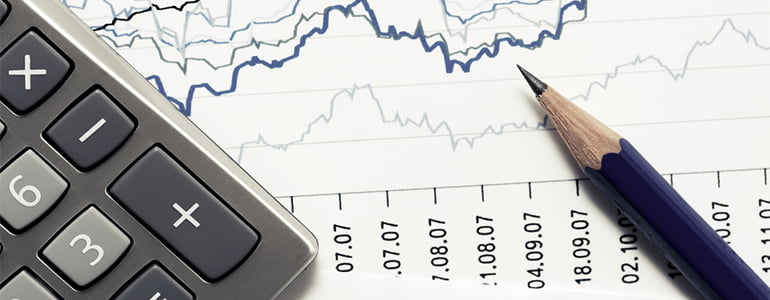
Renewable energy outpaced fossil fuels for 137 days in 2019, a record number that’s made 2019 the greenest year ever for the UK’s energy sector. This is a truly fantastic achievement, made all the more remarkable when you consider that as recently as 1990, 75% of the UK’s electricity was fuelled by burning coal. Fast forward to 2019, and that number had fallen to just 2.1%, which says a lot of things about our changing attitudes as a nation.
With changing public perceptions and growing favour for renewables, we’re steadily moving away from fossil fuels and other limited sources of energy, thanks in part to increasing numbers of business opting for commercial solar panels for their premises. So what’s the current status of the UK’s energy mix, and where do we stand moving into 2020?
As the climate crisis reaches a new stage in 2020, it’s fair to say that few UK industries are feeling the heat quite like the energy sector. Happily, we seem to be moving in the right direction, according to a new report by the Carbon Brief, which used data from BM Reports, as well as the Department for Business, Energy and Industrial Strategy. The report states that renewable energy grew by 9% last year, encompassing wind, solar panels, hydro and biomass projects. Meanwhile, the generation from coal and gas plants dropped by 6%, and our dependence on these has ultimately halved from where we were at the start of the decade.
Now, low carbon electricity made up more than half (54%) of the UK’s energy mix last year, for the first time in our history. It’s a significant step on the government’s long-term plan of creating a carbon neutral economy, which means we can only use as much carbon as we’re able to capture and store. The ultimate aim is to cut our emissions to net zero by 2050. However, as industry analysts have highlighted, there’s still a long way to go.
It’s fair to say that as UK citizens, we all have a vested interest in cutting our emissions, both from a personal and commercial perspective. That said, as a business owner, there are a lot of fantastic bonuses you can enjoy by switching to solar for your own energy supply. To start off with, generating your own energy means that you can rely less on the National Grid, ultimately leading to lower energy costs each year. On a related note, increasing your energy independence also helps protect your business against region-wide outages or power cuts.
And of course, it’s a clear and demonstrable sign of your commitment to Corporate Social Responsibility, which is becoming an ever more pressing issue for the public and businesses alike as we move into a new decade. Customers are now more selective of the products and services they use, and often factor the perceived CSR of a business into the purchasing decisions. In that sense, not only are you safeguarding the future of the planet, but it’s also a handy way to get one up on your competitors. Not bad, all in all!
Here at Low Carbon Energy, we’ve got over 25 years of installing solar panels for a huge variety of businesses and organisations. Just give us a call on 01282 421 489, or email us on info@activ8energies.co.uk, and we’ll be happy to help in any way we can!

In a word – yes. We recognise that you might be after a bit more detail than that, though, so we’ll go into it here. After all, our British winter times are hardly the envy of the world, and most of us resign ourselves to months on end of rubbish weather. If you’ve taken the time and money to invest in commercial solar panels, this can be especially frustrating. Don’t be discouraged though! While the efficiency of solar panels is affected in winter, that doesn’t make them useless. Far from it – in some cases they can even be more efficient!
Right off the bat, this probably isn’t something you’ll have to worry about an awful lot here in the UK, as the relatively low chances of a white Christmas means it’s not a problem you’ll likely find yourself having to deal with. That’s just as well, because it can have a mixed effect on your solar panels. As a surprisingly positive effect, white snow can reflect light and improve the performance of your panels, but of course if too much falls directly onto them, it can block them from absorbing light entirely. That means it’s a good idea to make clearing them a priority as soon as it’s safe to do so. As we’ve said though, it’s an unlikely problem to deal with!
While it’s true that solar panels tend to perform best in brighter, warmer summer months, the ‘bright’ aspect is the more important of the two. In fact, heat isn’t nearly as much of a crucial factor as people often think. The big thing is light, and as long as your solar panels are getting light throughout winter, they won’t stop producing energy. Cold can even be better for your solar panels – channelling light and creating energy creates heat, and chillier weather can help to take the edge off that, making them more efficient. Other than that, temperature isn’t really all that relevant to how well your solar panels perform – which is always good news!

We’ve just briefly touched on how important light is for solar panels, so we won’t sugarcoat it for you – yes, they are indeed less efficient in winter. You’ve probably already guessed some of the most pivotal reasons why. The skies are overcast far more often, and when the sun does come up, its appearance is briefer and lower in the sky than it is in the summer months. That means less direct sunlight hitting your panels, for lower amounts of time. Ultimately, that can lead their efficiency rating to drop by 40% (or more), but crucially, this doesn’t mean they stop generating energy.
At first, the British weather might seem like it doesn’t put UK businesses in a great position for solar panels, but that’s not to say they’re an unworthy investment. Various pitches and falls throughout the year are part and parcel of solar panels, and they’re factors that we take into account when designing your system – our job is to ensure it’s meeting your requirements all year round. For that reason, we always take the long view with any installation, and we’d encourage you to do the same!
If you’ve got any further questions you’d like us to specifically address, or any queries about the creation or maintenance of your particular system, one of our experts will be happy to help out. Just give us a call on 01282 421 489, or email us using the details on our contact form. We’re here to help!
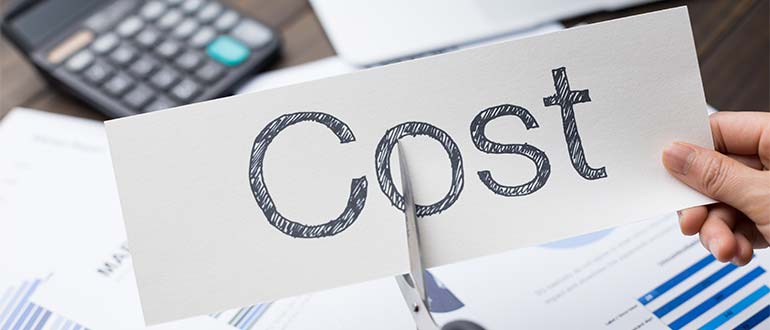
It’s no secret that winter can be a little hard on the wallet when it comes to energy bills, and nobody knows that better than business owners. Businesses have bigger surface areas to keep lit, and more people to keep comfortable during the chilly darker months, and means you can soon find yourself spending increasingly more on energy bills. After all, you need to keep staff comfortable enough to maintain productivity, and your premises light enough to be safe!
However, while a rise in spending is almost inevitable during the winter, you’ll be happy to hear there are a couple of ways you can take the edge off. A solar panel system can provide a great way for you to take control of your business’ energy bills all year round, and when it comes to winter, there are a couple of additional measures you can take too. We’ve summed up some of the easiest (and most helpful) ones here.
If you’re able to, it can be helpful to install a seven-day time switch on your thermostat, as it’ll help you to adjust the setting for different times of day. Even the winter days tend to be warmer when the sun is highest and brightest in the sky, which means you can afford to lower it by a couple of degrees about midday. By the same token, after 4pm in winter is when we tend to lose the warmth of that sunlight, so that’s when you can afford to bump it back up a notch again.
Bear in mind the power those few degrees can have, though! Experts say that if you lower your heating by just 1C, you can save up to 8% on your annual heating costs. Similarly, taking it down by 2C whenever possible means that you can save around £140 on every £1000 you spend on heating. It’s worth thinking about!
It may sound obvious, but you might be surprised at how many countless empty rooms across the country are being heated every winter, wasting hundreds of thousands in energy bills for UK businesses. To avoid being one of them, make sure you’re only heating the areas of the building which are regularly occupied. Stationery cupboards and empty meeting rooms can have their radiators turned off (or right down) when unoccupied, and similarly temperatures can also be kept to a minimum in hallways and corridors, as they’re generally not used for more than a few seconds at a time.
Nobody can work in complete darkness – but while having the lights on isn’t up for debate, it might be worth thinking about the bulbs in them. You can switch out yours for compact fluorescent bulbs in winter, as they tend to last longer while burning just as brightly. It may also be worth considering motion sensors in your hallways and corridors. That way, they can help you save on energy bills by making sure that areas are only lit when people are actually using them.

Don’t forget the simple stuff, either – there’s no point in spending money to have your thermostat automatically adjusting throughout the day if someone’s left a window open somewhere, letting all of that precious heat escape into the world outside. It’s always worth just an occasional quick check to make sure doors and windows are closed, so you’re making the most of all your generated heat. That way, you’re not unnecessarily spending extra on your bills! While you’re at it, make sure there aren’t any office machines like printers or computers which have been left on necessarily. In fact, on that note…
You don’t need to have a lot of technical knowledge to know that old equipment tends to be more inefficient, which can take a lot more power to keep running effectively. Now, it’s fair to say that buying a brand-new desktop computer is going to make a significant dent in any energy you’d have saved by using it. However, if you’re thinking about upgrading any of your office equipment anyway, arguably winter is the best time to do it, as that’s when you’d feel the most benefit of its increased energy efficiency.
Plus, doing it at around Christmas time gives you a great opportunity to take advantage of seasonal deals like Black Friday. It’s not a bad idea to look out for the Energy Star logo on all your next purchases. (And if you’re in the market for new desktop machines, it might be worth considering laptops instead – by some estimates, they can provide an energy saving of up to 90% when compared to a desktop computer.)
This is all just for winter, though – as for the rest of the year, solar panel business solutions can provide you with a great way to take the reins when it comes to your business’ energy bills. Generating your own power on site can help you decrease your reliance on the National Grid, lowering the associated amount you spend on energy. That’s far from the only benefit, too – you can find out more in our previous post about the advantages of solar panels for your business. Alternatively, you could ask our experts in person right here at Low Carbon Energy! Just give us a call on 01282 421 489, or email us on info@activ8energies.co.uk, and we’ll be happy to help in any way we can!
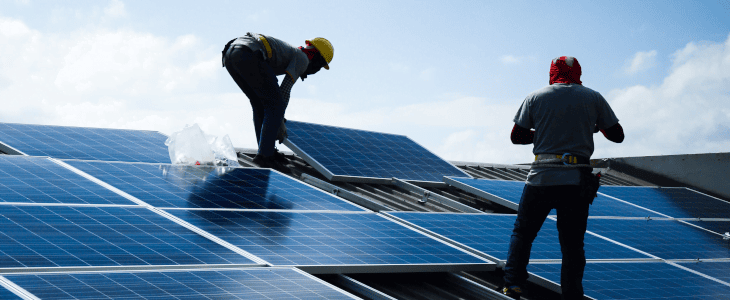
It’s a question our experts often get asked here at the Low Carbon Energy company, and to be honest the answer varies, depending on a couple of different factors which are specific to your business. While you’ll probably find it difficult to get any exact answers without a detailed consultation with an expert, it can be helpful to familiarise yourself with these factors in advance. This way, you can have at least a rough idea of what’s involved by the time you’re ready to start the installation of your commercial solar panel system in earnest. We’ll explore the biggest ones below!
You don’t need specialist knowledge to guess that the size of your premises is one of the biggest determining factors in our process, but it’s certainly not the only one. In almost all cases, the number of solar panels your commercial solar panel system needs will depend on the following factors:
In many ways, your industry and the nature of your business can make a difference too, but only to the extent that it influences the construction and requirements of your premises. For example, a law firm will often naturally be less energy-intensive than a manufacturing or industrial facility, so in most cases it will need fewer solar panels.
It’s not a hard and fast rule though – hypothetically, a reasonably small manufacturing facility might need fewer panels than an exceptionally large law firm. It’s just a part of why we’ll always base our key decisions first and foremost on the buildings and environment, rather than solely the nature of the business.
When you approach us for our services here at Low Carbon Energy, we’ll always start by conducting a detailed assessment of your premises and energy profile, so that we can supply and install the best possible system that works for you. Here’s a broad overview of our process.

1. Analyse electricity consumption
Contrary to what some people first assume, designing an effective solar solution isn’t just a case of filling every available space on the roof. The best solar panel system isn’t the one that’s largest – it’s the one that’s most efficient.
At Low Carbon Energy, we’ll review your existing energy consumption via electricity bills, half-hour data or any other consumption data that you might be able to provide. We’ll use this to review your ‘load profile’ – basically, how and when you use the electricity. This enables us to design a system that best suits the specific requirements of your business, giving you the best returns on investment.
2. Calculate the level of electricity generated
Solar energy is generated from daylight rather than sunlight. So if you’ve ever asked: do solar panels still work on cloudy days, the short answer is very much yes! (We’ve explained the full details why in the linked article.)
When we make our calculations, we use dedicated software which accounts for 20 years of geographical data, and we also consider the location, pitch and elevation of the roof, and the array layout. All this data ultimately gives us a very accurate estimation of what we can expect to be generated, which we use as a starting point to determine the basis of your solar PV system.
3. Finalise the type of solar panel being used
Solar panels obviously come in a wide variety of sizes and outputs, and like most other providers, we don’t use a one-size fits all. Instead, the exact size of the panel used is always determined by the customer’s specific requirements. Panel sizes can vary from anywhere between 270 watts to 410 watts, and typically the larger the wattage/output, the more expensive the panel.
Once we have all the required information to hand, we’re then in the perfect position to select the size of panel that best suits your system. For example, if your business has limited roof space but a large energy consumption, the best option would often be to select a large output/wattage panel. This enables us to maximise the available roof space, effectively meeting the energy demands within your premises.
This is another of the biggest questions! Just like the number of solar panels though, it’s difficult to give a definitive answer without a proper consultation, since the final figure depends so much on the specifics of your business and premises. We’ve done an entire post on this, but essentially many of the same factors apply – it all comes down to how much energy you’ll consume, and the necessary capabilities your solar PV system will need to offset this.
As well as the actual installation, the cost of solar panels also encompasses all the design, project management, administration and other costs. We lay all of these out for you during the consultation, so when you get a price for your system, you can be sure there’ll be no sudden surprises further on down the line!
What’s more, we offer all the specialist expertise, equipment and labour in-house right here at Low Carbon Energy, and for decades we’ve been using these to deliver solar PV systems for customers across a range of sectors. With over 30 years of combined experience, you can count on us to be able to create you a system that’s tailored specifically for your premises, providing maximum efficiency and return on investment. Feel free to give us a call today on 01282 421 489 to see how we can help you take the first step towards cheap, green, unlimited energy.
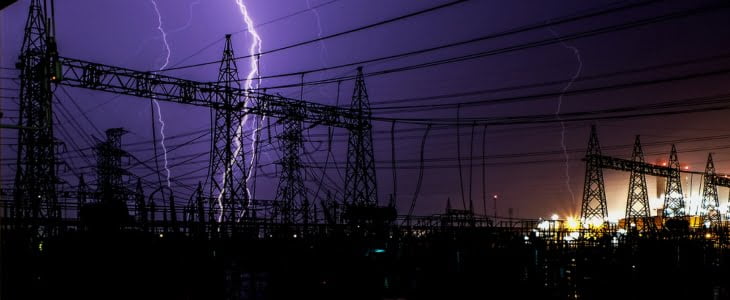
Just a few weeks ago, one of the biggest national headlines was the widespread blackout that affected over a million people across England and Wales. Two separate large-scale generators went down, and the official explanation has highlighted a lightning strike as being partially to blame.
National Grid officials have assured the public the incident was a once-in-a-decade event, but some industry commentators aren’t so sure. They think that it might be indicative of UK energy problems on a larger scale. This in itself is worrying for businesses, who are increasingly turning to solar panels to provide the energy security they need. So what exactly happened?
The National Grid says the power cut was mainly caused by the sudden loss of two large power generators, namely Hornsea offshore wind farm, and Little Barford power station. The failures occurred independently of one another, but were both associated with the same lightning strike. As a result, over a million people were affected by the power-cut, which had a major impact on homes and the transport network.
300,000 people were estimated to be affected in London alone, and the power cut also affected the Midlands, South East, South West and North West of England, as well as Wales. (Here in the North West, we were lucky to avoid it!) Underground trains and traffic lights were seriously affected, and many underground commuters had to make their way to their trains completely in the dark, finding their way only by light from their phones and that of transport staff.

The official government regulator, Ofgem, has opened an investigation into the National Grid, and while the lightning strike remains the official cause, some industry commentators are wondering whether this signifies deeper problems for the National Grid, which may be suffering from a lack of investment in recent years. For others, the underlying concern is the relative likelihood of another such event. While that’s a scary enough prospect for homeowners, it’s especially worrying for businesses, who could stand to lose significant amounts of revenue. Power cuts almost always have a severe impact on the productivity of individual businesses, which ultimately affects their bottom line. As a result, energy security is becoming an increasingly high priority.
Happily, energy security is something we’re in the business of helping to provide, here at Low Carbon Energy. Commercial solar panels provide an excellent way for businesses to generate their own electricity on site, decreasing reliance on the National Grid – protecting against the lost productivity that power cuts can inflict. Since summer is ending (rapidly, if the constant clouds are any indication), we sometimes get customers wondering if solar panels are worth the investment given the weather we get for the rest of the year. (If you’re wondering whether solar panels still work on cloudy days, the answer is – yes!) What’s more, if you invest in battery storage, it further decreases your reliance on the National Grid – which can soon start providing you with long-term savings, as well as guarding your business against the possibility of a disaster further on down the line.
With 20 years of knowledge and experience here at Low Carbon, we’ve got the skills and expertise to deliver a solar PV solution that’s perfect for your business – so why not get in touch today? Feel free to give us a call on 08456 808 963, and we’ll be happy to see how we can help!
The cost of solar panels always has been – and probably always will be – one of the most influential factors for businesses deciding whether or not to buy them. However, it’s worth noting that the price of them has actually plummeted in recent years, and now they’re even more affordable than they used to be; up to 70% cheaper than they were in 2010.
For many businesses, the financial savings offered by commercial solar is often reason enough to consider it. In addition, it can help businesses enhance their Corporate Social Responsibility, heightening your appeal to customers, investors and business partners. However, planning is vital if you’re going to maximise the benefits of solar panels, so with that in mind, we’ve listed some of the most influential factors on cost.
The size of your roof (and the size of your system)
Obviously, in order for a solar panel system to be properly viable, you’re going to need a certain amount of free space on your roof, and it’s only natural that a bigger system will require more investment than a smaller one. Some providers will provide the option to choose high-efficiency solar panels, which can allow you to fit more kWp onto a restricted area than you might otherwise be able to with standard panels, though it will cost more to do so.
Your roof orientation
In this context, this is referring to which way your roof faces, rather than its angle as such (although that is a factor, too – just not quite as crucial). A predominantly south-facing roof will maximise the efficiency of your panels, since they’ll be getting the maximum amount of sunlight throughout the day. If your roof faces towards the south-west, on the other hand, or it’s entirely westerly-facing, you’ll still get tangible amounts of savings, but not quite as much as you would have done from a south-facing roof.
The size and type of property
So we’ve covered your building’s roof fairly extensively, but there are other aspects of it which are important, too. If it’s a new build, it will often be relatively easy to install the panels, and if it’s only a single-storey or double-storey building, it will minimise the complexity of the cable run. Essentially, an AC cable always needs to run from the inverter to the consumer unit in order for the solar PV system to work correctly. Smaller buildings tend to make this run shorter and therefore simpler to set up. However, scaffolding may be required on taller buildings, which can immediately have a knock-on effect on the total cost of the system.
Meanwhile, if a building is much older, it can complicate the installation to varying degrees. For example, the roof must undergo an assessment to ensure that it’s physically capable of supporting the weight of the system, before any installation takes place.
Your exact location (both locally and nationally)
As we touched on above, the amount of energy you save is also affected by the angle of your roof, and it’s also affected by any shade from nearby trees or buildings. That means in order to save the most with your solar panels, it’s ideal to have a clear, unrestricted view of the sky. There’s a reason you don’t tend to see too many solar panels in built-up urban areas (even though, ideally, that’s where they’d be best placed) – if your premises are dwarfed by trees or much taller neighbouring buildings throughout the day, their shadows will limit the amount of sunlight your solar panels are able to absorb.
Your general location in the UK can also make a difference. The southernmost regions of the UK are the ones that tend to get marginally more sunshine than those in the North, which can provide slightly greater savings to those in London over Manchester. However, these differences are relatively negligible, and it’s certainly not a big enough difference to render solar panels unworthy of the investment for businesses up North!
Your energy profile
The rate of your energy consumption, the way you consume it, and when are all factors which can also influence the cost of your solar PV system. Since solar panels allow you to create your own energy, rather than solely relying on the National Grid, your energy requirements will naturally have a major influence on which solar panel system you choose. Storage batteries often aren’t a bad idea to consider alongside them, as it can help you better manage the energy you save, for maximum savings.

The quality of the solar panels and components
Cheap solar panels is a common search term here in the UK, which is understandable. After all, everyone likes to make the most of their budget. However, the price of solar panels isn’t as important as their quality, and the two are directly correlated more often than not. You’ll need to look beyond short-term costs, and focus your attention on long-term gains. The efficiency and lifespan of your solar panels are two of their most important qualities, and cheap solar panels can’t always guarantee these in good measure.
You may well find that the cost of maintenance over their lifespan, as well as their reduced efficiency, far outweighs the initial savings you’ll make on buying cheap solar panels. Here at Low Carbon Energy, we’ve always ensured that our offering comprises high-quality, reliable solar panels which match the quality of our experience and expertise, so you can count on them to provide savings for years to come. The same goes for crucial components, such as the inverter.
Mounting frame, roof covering and roof anchors
The mounting frame is an equally crucial bit of your solar panel system; and another key influence on cost is whether it’s an on-roof or in-roof mounting system. There are also different ways of fixing the solar panel mounting frame to the roof, and certain coverings require exceptional levels of time and care, compared to the relatively straightforward installation process for others. A slate roof, for example, is far more demanding in terms of what’s required than a concrete tile roof might be.
Any extras
In addition to these pivotal components, any additional components will incur extra cost; for example, any solar immersion controllers, advanced monitoring systems, or solar battery storage systems and if the building itself requires any extra contracting work over the course of the installation.
However, the normal cost of solar panels will account for service and labour, encompassing the design, project management, administration, and the work of installing the frame and solar panels themselves. All of which we’re pleased to supply in-house right here at Low Carbon Energy! With over 30 years of combined experience behind us, we’ve got the knowledge, skills and expertise to create and deliver the solar PV solution that’s perfect for your business, so why not get in touch today? You can give us a call on 01282 421489 – we’ll be happy to see how we can help!
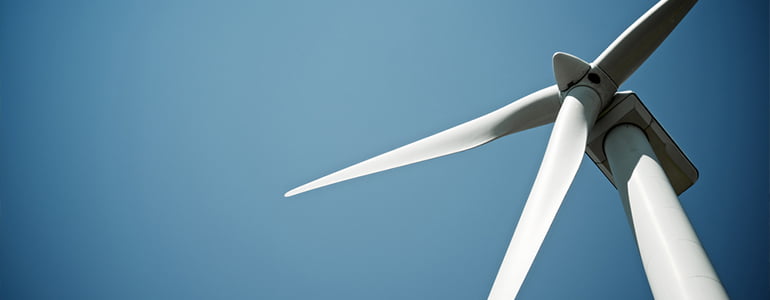
Amongst the ever-increasing concerns about climate – concerns which have only been intensified by the recent heatwave – the subjects surrounding clean energy are becoming more significant than ever here in the UK. And although we still have some way to go, happily we’ve not been without our milestones. Here’s one of the most recent; for the first time since the Industrial Revolution, Britain is now obtaining more power from zero carbon sources like wind energy and solar panels than we are from carbon-based fuels such as coal and natural gas. So, how did we get to this stage, and what does it mean going forward?
Historically, the UK’s National Grid has always had to rely more on carbon fuels like natural gases to provide power to the nation, but it’s been making significant efforts in recent years to ensure that the its power is drawn from more sustainable sources. As of 2019, this has been successfully achieved for the very first time; clean energy from solar panels and wind has edged ahead, accounting for 48% of the UK’s energy generation, while 47% is provided by carbon fuels like coal. (Burning biomass accounts for the remaining 5%.) It’s the latest milestone in a steady decline for coal energy, in contrast to an encouraging boom from wind and solar.
In fact, we’ve already passed another energy milestone back in May, where the UK enjoyed our first ever coal-free fortnight, while generating record levels of solar power for two consecutive days. The experts at the National Grid estimate that in the past decade alone, coal generation will have plunged from 30% to 3%, while wind energy in particular has soared from 1% to 19% of our energy generation.
Right now, the majority of our carbon fuel comprises natural gases, which still makes up a sizeable portion of our power generation here in the UK. However, there’s no denying we’re in the middle of dramatic shift, driven by the increasing urgency to cut greenhouse gas emissions.

A spokesman from the National Grid highlighted the milestone as particularly encouraging news, saying there’s been real progress in the decarbonisation of the energy system. 2019 was noted as a tipping point, which may well pave the way for increasing reserves of energy storage to be created in future, expanding along with our rising demand for wind and solar energy.
The National Grid isn’t alone in making this change, however. More and more companies have been seizing on the opportunity to transform the way they power their businesses. Commercial solar power can offer modern businesses a whole range of advantages; the ability to generate energy on-site allows them to decrease their reliance on the National Grid, which can end up making them savings of hundreds or even thousands on their energy bills throughout the year – savings which can then be re-invested into other aspects of the business. What’s more, it can give them green credentials in the form of Corporate Social Responsibility in an ever more environmentally-conscious world, providing a valuable edge over competitors. And those are just a few examples!
Here at Low Carbon Energy, we have over 20 years of providing solar PV solutions for businesses and homeowners alike, making us the perfect people to help you revolutionise the way your business uses energy. Feel free to give us a call on 08456 808 963, and we’ll be happy to see how we can help!
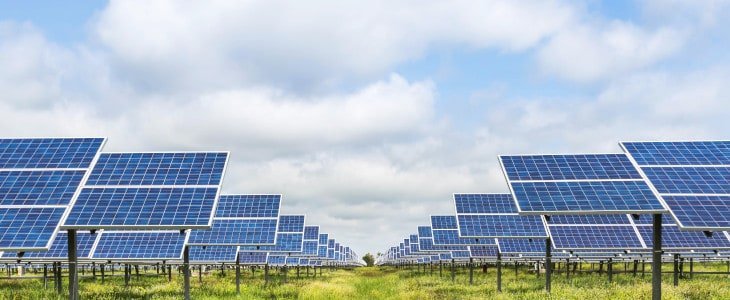
In short: yes. It’s a question that our expert regularly field here at Low Carbon Energy, and it’s an equally pressing question for businesses and private homeowners alike. After all, if you’ve invested a considerable amount into a domestic or commercial solar panel system, you won’t want it to be constantly hampered by cloud cover, especially here in the UK! Happily, this is less of an issue than many people think – and here’s why.
You can still get sunburned even in cloudy weather, as you may have been unfortunate enough to once discover. That’s because even though cloud cover can block the brightest sun rays, it’s still penetrated by a sizeable amount of solar radiation – and that’s a big part of the reason that solar panels still work. In a bit more depth; solar panels function by absorbing photons, which they convert into an electrical charge. (We’ve explained this in more detail in a recent article.) This means that the key requirement is daylight, rather than specifically sunlight. The energy they absorb comes from not just the visible light spectrum, but also from a range of different wavelengths, many of which are perfectly capable of penetrating cloud cover.
In fact, you could even theoretically provide power for a solar panel using artificial light – although obviously that probably wouldn’t be the most efficient way of generating power! Really, as a general rule of thumb, if you’re able to cast a shadow at any given time, it’s a safe bet to assume that your solar panels are working just fine. Now, that’s not to say they’ll still be operating at peak efficiency; solar panels take a hit of anywhere between a 10% to 25% drop in efficiency, compared to the level they’d be operating at on a sunny day.
Interestingly, chilly and cloudy weather can have far less of an impact on solar panel efficiency than many people think. The American cities of New York and Seattle, for example, are amongst the top US cities for solar panel savings. Similarly, Germany accounts for about 25% of the world’s solar power, while being simultaneously famous for its lack of sunlight. Nevertheless, it achieved its strongest growth output in about half a decade last year.
So, how does that work for them with less-than-optimal weather? Basically, it’s because it’s the local cost of electricity, and not the amount of cloud cover, that influences the scale of the savings that people and businesses are able to make with solar panel installations.

There’s even a slightly odd phenomenon in which cloudy weather can actually lead to increased output of solar panels, compared to a bright and cloudless day. This is called the Edge of Cloud effect. We won’t go into in-depth detail on the science behind it all, but the short version is that the sunlight can get magnified through refraction, just when the sun is emerging from (or being hidden behind) a bank of clouds. This leads to a sudden burst of energy, which can lead to a temporary but dramatic increase in output. Unfortunately, it’s not something to hope for too often, as it can actually lead to fuses being blown on the panels!
Thankfully, now that we’re well into summer here in the UK, cloud cover isn’t as much of a concern for solar panel owners – which makes it a perfect time to get some fitted for your home or business. We have over 20 years of experience in providing solar PV solutions for businesses and homeowners alike; feel free to give us a call on 08456 808 963, and we’ll be happy to see how we can help!

Low Carbon Energy prides itself on a long history of delivering quality solar panel solutions in the UK, and has now become a frontrunner for several prestigious awards in Burnley and the wider Lancashire area. Specifically, Low Carbon is in the running for both Small Business of the Year and Green Business of the year at the Be Inspired Business Awards, the Growing Business of the Year at the Burnley Business Awards.
First established in 2006, today the BIBAS comprises Lancashire’s largest and longest-running business awards programme; a highly prestigious set of accolades commonly referred to as ‘the one they all want to win’. It not only provides a platform for fantastic businesses and inspiring individuals to be recognised, and fuels innovation, cultivates excellence and drives growth throughout the Lancashire economy.
The awards are fiercely competitive, to the extent that even becoming a finalist is often regarded as an impressive achievement in itself amongst the Lancashire business community. Thousands of entrepreneurs have entered since the awards’ inception in 2006, with more than 10,000 guests having been welcomed to the annual ceremonies over the years. Low Carbon’s nomination for two awards is no small source of pride for the company.
Entering the awards means candidates must submit a paper entry, present themselves for an interview with the panel, and even take one of the judges on a short tour of their business premises. Now, throughout the May/June period, judges are making their final deliberations.
The awards ceremony itself will be held on Friday the 13th of September, and is regarded as one of the biggest events in the Lancashire business calendar.
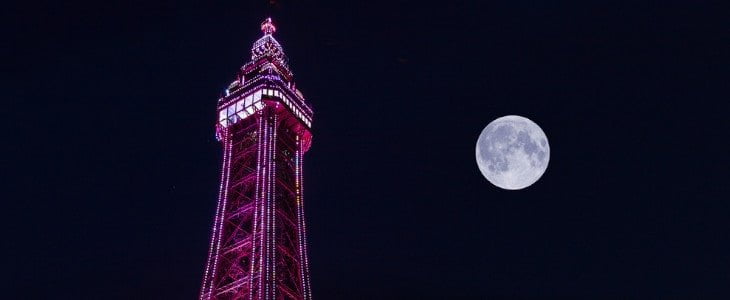
Low Carbon Energy is also a finalist for the Growing Business Award at the Burnley Business awards, organised by Burnley Council to reward and celebrate the achievements of local businesses and individuals.
Burnley Council chief executive, Mick Cartledge said: “The ceremony gets bigger every time and we are expecting around 560 guests this year. It’s a great way to acknowledge and celebrate our successful businesses and their workforces, and the event is a key diary date in Burnley’s business calendar.”
The awards night for the Burnley Business Awards will be held at the impressive Towneley Hall, with lavish food, fantastic entertainment and a glittering marquee on the grounds. It’s held on the 20th of June, which means there’s just one week to go!
Whether or not Low Carbon Energy wins the award, the team are honoured to count themselves as part of Lancashire’s thriving business community, and plan to continue delivering services for domestic and commercial solar panels with the same high standards of diligence and customer service that clients have come to expect.
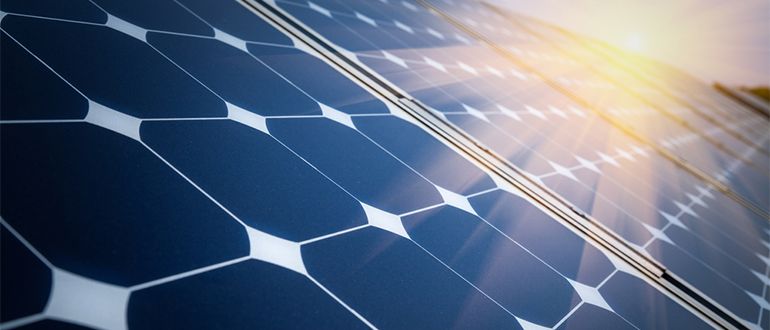
Solar panels have a whole range of advantages for your business – we’ve gone into them in extensive detail on our solar panels for business page. The spring season can be a particularly opportune time to install solar panels, though, especially if you want to be in a position where you’re getting maximum benefit for them in summer. Here are some of the main benefits!
We’ve been installing solar panels for years here at Low Carbon Energy, ranging across a number of sectors, from schools and education, aerospace and public sectors – just to name a few! All that experience under our belts has taught us that it takes a fair amount of time to plan and install a high-performing solar panel solution. Many of our customers find that the paperwork and similar written formalities can take a notably long time (and for good reason). There’s the matter of confirming any rebates, connecting you to the appropriate retailer and setting you up with any policies or grants (including our own 5K grant for small businesses) which you might be able to benefit from. This can take a number of weeks, so it’s nice to get it sorted out as early as possible, putting you in a great position to get maximum benefit during summer.
Typically, summer is the busiest time of the year for PV installations. That means it’s wise to act quickly in order to pin down the slot that best suits your schedule. We’ve got a great team, but they can only be in so many places at once! Depending on your business, you might find that installation times can cause a reasonable level of disruption (although obviously, we try to minimise that as much as we can!). Getting an installation time that works for you – rather than one you have to adjust to – can work wonders for minimising this disruption further.
Although we all look forward to summer for its warmth and sunshine, it’s worth remembering that solar panels only need one of those elements to start saving you money on your energy bills. Since they convert brightness into sunshine, rather than warmth, you don’t need to wait for the mercury to rise, just for the winter clouds to clear until you can start benefitting. And the sun starts to shine brighter a lot sooner than May!
Most of these benefits stem from one simple truth, which is that the sooner your get solar panels, the sooner your business can start benefitting from them. Here at Low Carbon Energy, we’re proud to have over twenty years of experience behind us in providing PV solutions for businesses and homeowners alike. We also offer a number of ways to pay – give us a call today on 08456 808 963, and we’ll be happy to tell you more about how we can help!
In some encouraging news for renewable energy enthusiasts, recent data shows that as a nation, our levels of CO2 have once again dropped. They dipped by 2.7 percent in 2017 based on the UK’s Department of Business data and show a marked decline of over 42 percent from 1990 until 2017. Admittedly, the harmful greenhouse gas emissions which most knowledgeable scientists now agree lead to greater problems for the environment are still being emitted, which means there’s still work to do until we reach a zero-carbon emissions environment in the UK.
When looking at the shared usage data, business usage is a bright spot with a 17 percent share of the emissions compared to transportation at 27 percent. Surprisingly, agriculture also has a way to go with a 10 percent share in emissions. Clearly, the heavy use of machinery in farming which doesn’t usually run on electrical power has an impact on the farming industry. And while solar panels for farms are becoming an increasingly favoured option, here at Low Carbon Energy we’re still seeing an incredible uptake of solar panels for businesses.
It’s felt that what is needed is a zero-carbon emissions policy aimed at homeowners. Given that residential holds a 15 percent share of the emissions and energy supply sits at a full 25 percent, there’s still much to be done.

One of the worst pollutants is coal producers which thankfully has declined by 27 percent due to the closure of two key coal plants. However, this raises the spectre of energy production and energy usage in homes. While companies have done much better by investing in alternative forms of energy production and reducing their energy usage in many places, citing both the cost savings and environmental motivations, homeowners haven’t been as quick to do the same.
The overriding favourite option is solar panels to collect energy coming from the sun. The use of a solar panel array combined with equipment to harness the energy and convert it, and a battery bank to store it, is all that’s required to provide energy outside of the UK’s National Grid.
Solar panels can be installed in a variety of places. The roof is usually the best location; either the main roof or even the flat roof of an extension will work too. Solar panels can be fixed using a mounting system which is angled to best catch as much of the sun’s powerful rays each day. Energy is collected at a reduced rate despite the clouds too, which is great news for UK homeowners who don’t always benefit from clear blue skies.
Harnessing the sun for a home’s energy supply saves money over time. The reduced cost of solar panels with their increasing popularity has meant that recouping the cost of the equipment doesn’t take too long. The panels and other equipment supplied by Low Carbon Energy last many years. Being far less reliant on the grid for power also means homeowners don’t suffer the effects of a grid power cut.
However, the feel-good factor about the environment is the gift that keeps on giving. Solar panels are easy to manufacture. There are no CO2 emissions when a home benefits from an ongoing energy supply using solar power. At that point, a residence is carbon neutral with the residents having done their bit for the future of our planet.
Here at Low Carbon Energy, we’re proud to have over two decades of experience behind us in providing tailored, efficient solar PV solutions for businesses and homeowners alike. We also offer a number of ways to pay, so that our solutions are never out of reach. Give us a call today on 08456 808 963, and we’ll be happy to tell you more about how we can help!
We recently posted right here on the blog about how energy prices are set to rise by 50% by 2020. It seems that we’re taking the first step on that journey already, as Ofgem, the UK’s energy regular, has raised the cap on the prices that energy prices are permitted to charge. The result is that millions of British households can expect to see a notable increase in the cost of energy from April 2019. Now, obviously this is not fantastic news to the vast majority of people, but with solar panels, energy security doesn’t have to be out of your reach! Before we get too deeply into that, though, let’s quickly cover what’s happening.
You may well already know this, but essentially – in a move instigated by the government, the UK regular Ofgem sets maximum gas and electricity prices that suppliers are allowed to charge to people who are a) loyal to their suppliers, and b) are on default tariffs. Energy suppliers aren’t allowed to exceed these price caps. The caps on these prices are now being raised in order to let suppliers cover the higher costs they have to deal with on the wholesale market. Notably, Ofgem’s taken care to reassure customers that they’re still protected from overcharges, and that the raised caps reflect the actual rise in costs. In other words, it’s not just so suppliers can squeeze a bit more money from their customers.
This reasoning may still not be much comfort to the 11 million households affected, who are on default (or standard variable) tariffs. One of these households – using a typical amount of energy – can now expect to have to pay about £1254 a year, which is around an extra £117 annually.
Meanwhile, about 4 million households are on prepayment meters. Their price caps will rise too. Now, the typical customer will have to pay about £1242 a year, which is a rise of £106. Not insignificant, whatever the reasons behind it!
It’s important for us to reiterate here that Ofgem have said that customers that customers will still be protected from overcharging – it’s not a free-for-all! People can shop around for a cheaper fixed deal on their energy, which can help take the edge off the price rises. However, for long term solutions, solar panels provide a fantastic way for households to achieve almost total energy independence. In fact, it’s one of the core advantages of solar panels; essentially, it’s a limitless source of energy, generated right there at your home.
This liberates you from such heavy dependence on the National Grid, which in turn gives you a level of immunity from fluctuations in price – exactly like the kind that millions of households will find themselves dealing with from April onwards. That’s far from the only reason to choose residential solar panels, of course – others include their efficiency, their cost-savings and impeccable green credentials – but we often find that the ability to achieve energy security is more than enough for many homeowners!
Here at Low Carbon Energy, we’re proud to have over two decades of experience behind us in providing tailored, efficient solar PV solutions for businesses and homeowners alike. We also offer a number of ways to pay, so that our solutions are never out of reach. Give us a call today on 08456 808 963, and we’ll be happy to tell you more about how we can help!
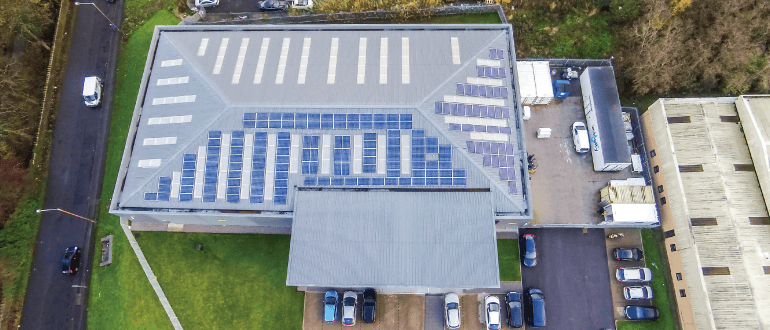

Cost savings, energy security, and enhanced green credentials are just a few of the reasons commonly cited by commercial businesses to explain why they’ve chosen solar panels to fulfil their energy requirements. What’s more, customers can even sidestep the issue of upfront costs with a Power Purchase Agreement, which is often particularly helpful for small businesses and organisations such as schools. Here’s a quick explanation as to what you need to know about Power Purchase Agreements (PPAs for short), so you can get a better idea of how your organisation can benefit.
Essentially, a Power Purchase Agreement is one of several ways to pay. It’s a handy alternative to buying a solar panel system outright, allowing you to save on upfront costs while still being able to benefit from the multitude of advantages that solar power has to offer. When you enter into a Power Purchase Agreement with us here at Low Carbon Energy, we’ll install a solar panel system on your premises completely free of charge. This is financed by a third party, who is always a trusted partner of Low Carbon. Once the system has been installed, we’ll sell you the generated electricity at a discounted rate, which is generally significantly lower than what you’d normally be paying to your existing provider.

Understandably, Power Purchase Agreements have seen a steady increase in popularity in recent years here in the UK, mostly because customers stand to benefit from them in very clear, tangible ways.
No up-front or capital costs
As we touched on above, this is obviously one of the core benefits of a PPA, as it allows you to sidestep the initial costs of setting up a solar panel system. Our experts at Low Carbon will take care of all the size, procurement and installation details, so once the system is set up, you can start feeling the benefits immediately.
Increased energy efficiency and cost savings
Typical solar panel systems are able to offer energy bill savings of around 25-35%, which means huge financial savings for your business. What’s more, there are no estimated bills with a Power Purchase Agreement. Instead, the amount of energy you purchase from us within the PPA is determined by your actual usage. This allows you to further reduce costs when it comes to commercial solar, granting you total peace of mind that you’re never spending more than you need to.
Better energy security and long-term budgeting
Another major benefit of a Power Purchase Agreement is that it offers you a fixed, predictable cost of energy with smaller and steadier rises than the sharper hikes you’d find at the normal market rate. This gives you increased flexibility to budget for these price rises in future, allowing you to streamline your finances and ultimately save more money on your energy bills.
No maintenance or repair costs
As the finance and risk is taken on by our third-party partner, they also take on all responsibility for ongoing service and maintenance, which is in turn carried out by our skilled solar engineers here at Low Carbon. Therefore, you as the customer don’t take on any financial responsibility for the panels themselves – we’ll take care of everything, leaving you to make the most of all the other benefits!
Maximum green credentials
In today’s environmentally-conscious society, modern consumers are now more than ever making statements with their wallets, preferring to deal with companies who are able to actively demonstrate their commitments to the environment and green initiatives. Solar panels offer a significant and conspicuous indication of an environmentally-mindful business, potentially influencing thousands of customers to choose your business over the competition’s.
Boosts the resale value of your premises
For the most part, it’s homeowners who stand to benefit the most from this key advantage, but it’s also worth bearing in mind for businesses who may relocate at any point in future. What’s more, most Power Purchase Agreements are transferable to new tenants, which means you don’t have to worry about any lengthy red tape while sorting out the energy provision in your new premises.
Here at Low Carbon, we’ve got decades of experience in providing a market-leading service for customers across a whole range of sectors. As well as our services for general commercial premises, other examples of these sectors include manufacturing, farming and agriculture, and public sector buildings. To find out how your business can benefit, just give us a call on 08456 808 963 or email us at info@activ8energies.co.uk. We’re here to help!
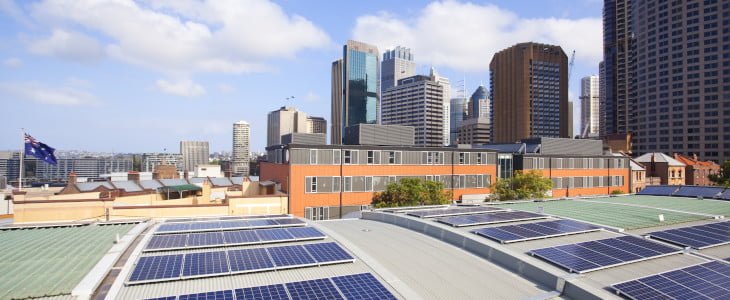
It’s no secret that public support for the solar energy industry has never been higher. Happily, British businesses are continuing to demonstrate their commitment to green initiatives as well. According to a new report, one in three businesses are now generating their own on-site power commercial solar power. This week, our experts take a closer look at which sectors are leading the charge, and how they’re benefitting from it!
The recent survey was carried out by none other than the Economist, who examined the energy strategies of businesses from across a wide range of industries, including manufacturing, transport, hospitality and retail. They found that businesses in the retail sector were most likely to be using commercial solar power, with almost 40% of those surveyed regularly generating their own energy on site. The hospitality sector wasn’t far behind. It make sense when you think about it, as companies in both sectors both use large premises that are often spread across a wide area, which can easily accommodate commercial solar panels on rooftops or top floors.
It’s probably no surprise, then, that solar power emerged as the most popular renewable method by far for businesses to produce their energy, with more than six in ten making use of it. Wind power was found to be another popular method, but its application was more limited as businesses would need to have access to open areas where wind would not be blocked by other nearby buildings or structures. Right from the outset, that makes wind power far more limited in heavily urban centres and cities, where solar power might not suffer the same setbacks.
You don’t need to look far to find out the many advantages of solar power, but as far as businesses are concerned, commitment to an eco-friendly future is becoming a more and more pressing issue on many agendas. Environmental concerns are making the headlines more often than ever, and increasingly, larger British businesses are looking to follow the examples already set by international brands like Lego, which hit its 100% renewable energy target in June of last year. Around 40% of the surveyed businesses mentioned an increased sense of environmental responsibility and reducing their own carbon footprint.
Another motivating factor is likely to be the UK’s own energy prices, which include amongst some of the highest electricity prices in Europe. Amongst the businesses surveyed, almost 50% of them cited cost savings as one of the leading reasons for generating their own energy. Meanwhile, on the whole, the cost of renewable energy has dropped steadily in the last few years, with solar panels and smart energy solutions becoming gradually even more affordable with every passing year.
So if your businesses isn’t already benefitting, why not? Here at Low Carbon Energy, we’ve got decades of accumulated experience in helping businesses make the most of what the renewable energy sector has to offer, encompassing cost savings, energy security and flexibility, and a significantly reduced carbon footprint – and that’s just the start! And best of all, it doesn’t have to cost the earth. Feel free to contact us on 08456 808 963, and we’ll be happy to tell you more about how we can help your business.